

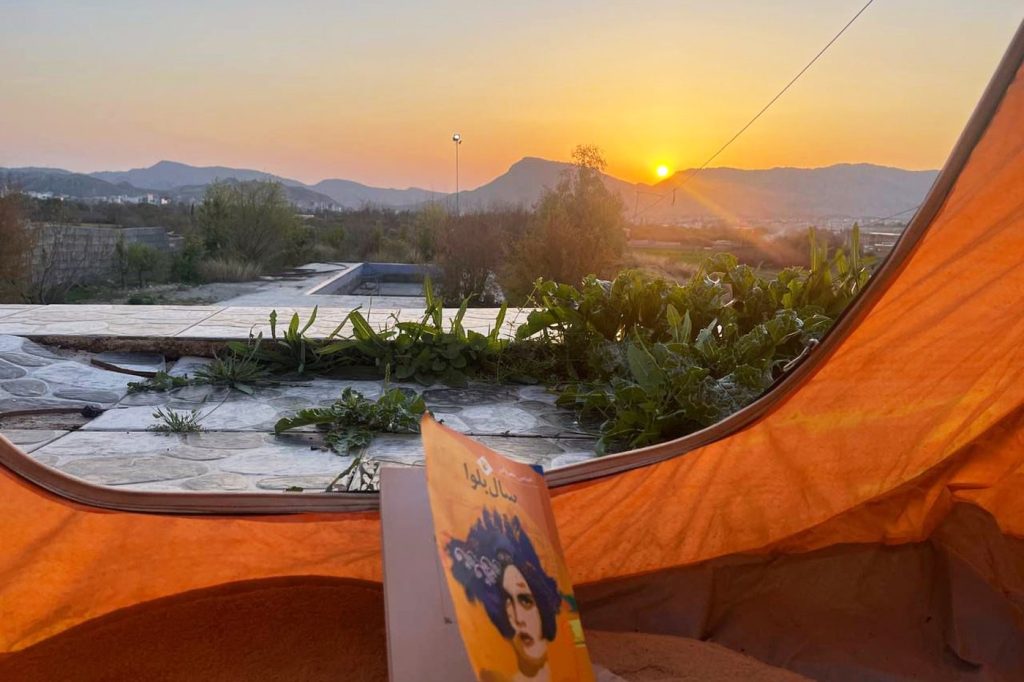
BEIRUT (AP) – In the wake of massive bombardment by Israel and the United States, tens of thousands of Iranians have fled major cities, including Tehran, seeking refuge in smaller, remote towns. Pouya Akhgari, a 22-year-old from Tehran, currently resides in a family house located 200 kilometers (120 miles) away in Zanjan province. This village has thus far been spared from airstrikes, allowing Akhgari to spend his days watching movies and venturing into nearby towns.
The United Nations refugee agency reported that approximately 100,000 people abandoned Tehran, which has a population of around 9.7 million, in merely the first two days of conflict. Although the exact scale of the ongoing displacement remains unknown, it is believed to be even higher, particularly as people flee other cities.
One individual, a 39-year-old lawyer from Ahvaz, situated 800 kilometers (500 miles) southeast of Tehran, decided to leave with her brother, sister, and their families after enduring a tumultuous day filled with explosions. They sought refuge at a family-owned strawberry farm located several hours away from the fighting. While this town lacks military bases, making it feel relatively safe, the lawyer remains concerned about nearby towns that have experienced intense bombardment, especially one that was struck due to its association with the Revolutionary Guard.
The ongoing airstrikes have inflicted severe blows to Iran’s leadership, notably killing Supreme Leader Ayatollah Ali Khamenei and other high-ranking military officials. These operations have targeted the Revolutionary Guard and Basij militia, responsible for safeguarding the clerical regime and suppressing anti-government protests. Despite these losses, the leadership has managed to retain control, with Khamenei’s son, Ayatollah Mojtaba Khamenei, appointed as the new supreme leader.
Residents have expressed apprehension about their day-to-day lives. The lawyer mentioned how people in their area are not attending work or school, spending time instead playing games, walking dogs, and even picking strawberries to distract themselves from the turmoil. Nevertheless, they frequently discuss their worries regarding rising costs and the ongoing conflict’s impact on their finances.
Local communities have demonstrated kindness towards incoming families. One man recalled the harrowing experience of evacuating from Tehran with his wife and young son, who was left terrified by the explosions. After witnessing the destruction along the way, they settled into a family home in a village overlooking the Caspian Sea, where they enjoy walks among the rice paddies, striving to maintain normalcy amidst chaos.
However, for many, relocation is not a feasible option. A 53-year-old man remains in Tehran to care for his elderly parents, lamenting the psychological strain of the situation. He shared his struggles, mentioning that he often retreats to the parked car at night to vent his frustrations.
Overall, the psychological and economic impact of ongoing bombardments has led to a palpable feeling of chaos and uncertainty, as individuals grapple with fear, displacement, and daily survival amidst an evolving conflict. The solidarity seen among local populations highlights a shared human experience in the face of adversity, even amid the fear of violence that continues to disrupt lives across Iran.








