

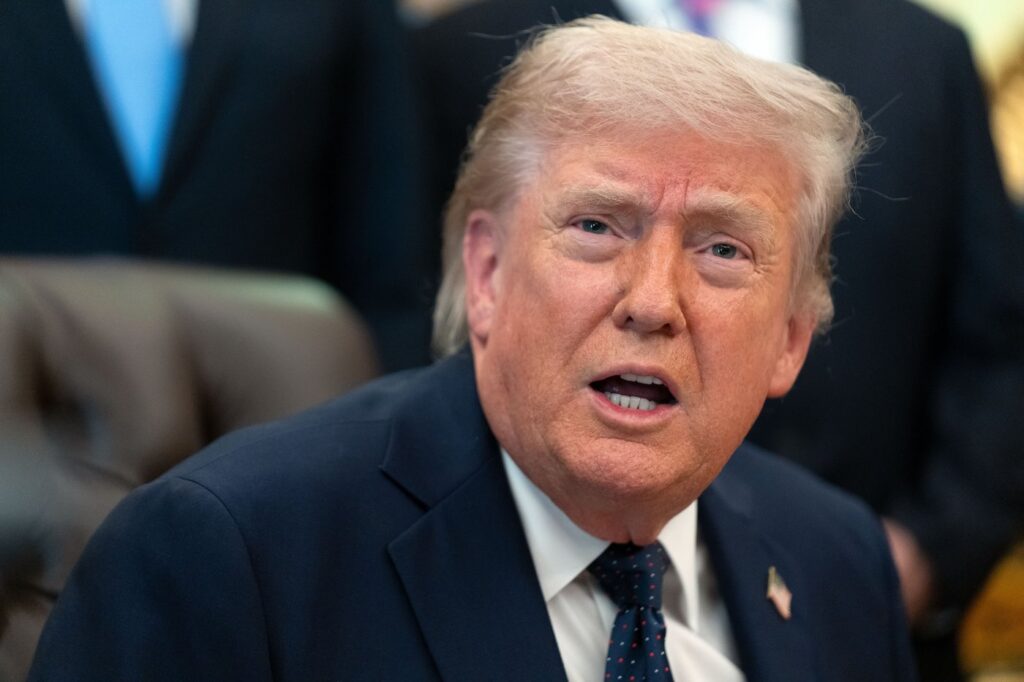
On a significant legal front, an appeals court on Friday delivered a pivotal ruling that blocked President Donald Trump's executive order designed to suspend asylum access, an integral component of his administration's efforts to crack down on migration at the U.S.-Mexico border. This decision came from a three-judge panel from the U.S. Court of Appeals for the District of Columbia Circuit.
The panel concluded that under existing immigration laws, individuals have the right to apply for asylum at the border. They determined that the president does not possess the authority to circumvent these rights. In their judgment, the Immigration and Nationality Act (INA) does not grant the president the power to unilaterally modify the procedures for removing individuals seeking asylum or to suspend their right to apply for it.
Judge J. Michelle Childs, a Biden nominee, articulated this decision, stating that the president’s ability to temporarily suspend the entry of specific foreign individuals into the U.S. does not implicitly include the power to override the mandatory asylum application process defined by the INA. This ruling underscored the legal limitations on the executive branch's authority regarding immigration enforcement.
The implications of this ruling are profound, particularly for those fleeing violence and persecution. ACLU attorney Lee Gelernt expressed that the appellate court’s decision is crucial for individuals who have been denied the opportunity even to present their asylum claims due to what he described as the "unlawful and inhumane" executive order instituted during the Trump administration.
The decision was not without dissent. Judge Justin Walker, who was nominated by Trump, wrote a partial dissenting opinion, indicating the differing viewpoints within the judiciary on this contentious issue. Judge Cornelia Pillard, a nominee of former President Barack Obama, also participated in the deliberation of the case, reflecting the panel's diverse ideological composition.
This ruling indicates a significant pushback against the previous administration's attempts to alter the processes surrounding asylum applications. It reinforces the legal framework established by immigration laws, protecting the rights of those seeking refuge in the United States from persecution and violence. As the legal system continues to address the complexities of immigration policy, this decision may serve as a precedent for future cases regarding the asylum process and executive power.








