

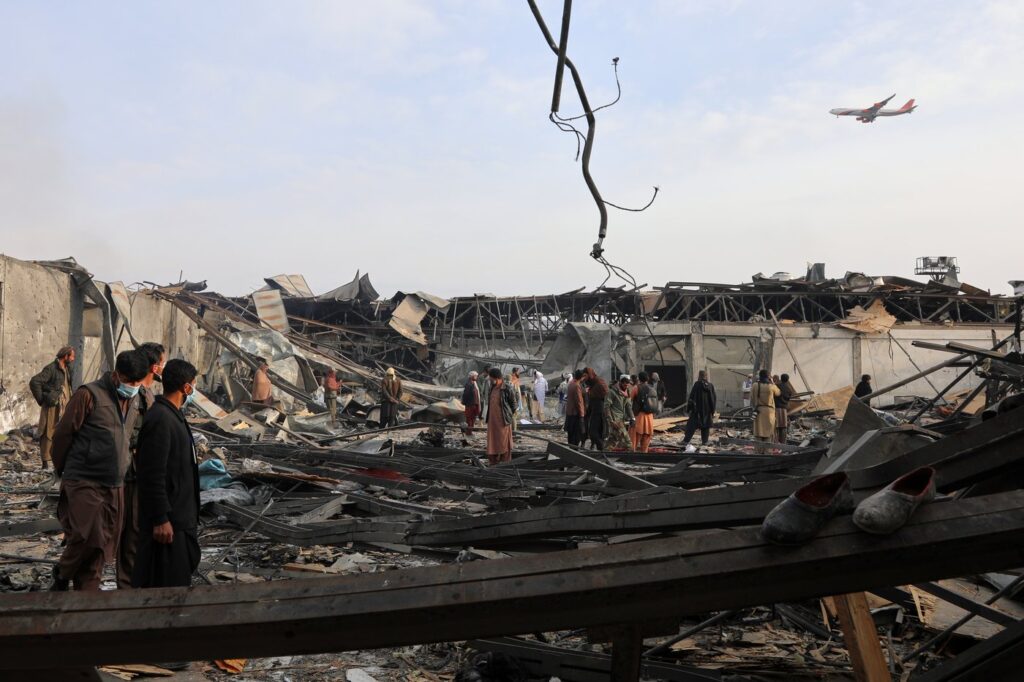
KABUL, Afghanistan (AP) — Rescue crews continue to recover bodies from the ruins of a drug rehabilitation hospital in Kabul after a Pakistani airstrike overnight reportedly killed at least 400 people. The attack marks a significant escalation in the ongoing conflict between Afghanistan and Pakistan, now entering its third week.
While Afghan officials claim that the airstrike targeted the Omid Addiction Treatment Hospital, a facility with 2,000 beds, Pakistani authorities have denied these allegations. They assert that the strikes were aimed at military facilities in Afghanistan and dismissed the casualty figures as propaganda.
The casualties from the airstrike were taken to several nearby hospitals, but the death toll has not been independently verified. The conflict began in late February 2023, characterized by repeated cross-border clashes and airstrikes that have led to international calls for a ceasefire being ignored.
The airstrike occurred shortly after exchanges of fire along the border resulted in the deaths of four people in Afghanistan. Pakistan accuses the Afghan government of providing refuge to militants, particularly those affiliated with the Tehrik-e-Taliban Pakistan (TTP), a group that the U.S. designates as a terrorist organization. The Afghan government, in turn, denies these accusations.
Hamdullah Fitrat, Afghanistan's deputy government spokesperson, reported on X (formerly Twitter) that the airstrike hit the Omid hospital at about 9 p.m. local time. He indicated that large sections of the facility were destroyed, with a preliminary death toll reaching 400 and approximately 250 wounded. As of early Tuesday morning, no updated official figures were available.
Local media shared footage of emergency responders searching for victims amid the rubble, while firefighters struggled to extinguish flames coming from the wreckage. The Omid facility, which had been renamed and expanded from the Ibn Sina Drug Addiction Treatment Hospital about a year ago, is situated near a former NATO military base known as Camp Phoenix.
Officials from Pakistan's Information Ministry claimed that the military had “precisely targeted” Camp Phoenix, asserting it was being used for military storage. They argued that the hospital was located several kilometers away and accused Afghan officials of spreading false information about their operations.
The Afghan government condemned the strike, labeling it an act against humanity. Spokesperson Zabihullah Mujahid stated that innocent civilians and addicts were the victims of this attack, denouncing it as a crime against humanity. A rescue team member reported the grim scene, highlighting that many victims were trapped under debris.
The attack has drawn international concern, particularly from UN officials like Richard Bennett, who expressed dismay over the civilian casualties resulting from airstrikes and urged both sides to de-escalate and adhere to international law.
In response to the allegations made by Afghanistan, Pakistani Prime Minister Shehbaz Sharif’s spokesperson called them unfounded, emphasizing that no hospitals were targeted. Instead, they claimed that airstrikes were aimed at military facilities linked to the Afghan Taliban's support for terrorist groups.
The ongoing conflict represents the most severe hostilities between Afghanistan and Pakistan in recent history. It erupted following Afghanistan's retaliatory cross-border attacks in response to Pakistani airstrikes that Afghan officials said caused civilian casualties. This escalation has disrupted previously brokered ceasefires and raised alarms regarding the presence of multiple militant organizations in the region.
The dynamics of this conflict, marked by accusations, denials, and significant civilian suffering, continue to evolve as both nations grapple with security and territorial challenges, raising concerns about stability in the region.








