

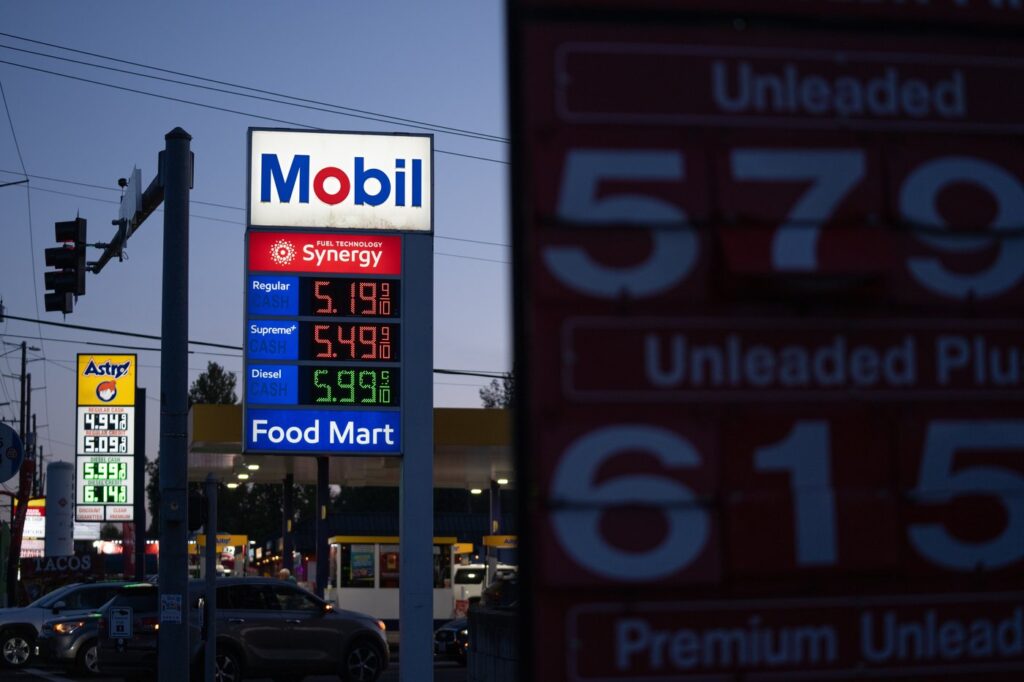
Americans are currently feeling the economic impact of the war in Iran with rising gas prices affecting daily expenses. Despite these challenges, there are factors mitigating the damage, including substantial tax refunds and a surge in business investments driven by advancements in artificial intelligence.
In March, consumer prices surged at the fastest rate in nearly three years, according to various economic data released. The inflation rate, measured by the Commerce Department’s Personal Consumption Expenditures (PCE) price index, rose by 0.7% from February to March and increased by 3.5% year-over-year — the largest annual jump since May 2023. This inflation spike was largely fueled by gasoline prices that rose 21% in March alone, a significant increase attributed to Iran’s aggressive response to U.S. and Israeli military actions, which included closing the Strait of Hormuz and causing drastic disruptions in global oil supplies.
The rising costs contributed to a noteworthy trend where inflation outpaced American wages, business income, and government benefits for the second consecutive month. The Commerce Department’s report also indicated that the U.S. gross domestic product (GDP) grew at a steady annual rate of 2% from January to March, a rebound from the sluggish 0.5% growth seen in the final quarter of 2025, which had been significantly affected by a federal government shutdown.
Notably, business investment experienced a major boost thanks to the AI boom, which resulted in a 10.4% increase in investment excluding housing during the first quarter — the largest rise in nearly three years. Meanwhile, consumer spending, representing 70% of U.S. economic activity, rose at an annual pace of 1.6%. These gains were supported by substantial tax refunds, a direct consequence of tax cuts implemented in 2025 during the Trump administration.
However, this economic uplift may not be sustainable. Economist Michael Pearce noted that while tax refunds were providing more financial relief, they were outpacing the burden of rising gasoline costs two to one in March and early April. As the tax refund season draws to a close and gas prices continue to increase, a decline in consumer spending is anticipated starting in May. The average price for a gallon of regular gasoline climbed to $4.30, significantly up from $3.18 a year prior, with recent days marking new multi-year highs for gas prices.
This rise in gasoline costs is expected to compel consumers to limit spending on other goods and services, which may negatively impact GDP. Joe Brusuelas, the chief economist at RSM, revised his forecast for U.S. economic growth down to 1.7% from an earlier expectation of 2.4%, citing the adverse effects of the ongoing conflict in Iran. He expressed concern that the economic benefits initially anticipated from tax cuts and the AI investment boom had been disrupted by the challenges arising from the war.
The dual pressures of rising prices and a potential slowdown in economic growth present a dilemma for the Federal Reserve and other central banks. They must decide whether to lower interest rates to stimulate economic activity or maintain or increase rates to combat inflation. Thus far, central banks have opted for a cautious approach. The Bank of England has maintained its main interest rate at 3.75% while signaling potential future increases, and similarly, the Fed, the Bank of Japan, and the European Central Bank have chosen to keep their rates unchanged as they assess the economic ramifications of the conflict.
Despite the economic challenges, job security remains relatively strong in the U.S. The Labor Department reported a substantial decrease in unemployment claims, hitting the lowest level in over 50 years, indicating that layoffs are currently not widespread. However, there is caution among employers regarding hiring, resulting in a “no-hire, no-fire” scenario that bars many young applicants from entering the job market. Moreover, concerns are growing that artificial intelligence may replace entry-level positions, further complicating the employment landscape.








