

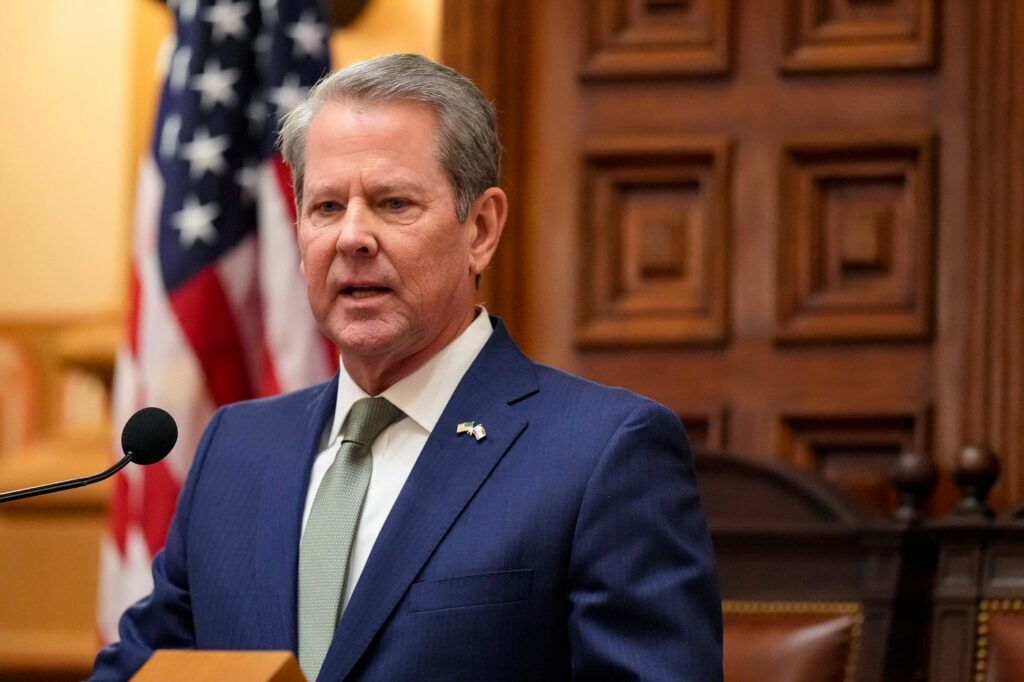
ATLANTA (AP) - Georgia has made headlines by becoming the first state in the United States to suspend fuel taxes in response to soaring gas prices triggered by ongoing conflicts in the Middle East. Governor Brian Kemp, a Republican, enacted a law to temporarily eliminate the state’s 33-cents-per-gallon tax on gasoline and a 37-cents-per-gallon tax on diesel. The tax suspension is set to last for 60 days, providing relief to motorists as savings are expected to reach consumers in the upcoming days as adjustments are made from wholesalers to gas stations.
This recent action contrasts sharply with 2022, when multiple states offered similar gas tax relief amid rising fuel prices. One reason for the lack of states following Georgia's lead is the current financial landscape; states are not as flush with cash as they were following the pandemic when federal aid and tax revenues experienced a surge.
As reported by the American Automobile Association (AAA), the national average gas price has escalated from $2.93 per gallon on February 20 to $3.91 per gallon on Friday. In Georgia, the decision to suspend fuel taxes aims to relieve some financial pressures for motorists, with an estimated savings of $5 to $6 per tank for typical passenger vehicles. The suspension of the fuel tax is estimated to cost the state upwards of $360 million to $400 million, money that is traditionally allocated for road and bridge maintenance. To mitigate the impact on these essential services, Georgia plans to tap into its accumulated surplus.
Moreover, this tax suspension is part of a broader initiative aimed at providing financial relief, which also includes state income tax rebates ranging from $250 to $500 for households that filed tax returns in both 2024 and 2025. Overall, these tax relief measures will collectively draw from state savings amounting to about $1.2 billion. The timing of these measures comes as both parties gear up for a pivotal election year in Georgia, a swing state where Republicans and Democrats are vying for control.
Since 2021, Republican-led state efforts in Georgia have provided various tax rebates, including property tax rebates and multiple gas tax holidays, accumulating over $9 billion in total financial relief. In 2022, as the war in Ukraine impacted global oil prices, other states also instituted similar gas price relief measures, such as Connecticut, Florida, Maryland, and New York. Meanwhile, Illinois and Kentucky postponed scheduled gas tax increases.
In contrast, Florida Governor Ron DeSantis declared he would not suspend the state’s 23.5-cent gas tax, stating that there is no “simple fix” to the issue. During a recent news conference, DeSantis emphasized the importance of stabilizing international energy markets rather than relying on temporary market adjustments.
In Maryland, Republicans are advocating for a 30-day gas tax holiday, but Democratic leadership has rejected the proposal, pointing to potential harm to the state's transportation budget amid efforts to address a budget shortfall. Ammar Moussa, a spokesperson for Democratic Governor Wes Moore, suggested that meaningful relief would not come from just a temporary gas tax suspension.
Meanwhile, Connecticut's Democratic Governor Ned Lamont has proposed a gas tax holiday, but that initiative has yet to progress in the legislative process. In Georgia, Republican officials have been careful to avoid discussions surrounding President Trump and the war, instead framing the tax suspension as a crucial element of their affordability agenda to counteract growing public dissatisfaction related to fuel prices.
Kemp remarked, “This isn’t an issue that we just discovered. It’s one we’ve been taking action on for years, in a strategic and carefully planned way, to help hardworking Georgians.”








