

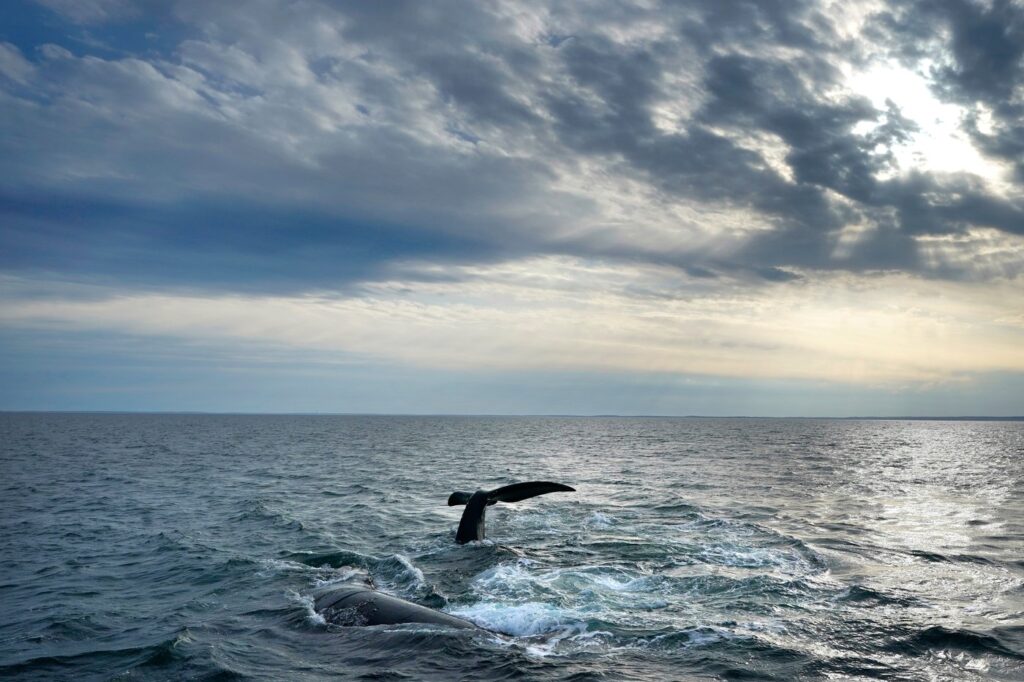
PORTLAND, Maine (AP) – In a concerning development for the critically endangered North Atlantic right whale population, which has dwindled to approximately 380 individuals, the Trump administration announced plans to delay new protective measures for the species by nearly a decade. This decision favors commercial fishing interests and raises significant concerns among conservationists about the future of the whales, which are at risk of entanglement in fishing ropes or collisions with vessels.
The North Atlantic right whales, weighing as much as a midsized bulldozer, have seen their numbers decline sharply in recent decades. Environmental advocates assert that minimizing human-induced fatalities and injuries is vital for the species' recovery. These whales typically give birth off the coasts of Florida and Georgia before migrating north to feed in the waters of New England and Canada. Protected marine areas have historically assisted them along their migratory routes; however, scientists have observed that the whales have deviated from these sanctuaries in recent years in search of food, a shift attributed to rising ocean temperatures.
In response to the situation, U.S. Representative Jared Golden, a Democrat from Maine, proposed legislation that would postpone the implementation of new federal protections for right whales until 2035. This delay would also provide time to develop regulations that are less onerous for the fishing industry. The White House expressed strong support for Golden's proposal, indicating that President Trump’s senior advisors would recommend his approval if the bill passes through Congress.
This legislative proposal is particularly significant given that the federal government has already announced a suspension on any new regulations concerning right whales until 2028. Representative Golden articulated that the existing and paused regulations could devastate Maine's iconic lobster industry, criticizing them as "based on flawed science and hypothetical scenarios rather than the reality on the water." He emphasized that a longer delay would afford the government the opportunity to "get the science right" regarding the risks faced by the whales.
The lobster and crab fishing sectors in the United States are economically vital, generating hundreds of millions of dollars at docks along the Northeast Coast. John Drouin, Vice President of the New England Fishermen’s Stewardship Association, expressed that the proposed legislation is essential for ensuring the long-term stability of American fisheries for future generations.
Conversely, environmental organizations such as In Defense of Animals, based in California, have vigorously opposed efforts to dilute protections for the right whales. They point to alarming statistics demonstrating a significant decline in the whale population, which fell by nearly 25% between 2010 and 2020, with recovery progress lingering at a slow pace in subsequent years.
Despite the grim scenario, there have been positive signs regarding the whale population's health. The New England Aquarium recently reported the successful birth of 23 mother-calf pairs during this year's calving season, marking the highest count since 2009. Yet, despite being federally protected for over 50 years, the North Atlantic right whale remains classified as critically endangered. The species once thrived off the East Coast but suffered drastic reductions during the era of commercial whaling.
As the situation continues to develop, the tension between conservation efforts and commercial fishing interests raises complex questions about the future of one of the world's most endangered marine species.








