

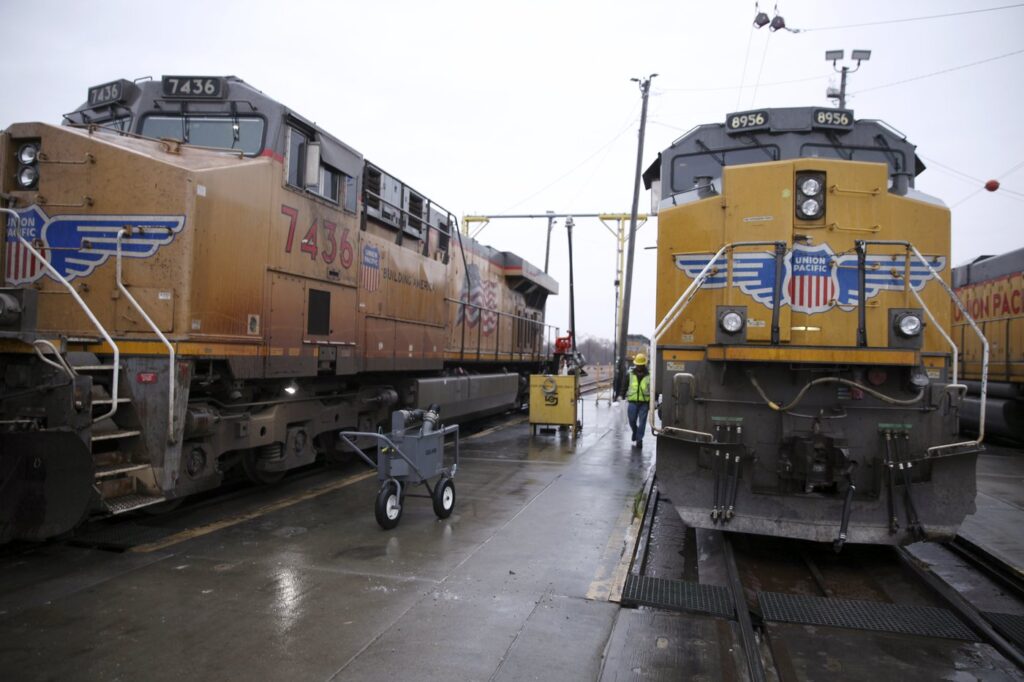
MONTREAL A proposed merger between Union Pacific Corp. and Norfolk Southern Corp. is stirring debates about its potential impact on competition and consumer costs across North America. Union Pacific, the second-largest railroad operator in the United States, announced in July its intention to acquire Norfolk Southern, the third-largest railroad, in an $85-billion deal. This merger would result in the creation of the first transcontinental railway in the U.S., sparking concerns that it may lead to further consolidation within the rail industry.
In the aftermath of the announcement, industry stakeholders have expressed fears about the dominance this merger could create. Keith Creel, CEO of Canadian Pacific Kansas City Ltd. (CPKC), has been a prominent critic, arguing that the merger could significantly undermine competition in the rail freight market. He cautioned that the combined entity would control approximately 40 percent of American freight traffic, posing risks to customers and placing excessive market power into the hands of one railway operator. Creel highlighted that the merger would create a behemoth that is seven times larger than CPKC, which is currently the smallest of the six Class One freight railroads in North America.
Tracy Robinson, CEO of Canadian National Railway Co. (CN), has taken a more tempered approach, noting that while the potential impact of the merger on CN would be diminished compared to CPKC, it would still exist. The proposed merger would combine Union Pacific’s extensive rail network in the western U.S. with Norfolk Southern’s operations in the east, creating a unified system covering over 80,000 kilometers of track across 43 states and facilitating better connections to major ports.
Proponents of the merger argue that it aims to enhance efficiency, suggesting that the merger could streamline operations and reduce transit times by as much as 24 to 48 hours. They contend that it might allow for a shift away from reliance on trucks for freight transportation and could encourage rival railways to lower their rates in response to increased competition. Jim Vena, CEO of Union Pacific, asserted that a combined railway would compel competitors to improve their services or reduce prices to remain viable.
Opposition to the merger is also significant. Major industry stakeholders representing energy, chemicals, agriculture, and construction — including companies like Chevron and ExxonMobil — have voiced their disapproval. Transport unions, representing a majority of unionized workers at both Union Pacific and Norfolk Southern, have also expressed concerns. John Corey, President of the Freight Management Association of Canada, indicated that such a merger would likely lead to increased costs for existing customers, despite claims of potential cost savings.
Amidst these discussions, there is speculation that the merger could crystalize further acquisitions within the industry. Analysts suggest that smaller players like CSX may become targets for larger companies, leading to a wave of consolidation that could reshape the freight transport landscape. Analysts also note vulnerabilities for rival companies, particularly in auto shipments, as they compete for valuable transport routes.
On January 16, 2026, the U.S. rail regulatory body rejected the merger application from Union Pacific and Norfolk Southern, deeming it incomplete. Union Pacific intends to resubmit its application by April 30, with a decision from the Surface Transportation Board expected next year. The regulatory landscape remains complex, with some speculation that the merger might receive favorable treatment under a pro-business administration. However, transport analyst Anthony Hatch emphasized the need for regulatory scrutiny given the significant opposition from various industry constituencies.
The heightened bar for merger approvals stems from historical experiences following prior consolidation waves, which resulted in significant disruptions to service. As a result, companies now need to demonstrate that their mergers would actively enhance competition and serve the public interest. The adverse reactions from both the chemical and agribusiness sectors, alongside multiple Republican state attorneys general calling for antitrust review, may complicate the approval process for the merger.
This development regarding the proposed merger between Union Pacific and Norfolk Southern highlights ongoing tensions within the freight rail industry as stakeholders assess the balance between growth and competition in the market.








