

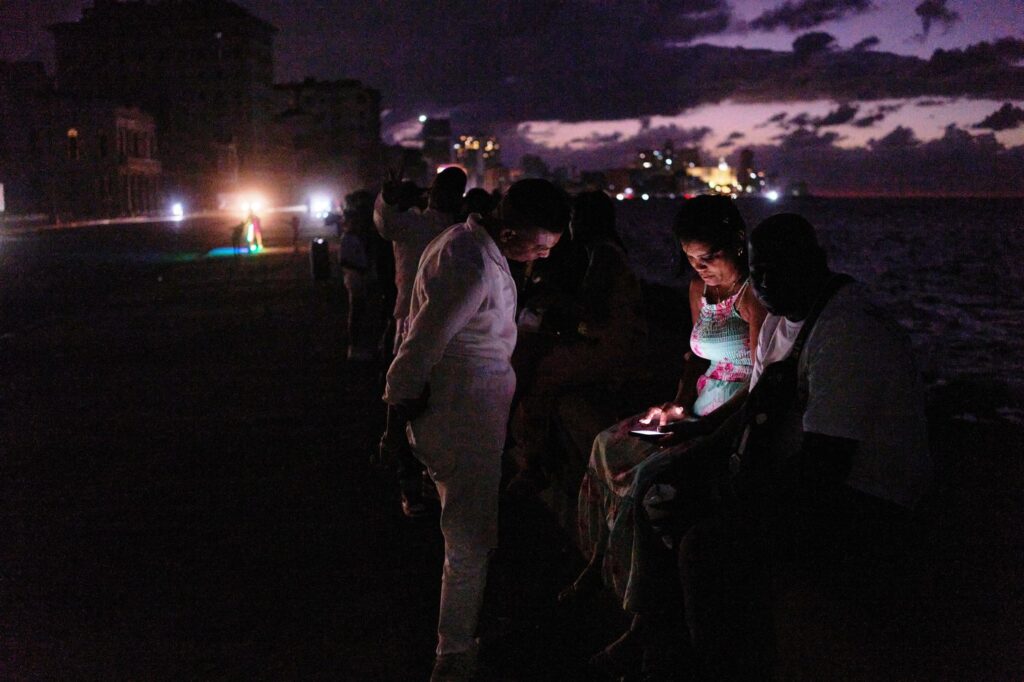
HAVANA (AP) — On Sunday, Cuba initiated the restoration of its energy system, a day after experiencing a nationwide blackout that left millions in the dark for the third time this month. The substantial failure of the electrical grid has exacerbated an ongoing energy crisis on the island.
Early reports indicated that around 72,000 customers in Havana, including five hospitals, regained access to electricity. This number represents only a small fraction of the city's total population, which is approximately 2 million. Locally established power microsystems have been deployed in critical areas across the capital and other provinces, such as western Matanzas and eastern Holguin, to stabilize the situation. Many residents reported power returning in the early morning hours.
Cuba is currently grappling with an unprecedented energy crisis, largely attributed to an aging electrical grid that has significantly deteriorated over the years. The Cuban government also blames the extensive outages on a U.S. energy blockade, particularly following President Donald Trump's warnings of potential tariffs on any country that sells or supplies oil to Cuba. Trump's administration has called for the release of political prisoners and greater political and economic openness before lifting sanctions. Additionally, Trump's rhetoric has suggested a possible “friendly takeover” of Cuba.
Moreover, Cuba’s struggle for stable oil supplies has been compounded by the U.S. removal of Venezuela’s former President Nicolás Maduro, which has led to halted petroleum shipments from the once reliable ally. Current estimates suggest that Cuba generates only about 40% of the fuel necessary to power its economy, and President Miguel Díaz-Canel has publicly stated that the island has not received oil from foreign sources for the past three months.
The daily power outages have severely impacted the daily lives of Cubans, disrupting work hours, hindering cooking, and damaging household appliances. Suleydi Crespo, a 33-year-old mother, recounted the challenges she faces, saying, "With the blackout and low voltage, my refrigerator broke— that was today. If there’s no electricity tomorrow, we won’t be able to get water.” Many residents expressed frustration and exhaustion with the constant, nationwide or partial outages.
The Cuban Electric Union, which reports to the Ministry of Energy and Mines, attributed the complete disconnection of the national energy system to an unexpected shutdown of a generation unit at the Nuevitas thermoelectric plant in Camaguey province. However, the specifics surrounding this failure were not disclosed.
The most recent blackout occurred on March 21, 2026, marking the second outage in the past week and the third within March alone. A vendor, Dagnay Alarcón, summarized the sentiment of many Cubans: "We have to get used to continuing our usual routine. What else can we do? We have to try to survive. Get used to events, with or without electricity.”
Both authorities and Díaz-Canel have recognized the critical nature of the current energy situation. Argelio Abad Vigo, Vice Minister of Energy and Mines, noted that the country has gone without vital supplies of diesel, fuel oil, gasoline, aviation fuel, and liquefied petroleum gas for three months—all essential for both economic stability and effective power generation. As a result, fuel sales for vehicles have been rationed, airlines have reduced flight frequencies, and many workplaces have shortened hours.
Trump has repeatedly suggested that Cuba's government is on the brink of collapse. Following a previous blackout, he was quoted saying he believed he would soon have the "honor of taking Cuba." Despite the political turmoil, many residents, like housewife María Regla Cardoso, expressed apathy toward politics, focusing instead on daily survival: "I leave everything in God’s hands. Whatever form the situation takes, we just have to face it.”








