

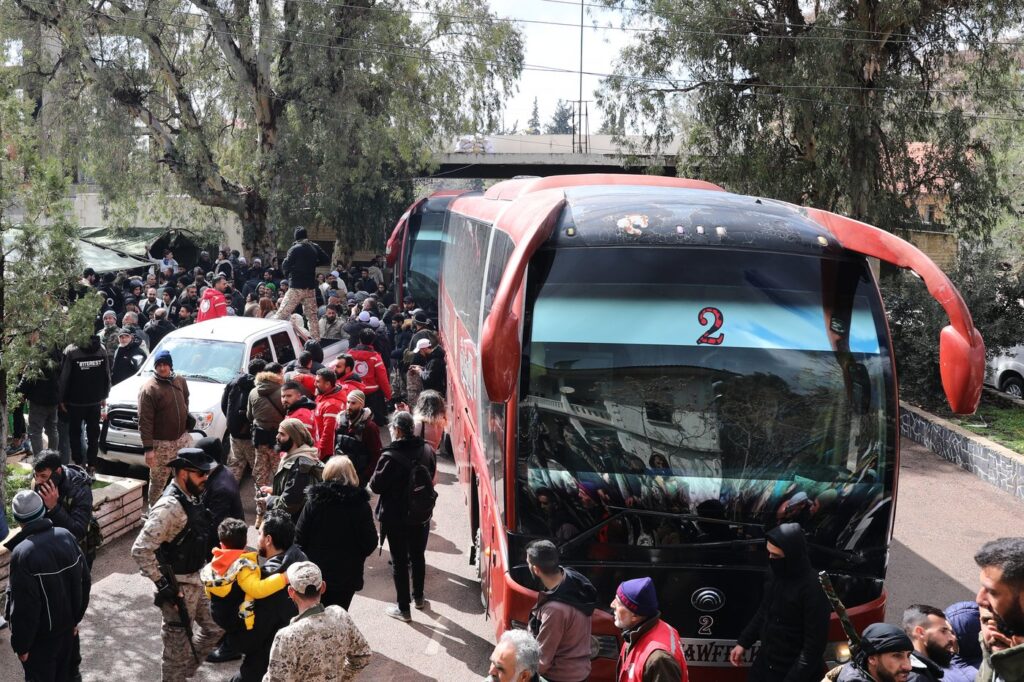
BEIRUT (AP) — A United Nations inquiry has reported that there is "no indication" that the Syrian government has conducted any investigations into violations committed by its forces during sectarian clashes last summer. These clashes resulted in at least 1,700 deaths, predominantly affecting the Druze religious minority.
In a critical report, the U.N. Independent International Commission of Inquiry on the Syrian Arab Republic urged the Syrian government to investigate the leadership within its security forces that either allowed or organized sectarian attacks against the Druze community. The violence primarily unfolded in Sweida, the heartland of Syria's Druze community, displacing approximately 200,000 individuals, including almost 200 women and children among the deceased.
The clashes began in mid-July when armed groups allied with Druze spiritual leader Sheikh Hikmat al-Hijri engaged with local Bedouin clans. Government forces intervened, reportedly siding with the Bedouins, which turned the incidents into targeted sectarian attacks—initially directed against the Druze and later against the Bedouin community. Reports of abductions further exacerbated tensions between the groups.
Syrian President Ahmad al-Sharaa has promised to investigate the events and hold accountable those responsible for the violence on all sides, including government forces. U.N. investigators conducted extensive interviews with over 400 individuals, including survivors, officials, and alleged perpetrators. They visited various affected areas, both under government control and those under the de facto authority of an Israeli-backed umbrella group comprising local armed Druze factions.
The report emphasized the need for Damascus to address whether "certain practices are tolerated" among security agency elements, referring to the violence that erupted. The commission urged the identification and removal of leadership members who permitted such acts to occur. The involvement of armed tribal fighters from other regions supporting government forces contributed to the chaos, with report findings indicating that authorities seemed "unwilling or unable" to confront them.
The extended violence in Sweida represented a setback for President al-Sharaa, who has been striving to establish his government’s full authority in a war-torn Syria and aiming to appeal to various minority groups. Despite some prisoner exchanges occurring, no substantial reconciliation process has materialized, with human rights organizations criticizing Damascus for lacking viable accountability measures for attacks on civilians.
The report detailed instances of "widespread looting and systematic burning" during the state-led military advance, alongside the killings and abductions of civilians. Tribal fighters reportedly targeted nearly every home in 35 villages within the province, many of which were mixed or predominantly Druze. The Druze community has suffered exceptionally severe sectarian violence, resulting in massive displacement that the report anticipates will continue for an extended period.
In the aftermath of the ceasefire, bodies were discovered months later in various locations, some severely burned, while others showed signs of mutilation. The report noted that nearly all Druze religious sites in the affected regions were looted, burned, and vandalized. At least three houses of worship were destroyed, with another site sustaining looting and vandalism.
Retaliatory attacks against Bedouin civilians, particularly observed in the western countryside of Sweida province, were documented. While many attacks were chronicled amid the ongoing hostilities, additional incidents appeared to be deliberately targeted at civilian areas, including reports of Bedouin civilians—such as children and the elderly—being shot as they attempted to flee. In one instance, the bodies of two men were left hanging at a village gate for an extended duration.
The scale of violence has severely strained hospitals in both Sweida and neighboring Daraa province, where hundreds of casualties were reported, overwhelming morgue capacities. Many bodies showed severe burn marks, and others were left outside, possibly scavenged by wild animals before they were discovered. Hospital staff and first responders were compelled to conduct burials before identifying the deceased, while meticulously safeguarding records for subsequent identification.








