

In the predominantly Christian village of Alma al-Shaab, located in southern Lebanon near the Israeli border, Rev. Maroun Ghafari's Holy Week took an unexpected turn this year. For many years, he had conducted Easter sermons in his community, but due to the recent escalation of hostilities between Israel and Hezbollah, he found himself preaching in a Beirut suburb instead. A cardboard cutout of his church symbolically represented Alma al-Shaab, now a battleground caught in the midst of the conflict.
Since the hostilities reignited last month, over 1,400 people have been killed in Lebanon, and more than 1 million have been displaced from their homes, primarily due to the clashes between Israeli forces and the Iran-backed Hezbollah militant group. This ongoing violence has displaced thousands of Christians, who are now far removed from their ancestral churches and the rich Christian heritage that has persisted in Lebanon through various historical upheavals.
Christians constitute approximately one-third of Lebanon's total population of about 5.5 million, representing the largest proportion of Christians in any Arab country. Despite the historical challenges, the community has endured. However, in light of the current aggression, many Christian villagers who chose not to evacuate have retreated to enclaves that have become increasingly surrounded by violence.
In the context of the ongoing conflict, villagers in Alma al-Shaab had previously faced evacuations but insisted on staying this time, despite the impending airstrikes. They sought refuge in their church, even as Israeli airstrikes intensified. The Rev. Maroun Ghafari reflected on the situation, emphasizing that while they desired to remain, the danger was ever-present, prompting residents to ultimately evacuate after the tragic killing of Sami Ghafari, Maroun's brother, by an Israeli drone strike.
The community of displaced Christians eventually found sanctuary in the northern suburbs of Beirut, facilitated by U.N. peacekeepers known as UNIFIL, who have monitored the region for decades. Rev. Maroun Ghafari expressed the collective exhaustion and despair of his community, observing that war breeds nothing but suffering.
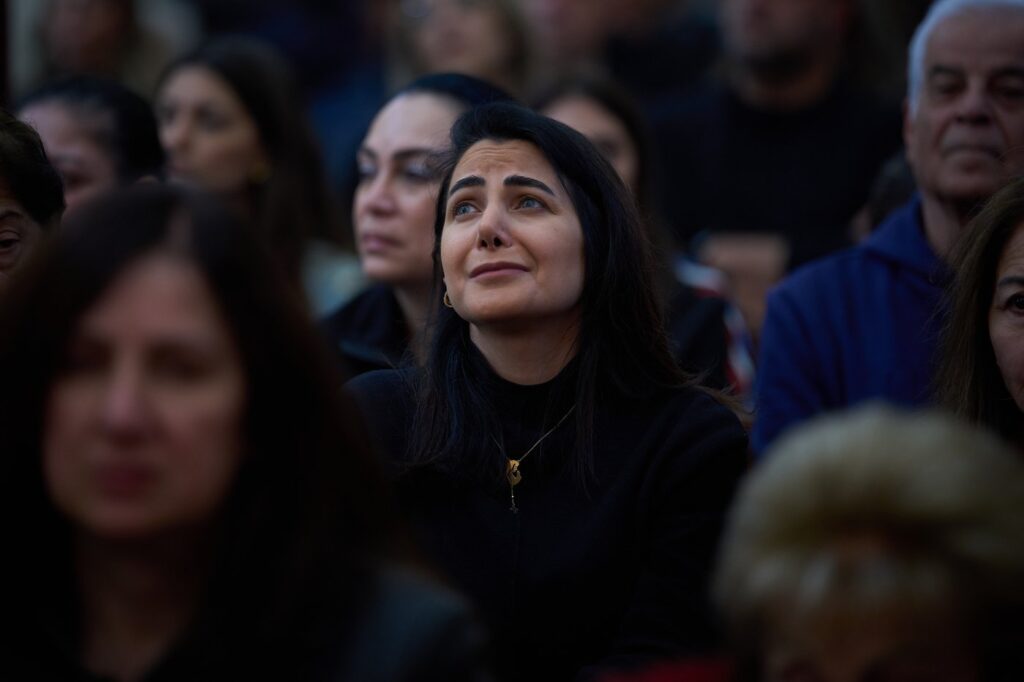
On Holy Saturday, a day steeped in tradition for many Lebanese Christians, those displaced could do little more than reminisce about their homes from a distance. Nabila Farah, who had recently fled Alma al-Shaab, poignantly described her longing for the familiar scents, traditions, and the harmonious sounds of church bells that resonated in her village, reflecting the deep emotional impact of their displacement.
Despite the challenges, many Christians in different regions of Lebanon, including Tyre, have chosen to remain. Priest Marius Khairallah noted that his congregation's presence is not an act of defiance but a commitment to stand by their fellow faithful. Though attendance has dwindled due to displacement, churches continue to hold services, demonstrating resilience amid adversity.
As the conflict escalated, fears among the remaining Christian population grew, especially as Lebanese forces withdrew from various areas, leaving them vulnerable to ongoing Israeli advancements. Rev. Dori Fayyad of St. Antony's Church addressed the congregation during Good Friday services, acknowledging the deep suffering brought on by the war and emphasizing that the churches symbolize both faith and shared hardship. His heartfelt messages resonated in the church, underscored by the collective grief of a community grappling with loss.








