

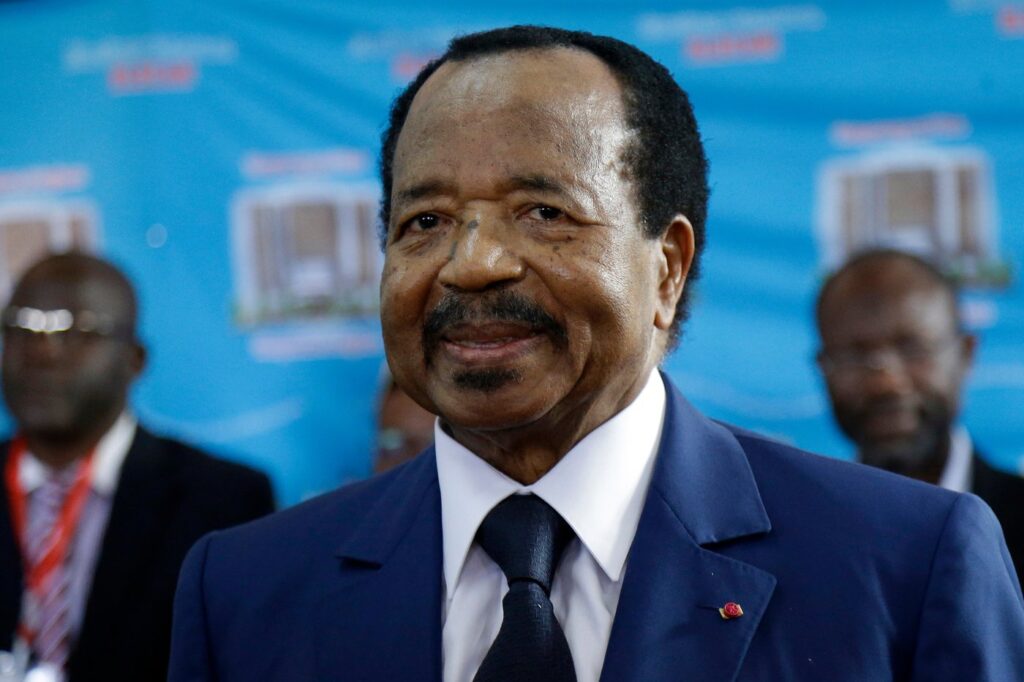
YAOUNDE, Cameroon (AP) – Cameroon’s parliament has overwhelmingly approved a constitutional amendment to reintroduce the position of vice president, a development that the opposition claims will consolidate President Paul Biya's hold on power. The approval occurred during a joint session of the National Assembly and Senate on Saturday, with 200 votes in favor, 18 against, and 4 abstentions. The main opposition party, the Social Democratic Front (SDF), boycotted the vote.
At 93, Biya is the world’s oldest leader and has been at the helm of the central African nation since 1982. His most recent election, which took place last year and marked his eighth term in office, was widely disputed and has been a point of contention within the country. The newly passed bill, which Biya is expected to sign into law, has drawn significant criticism, particularly regarding its implications for democratic governance in Cameroon.
The amendment grants President Biya absolute authority over the vice president's office, allowing him to appoint and dismiss the vice president at will. Furthermore, the vice president can only exercise powers that are expressly delegated by Biya. In the event of the president's death, resignation, or incapacitation, the vice president is designated to serve as the interim president for the remainder of the president's seven-year term.
Members of the ruling Cameroon People's Democratic Movement (CPDM) have characterized the legislation as essential for ensuring institutional stability. In contrast, critics argue that the amendment diminishes democratic principles, replacing electoral legitimacy with appointments made by the president. The SDF has expressed concerns that the amendment fails to provide democratic legitimacy, inclusiveness, and proper institutional balance. Fusi Namukong, an SDF member of parliament, stated that the law appears to pave the way for a form of monarchy, asserting that power at the highest state level should be earned through election rather than appointment.
The Cameroon Bar Association has echoed these sentiments, warning that the amendment erodes the democratic legitimacy of the presidential office and undermines the country’s constitution. The vice presidential role had been eliminated in 1972 following a constitutional referendum, making this reintroduction a significant shift in Cameroon’s political structure.
Biya's health has been a topic of increasing speculation, as he is known to spend a substantial amount of time in Europe, effectively delegating governance to key officials in his party and family members. Expectations for his re-election in 2025 have already sparked widespread protests, which tragically resulted in at least four deaths, highlighting the growing unrest among a predominantly young population in contrast to their aging leader.
The approval of this amendment and Biya's continued presidency underscore the complexities of governance in Cameroon, particularly concerning issues related to democracy and representation in a nation grappling with both internal and external pressures.








