

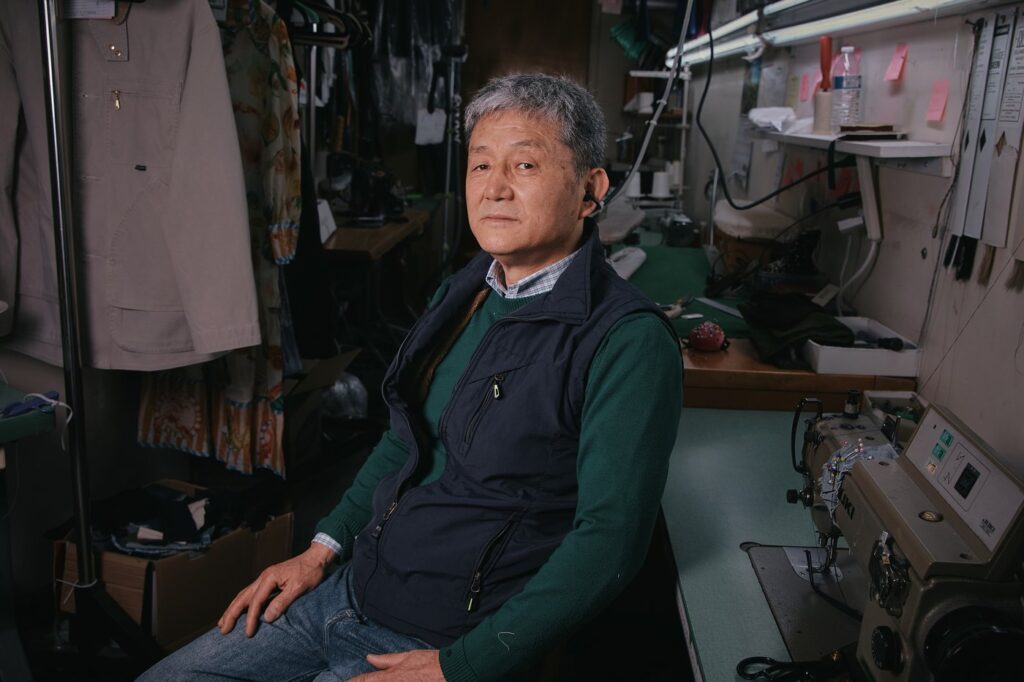
NEW YORK (AP) – Kil Bae, a tailor in Manhattan, is experiencing a resurgence of interest in bespoke alterations, contrasting the dominance of fast fashion. While working at his shop, 85 Custom Tailor, Bae encounters a customer who paid just $20 for a vintage Tommy Hilfiger jacket from a thrift store, but is prepared to pay $280 for alterations to achieve a custom fit. This willingness to spend significantly on tailoring reflects a shift in consumer attitudes towards clothing, emphasizing quality and personalization over mere affordability.
Bae, who began his tailoring career in South Korea at age 17 and is now 63, highlights that such alteration requests were uncommon a few years back. Now, shoppers are increasingly turning to tailors and seamstresses to adapt off-the-rack clothing to better fit their bodies or to extend the life of secondhand garments. The rise of weight-loss medications like Zepbound and Wegovy has also contributed to the demand for alterations like adjusted waistbands and tapered sleeves.
Recognizing the enduring relevance of tailoring, Bae notes the uniqueness of his art, stating, "This one cannot be AI’d," as artificial intelligence has not yet replicated the nuanced craftsmanship of a skilled tailor. However, the tailoring profession faces challenges, specifically a shortage of new entrants. With many seasoned professionals retiring, the U.S. Bureau of Labor Statistics estimates that there were fewer than 17,000 tailors and dressmakers in the nation as of two years ago, representing a 30% decline over the preceding decade.
The median age of sewers, dressmakers, and tailors is 54 years, significantly higher than the national average for employed individuals. Factors such as low wages—where the average annual salary for tailors was $44,050, compared to $68,000 for all workers—alongside the physically demanding nature of the tailor's craft, deter young people from pursuing this career. Most fashion training programs focus on mass production rather than individual craftsmanship, further isolating the profession.
Despite these challenges, the demand for skilled tailors remains. Data from Indeed shows that job postings for tailors have been fairly stable. Bae's sentiments resonate with many in the industry, as they recognize the intricate craftsmanship that tailors contribute, distinguishing them from mass-produced garments.
Historically, immigrants have played a critical role in America's garment industry, with about 40% of tailors, dressmakers, and sewers being foreign-born. This demographic diversity has been essential in sustaining the industry, and initiatives are underway to cultivate a new generation of skilled tailors. For instance, Nordstrom collaborated with the Fashion Institute of Technology to develop a nine-week program focused on advanced sewing and alteration techniques, responding to the industry's labor shortage.
The Fashion Institute received 200 applications for its inaugural course, which only accepted 15 students, demonstrating a keen interest in mastering tailoring skills. As retailers increasingly recognize the market demand for tailored services, companies like Brooks Brothers have expanded their bespoke offerings, catering to both men's and women's tailoring needs.
Back at 85 Custom Tailor, Bae engages attentively with each customer, contemplating the necessity of alterations in a world where fast fashion is prevalent. Jonathan Reiss, the customer requesting changes to his Tommy Hilfiger jacket, expresses his desire to invest in quality clothing that will endure beyond cheap, easily discarded items. Bae's attempts to persuade his own son to embrace a career in tailoring illustrate a broader trend of young individuals gravitating towards technology and less traditional fields, leaving the future of tailoring uncertain.
Drawing on his extensive experience from South Korea to high-end fashion labels like Ralph Lauren and Donna Karan, Bae continues to hone his craft in hopes of passing it down, though he remains aware of the industry's obstacles. At this stage in his career, Bae is committed to mastering his trade and maintaining a connection with the artistry of tailoring.








