

PITTSBURGH (AP) — The experience of throwing a fastball for the first time and making a parent flinch can mark a significant moment in a child's life. For the author, this milestone occurred in 1978 when he was just 10 years old, illustrating a moment of growth and skill development. His father, feeling the effects of time, jokingly remarked, “I don’t know how much longer I can catch these,” even though he later denied saying it until his son was at least 14 years old.
The allure of baseball extends beyond mere statistics or professional records. It is a reflection of a cultural connection shared by millions of children who have held an American baseball since its popularization in the latter half of the 19th century. The tactile experience of feeling the nubby stitches of the ball while gripping its smooth white leather symbolizes the excitement and hope that comes with the game. Children have swung tiny bats—initially wooden, then aluminum, and now graphite—connecting with specially designed “T-balls” and experiencing the unique thrill of hitting, which invites a rush of kinetic energy.
At the heart of baseball lies the baseball itself, serving as the focal point of the game. While bats and gloves play vital roles, the ball remains the center of attention. The narrative of baseball features moments where the ball is spun, bobbed, and weaved across the field. Its journey can be both perilous and exhilarating, as seen in tragic historical moments like the death of Ray Chapman in 1920 from a pitched ball. Nowadays, dozens of baseballs are used within a single big-league game, emphasizing the object’s transient yet pivotal role during gameplay.
A vivid portrayal occurs when a fresh baseball emerges from an umpire’s waist pouch, carefully held by a player who treats it with reverence for just a few moments before handing it over to an opponent ready to swing aggressively. This delicate relationship between players and the ball highlights the shared respect within the game, with the ball often perceived as a central character in baseball's narrative.
In a personal anecdote, the author reflects on a chance meeting in 1979 with an elderly man overseas who reminisced about interviewing baseball legend Ted Williams. Recognizing the author's homesickness for baseball, he poignantly remarked, “As long as you have a baseball, you’re home.” This sentiment resonates deeply with the author, prompting him to keep a baseball close by wherever he travels—a representation of home and the foundational American pastime.
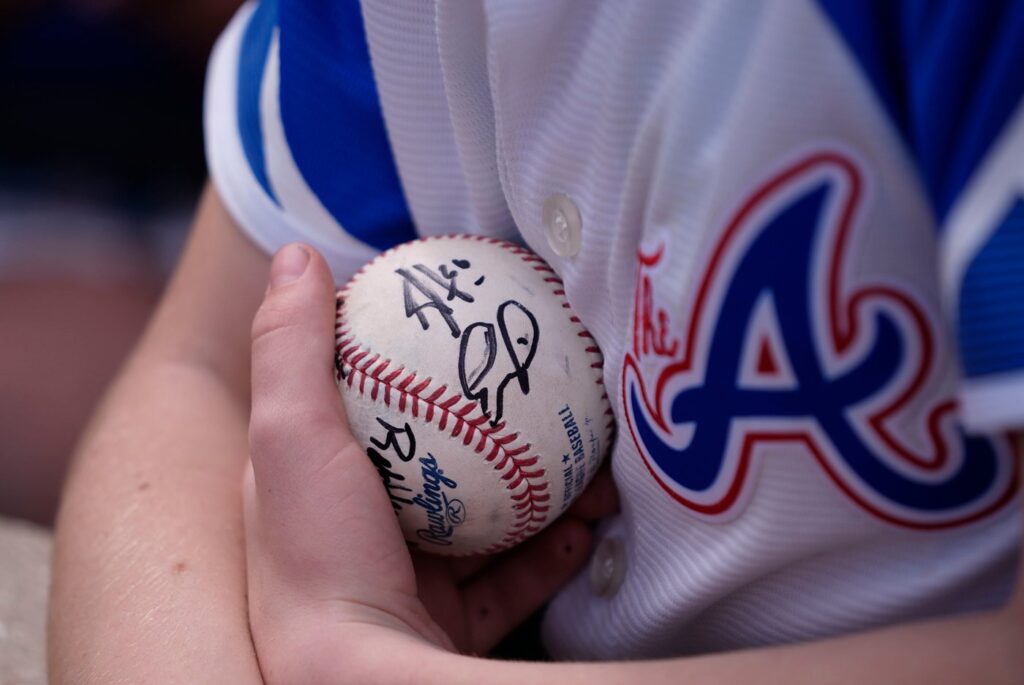
The act of carrying a baseball embodies much more than just a sporting gesture; it signifies a profound connection to Americana. For the author, the baseball is more than just an object; it encapsulates the spirit of the game, serving as a reminder of childhood memories and the anticipation for future games of catch.
Through these reflections, it is evident that baseball—and the ball that facilitates the game—plays a crucial role in American culture, symbolizing not just a sport but a cherished aspect of identity and nostalgia.








