

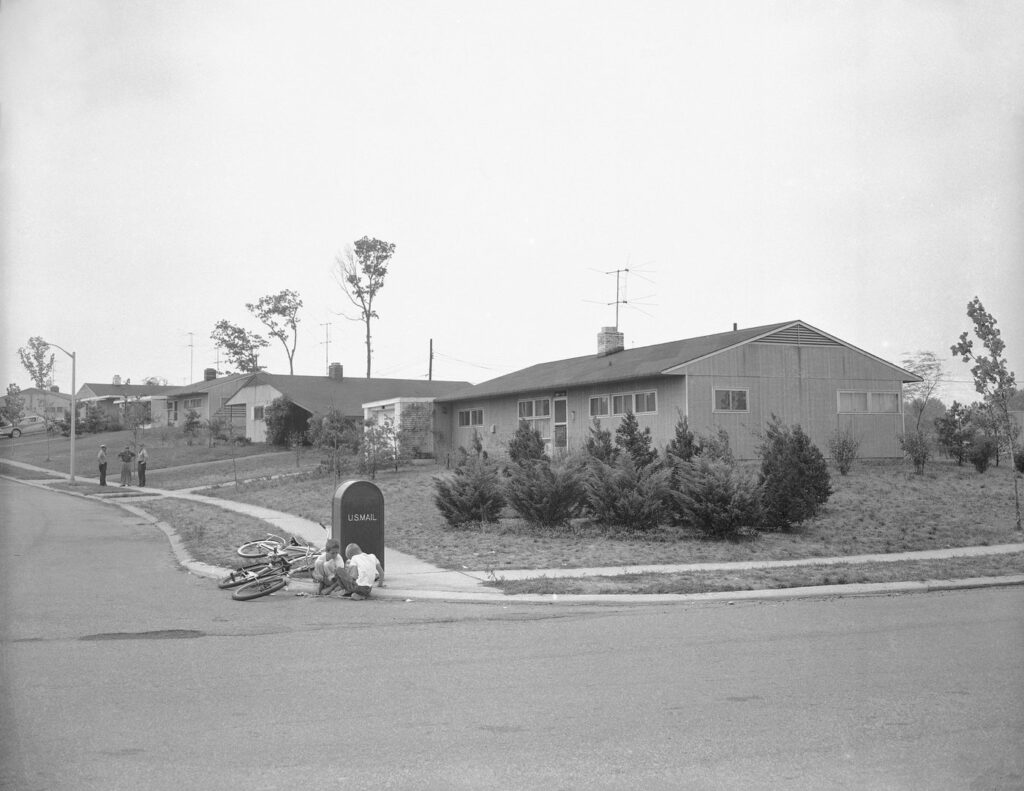
The development of Levittown marked a significant moment in American suburban history, emerging in the years following World War II as a response to a severe housing shortage. Levittown, located approximately 40 miles outside of New York City on Long Island, was the first fully planned American suburb and would eventually comprise over 17,000 houses. While these homes were compact and modest—consisting mainly of two bedrooms, a living room, and a kitchen—they offered returning veterans and their families a much-needed opportunity for homeownership.
William Levitt, the mastermind behind this suburban expansion, was not the first to utilize mass-production techniques for real estate, but his approach was unprecedented in scale. According to Ed Berenson, a history professor at New York University and author of "Perfect Communities: Levitt, Levittown and the Dream of White Suburbia," Levitt's process allowed for affordability that was rare at the time. Initially planning to build 2,000 homes, Levitt was taken aback when demand surged, as three times that amount of people showed interest, largely motivated by the aspirations of returning war veterans. The Federal Housing Authority also played a crucial role by guaranteeing mortgages, making the homes financially accessible to a wider audience.
However, the Levittowns of the era had a significant flaw that has led to enduring consequences in American society. The Federal backing of mortgages predominantly targeted white buyers, effectively excluding Black families from these burgeoning communities. William Levitt himself maintained a policy of refusing to sell homes to Black families and implemented restrictive covenants that prohibited the resale of homes to Black buyers. This exclusionary practice established a legacy of racial segregation and inequality within these planned suburbs.
Ed Berenson points out the lasting impact of Levitt's decision to create largely white communities, stating that it has fortified a structure of racial inequality that persists today. Although progress has been made since that time, the ramifications of these suburban developments continue to feed into broader patterns of inequality in America, particularly along racial lines. The restrictions in Levittown echo through subsequent housing policies and community developments, shaping the landscape of American homeownership in a way that still influences future generations.
Levittown serves as a poignant case study within the context of post-war American society, illustrating how housing development can intertwine with issues of race and equality. The initial promise of accessible, affordable homes for the working and middle class was undermined by systematic discrimination, highlighting the complexities of the American dream and its accessibility for all demographics. The discussion surrounding Levittown remains relevant as it reflects ongoing challenges in addressing racial disparities in housing and wealth accumulation.








