

In a recent development, Iran, the United States, and Israel announced a two-week ceasefire amid ongoing tensions and conflict in the region. Tehran stated that it would begin negotiations with the U.S. in Islamabad starting Friday. This announcement signals a potential shift towards de-escalation, although the details surrounding the ceasefire are still being clarified.
Initially, former President Donald Trump described a proposed ten-point plan by Iran as a "workable" solution. However, he later reversed his stance, labeling the proposal as fraudulent without providing specific details. Just hours before the ceasefire was officially declared, Trump intensified his rhetoric by threatening that, should a deal not be reached that involved reopening the crucial Strait of Hormuz, "a whole civilization will die tonight," implying catastrophic consequences for Iran.
Israeli Prime Minister Benjamin Netanyahu expressed support for Trump's decision to pause military actions against Iran for two weeks; however, he emphasized that the ceasefire does not extend to the ongoing conflict with Hezbollah in Lebanon, where over 1,500 individuals have lost their lives. This reflects the complex and multi-faceted nature of the conflicts in the region, as various actors continue to be involved.
Following the ceasefire announcement, Trump took to social media to declare it a “big day for World Peace.” He suggested that the U.S. would assist in managing the traffic buildup in the Strait of Hormuz, highlighting the strategic importance of this narrow shipping channel through which approximately 20% of the world’s oil and natural gas passes. Trump expected that positive developments would emerge from the ceasefire, including the potential for Iran to begin the reconstruction process and the provision of supplies to ensure stability.
Sirens were activated in Bahrain shortly after the ceasefire was announced, indicating ongoing concerns about security in the region. The Bahraini Interior Ministry issued a warning, underscoring the tense atmosphere. Despite the ceasefire, Iran reportedly launched missile strikes on Gulf Arab states and Israel, indicating that hostilities may not cease entirely in the interim period.
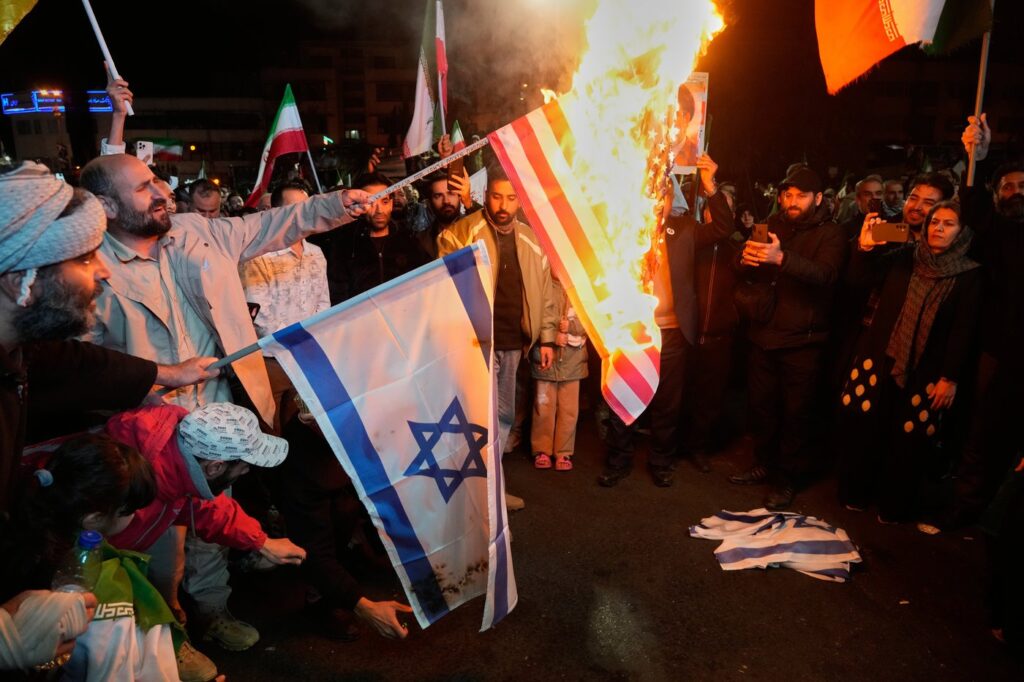
The announcement of the ceasefire has sparked mixed reactions across the region, reflected in protests and demonstrations. In Tehran, pro-government demonstrators have taken to the streets, burning American and Israeli flags in response to the ceasefire agreement. The public's reaction demonstrates the lingering animosities and deep-seated sentiments towards foreign involvement in Iranian affairs.
The current situation remains fluid as the ceasefire's terms are still being negotiated. While there are hopes for increased diplomatic engagement and stabilization in the region, the underlying tensions, especially surrounding Hezbollah's actions in Lebanon and Iran’s missile capabilities, complicate the dynamics. The international community will be watching closely as the next steps unfold in this deeply entrenched conflict.








