

TEHRAN, Iran (AP) — A tentative, two-week ceasefire was established on Wednesday between Iran, the United States, and Israel amid an escalating war that has destabilized the Middle East and disrupted global energy markets. This ceasefire was announced as U.S. President Donald Trump tempered his earlier threats to obliterate Iran's "civilization."
However, complications arose as Iran put forth a plan to manage the Strait of Hormuz, demanding control over shipping fees and continuing uranium enrichment, which has been a pivotal issue in the conflict. Initially, Trump described Iran's proposals as "workable," but later dismissed them as fraudulent without providing further details. He has emphasized that a complete halt to Iran's nuclear program is essential for any resolution to the ongoing hostilities, which began with Israel's involvement on February 28, 2026.
While Israel supported the U.S.-backed ceasefire, Prime Minister Benjamin Netanyahu indicated that it does not extend to confrontations with Hezbollah in Lebanon, which reportedly continued despite the ceasefire declaration. Contrastingly, Pakistan, acting as a mediator, announced plans for further peace talks in Islamabad starting Friday and suggested that the ceasefire was already in effect, even as Iran launched further retaliatory actions against Gulf Arab nations and Israel.
The United Nations Secretary-General Antonio Guterres called for all involved parties to adhere to the ceasefire terms to foster a comprehensive and lasting peace. Iranian Foreign Minister Abbas Araghchi stated that transit through the critical Strait of Hormuz would be regulated under Iranian military oversight. Yet, it remains ambiguous how much freedom this management will allow, particularly since the plan involves both Iran and Oman collecting fees from ships passing through the strait, with Iran intending to use the revenue for reconstruction efforts.
Amidst the negotiations, Trump assured that U.S. forces would maintain a presence in the area, describing their role as simply observing the situation. Iran's prerequisites for ending hostilities include the withdrawal of U.S. combat forces, lifting of sanctions, and the release of its frozen assets. Despite the fragile cessation of attacks, Trump has a history of extending deadlines and shifting positions on the conflict.
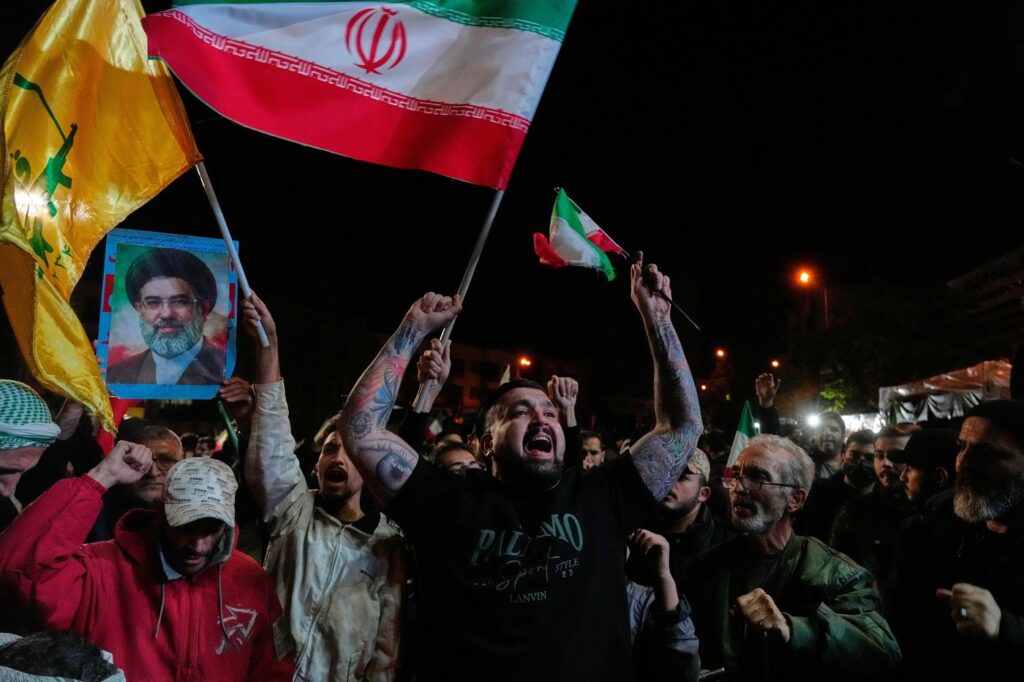
Domestically, significant unrest was noted in Tehran, where pro-government demonstrators voiced their sentiments against the U.S. and Israel following the ceasefire announcement, indicative of the continued animosity from hard-liners who were prepared for further confrontation.
Trump’s previous threats implied catastrophic consequences if an agreement was not reached, causing international concern regarding potential violations of civilian safety under international law. Iran’s U.N. envoy condemned the rhetoric as inciting the potential for war crimes, pledging retaliation if such threats were acted upon.
Throughout the conflict, U.S. and Israeli forces have conducted multiple strikes targeting Iranian military capabilities and assets, while Iran has retaliated against both Israel and Arab states, contributing to regional instability and considerable economic disruptions. Despite Iran's military limitations compared to that of the U.S. and Israel, its control over the Strait of Hormuz has significant repercussions for the global economy.
As the ceasefire was proclaimed, missile alerts rang out across the United Arab Emirates, Israel, Saudi Arabia, Bahrain, and Kuwait, signaling continued tensions. Iranian fire struck a gas processing facility in Abu Dhabi, while Israel persisted in its military operations against Iranian targets, illustrating that the ceasefire remains tenuous.
Casualty figures have been stark, with over 1,900 individuals reported dead in Iran, 1,500 in Lebanon, and various casualties elsewhere, including 23 fatalities in Israel and 13 U.S. service members killed. The war has resulted in widespread devastation and displacement across the involved regions, highlighting the urgent need for a stable resolution.
___
Bassem Mroue, Jon Gambrell And Samy Magdy, The Associated Press








