

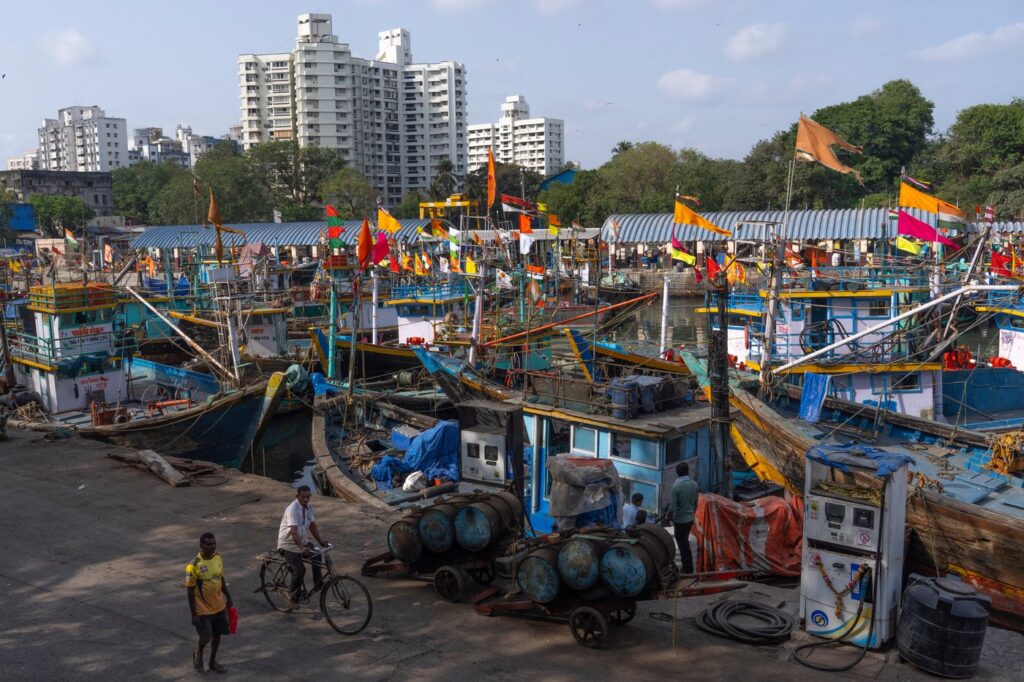
MUMBAI, India (AP) – Since its establishment in 1875, Sassoon Dock in Mumbai has served multiple purposes, including being a significant trade link with the Persian Gulf, a center for textiles, spices, and opium, and more recently, a vital hub for the city’s fish trade. However, the dock currently reflects a somber atmosphere, markedly quieter than its usually bustling environment.
On a typical day, Sassoon Dock would be filled with the sounds of diesel engines, shouting fishmongers, and the hustle and bustle of traders unloading fishing nets. Presently, this vibrant chaos has been replaced by an air of concern. Fishing boats lie idle side by side under the glaring sun, adorned with colorful flags fluttering against Mumbai’s towering skyline.
Shekhar Chogle, a local fishing boat owner, represents the plight of many fishermen affected by recent events, especially the ongoing conflict in the region. With his sun-tanned skin a testament to years spent at sea, Chogle has been unable to take his vessel out, resulting in a significant drop in income. The interplay of high labor costs and soaring diesel prices has rendered fishing an almost impossible venture for many. The price of bulk diesel has surged above $1.20 per liter (approximately $4.54 per gallon), imposing drastic challenges on fishing communities that rely on affordable fuel, ice, and necessary gear.
At the harbor, the diesel pump stands neglected, adorned with a dry marigold garland. A worker returns empty-handed from a gas station, having failed to procure the much-needed diesel. Across India and other parts of Asia, fishermen face a dilemma: remain ashore or venture out at a loss, endangering both their livelihoods and the very fabric of their coastal communities.
Despite the recent agreement for a two-week ceasefire among Iran, the U.S., and Israel, analysts caution that normalizing fuel supplies is a protracted process. Concerns rise as Chogle expresses, “Our income has dropped significantly since we have not been able to take our boat out to sea.” The urgency of the situation looms large for him and his fellow fishers.
Despite the challenges, a few boats brave the waters, but their hauls are considerably smaller than usual. The morning market continues with some activity; however, the limited fish supply has forced women in vibrant saris to haggle over increasingly precious goods. One mother, balancing her child on her hip, scrutinizes each fish carefully, weighing the cost against her family’s daily needs.
Amidst rising diesel prices, Chogle’s fears about the sustainability of their livelihoods grow. “If diesel prices don’t come down soon, I don’t know how we’ll survive,” he articulates, underscoring the critical nature of the situation faced by local fishers.
This narrative from Sassoon Dock highlights the broader implications of economic pressures on local communities that once thrived on a robust fishing industry. The vibrancy of the past is overshadowed by the significant struggles of today, as fishermen navigate the daunting challenges presented by fluctuating fuel prices and the impact of geopolitical issues on their livelihoods.








