

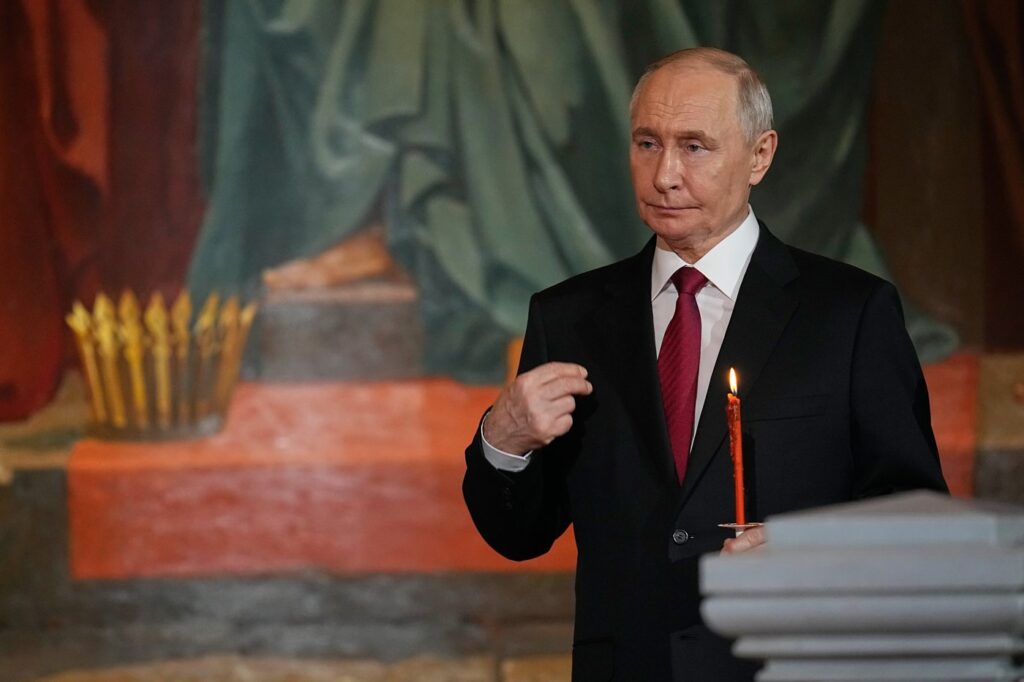
KYIV, Ukraine (AP) – Tensions between Russia and Ukraine escalated over the weekend as both nations accused each other of violating a Kremlin-declared ceasefire intended to coincide with the Orthodox Easter celebrations. The ceasefire, announced by Russian President Vladimir Putin, was set to last for 32 hours, commencing at 4 p.m. on Saturday, April 11, 2026, and ending at the close of Sunday.
Ukrainian President Volodymyr Zelenskyy expressed a commitment to honor the ceasefire while simultaneously cautioning that Ukraine would respond swiftly to any breaches. However, by Sunday morning, the General Staff of Ukraine's Armed Forces reported an alarming number of ceasefire violations, totaling 2,299 incidents by 7 a.m. local time. These violations included assaults, shelling, and the launch of small drones, yet notably did not account for the use of long-range drones, missiles, or guided bombs.
Furthermore, a Ukrainian military officer highlighted that Russian forces had continued to assault Ukrainian positions even after the ceasefire was declared, complicating the situation further. On the other hand, Russia's Defense Ministry claimed that Ukrainian forces recorded 1,971 violations, asserting that drone strikes targeted Russia’s Kursk and Belgorod regions, resulting in civilian injuries.
This latest episode of hostilities follows previous attempts to secure ceasefires, which have historically seen minimal success as each side tends to blame the other for breaches in the accord. Notably, Putin had unilaterally declared a 30-hour ceasefire during the previous Easter, yet both Russia and Ukraine accused one another of disregarding the terms.
The ongoing conflict underscores the challenges of establishing effective truces in a war that continues to claim lives and devastate communities on both sides. The inability to maintain a ceasefire during a religious celebration such as Easter reflects the deep-seated animosity and unresolved issues that persist between Russia and Ukraine, further complicating the road to peace.
As the situation develops, the international community watches closely, urging both parties to find common ground and halt hostilities in light of humanitarian considerations. However, with each side firm in its claims against the other, the prospect for a lasting resolution appears increasingly distant.








