

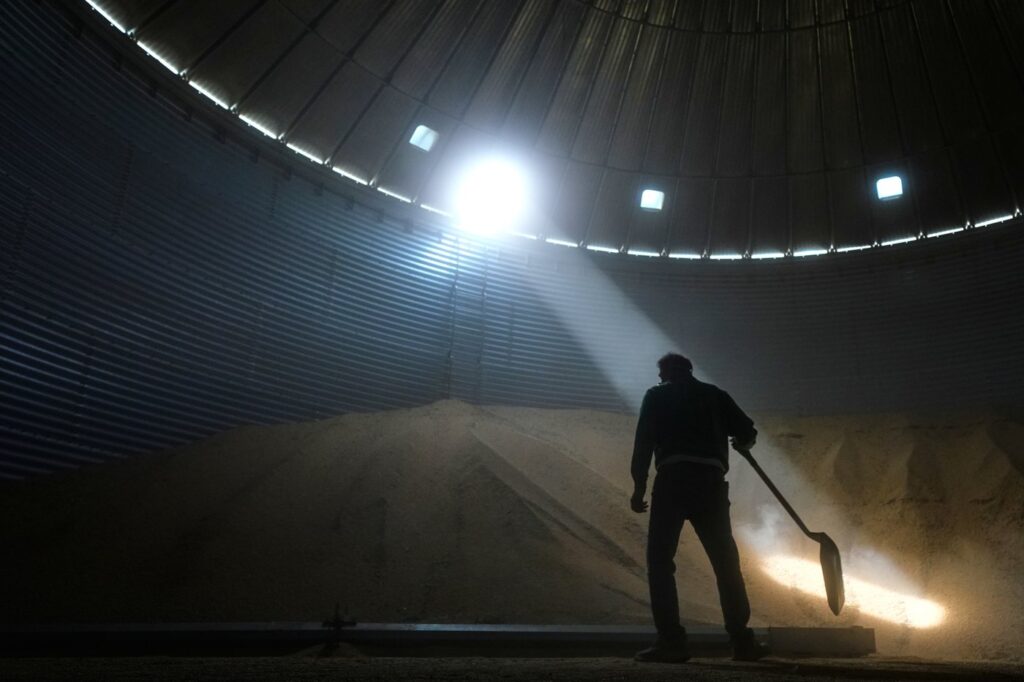
WAHOO, NE (AP) – As spring planting season begins, Doug Bartek, a 60-year-old fifth-generation farmer from Wahoo, Nebraska, faces mounting stress due to the numerous challenges affecting his 2,000-acre farm. High costs for fuel, equipment, and fertilizer have been exacerbated by the ongoing Iran war, tariffs imposed by the Trump administration, perceived price gouging by suppliers, and persistently low soybean prices. Bartek, who chairs the Nebraska Soybean Association, expressed concerns about the dramatic markup in input costs.
“Our biggest struggles are our inputs, be it fertilizer, seed, chemical, parts,” Bartek stated. “There has been so much drastic markup in all of these. And I just kind of feel like the farmer’s kind of painted in the corner.” His worries resonate with many soybean producers across the Midwest, who have endured rising costs while soybean prices remain stagnant. The trade war with China and the turmoil in Iran furthered complications, leading to inflated fertilizer prices and disruptions in supply chains.
The significance of soybeans, a vital crop for livestock feed, food, and biofuels, rose substantially since the 1990s, primarily driven by international demand, especially from China. However, U.S. soybean farmers have faced difficulties even prior to recent conflicts. Persistent low soybean prices have plagued the market, with production soaring globally—Brazil now leading as the world's largest soybean producer, prompting fears for American farmers. Chad Hart, an agricultural economist at Iowa State University, noted, “If we look at global soybean production over the past several years, it continues to set record, after record, after record.”
On the expenses front, farmers deal with ever-increasing costs associated with farming, including seed and pesticide. The U.S. Department of Agriculture indicates that operational costs have been elevated since 2020 and are predicted to surge again in 2026. Furthermore, the cost of land, particularly for those who rent, such as Bartek, poses an additional strain as landowners increase rental fees, causing financial hardships.
“There’s a lot of what I call absentee landowners that have absolutely no idea what goes on on the farm,” Bartek lamented. Experts indicate that many farmers are grappling with negative margins due to the combination of high costs, including increased land rents, and low commodity prices. This predicament has led to a cash liquidity crunch for many farmers who are trying to navigate tough financial waters.
The pressures on farmers extend beyond operational costs. The tariffs imposed about a year ago by the Trump administration during a trade fight with China have considerably impacted the sales of U.S. soybeans. China, the leading customer for American soybeans, retaliated by instituting their own tariffs, severely disrupting exports and contributing to the decline in prices. Mike Cerny, a farmer from Wisconsin, recalled the collapse in soybean prices during this period, noting that some growers had no choice but to sell quickly to meet financial obligations.
While a deal reached at the end of 2025 aimed to revive U.S.-China soybean trade, experts argue that the damage was already inflicted. American farmers are still feeling the aftereffects, with soybean exports lagging significantly behind expected levels. Joseph Glauber, a former chief economist, indicated that Brazil and Argentina have gained market share as a result of the trade fallout, diminishing U.S. dominance in the global market.
The ongoing Iran war has also played a critical role in inflating fuel and fertilizer costs. Following U.S. military actions, shipping through the Strait of Hormuz was severely disrupted, leading to skyrocketing oil prices and fertilizer shortages. Farmers who have not been able to purchase fertilizers in advance now face exorbitant prices, while those who stocked up earlier may have gained a temporary respite. However, the long-term damage from supply chain disruptions continues to be felt across the agricultural sector.
Recent statistics indicate a rise in farm bankruptcies; while still relatively low, they have seen a continuous increase as reported by the American Farm Bureau Federation. Surveys suggest that nearly half of farmers feel financially worse off than the previous year. Analysts warn that if the rising costs continue to outpace crop prices, more farms could face bankruptcy, exacerbating the ongoing agricultural crisis.
Despite the bleak outlook, Bartek remains hopeful for the upcoming planting season, though he shares concerns about the pressures weighing on the farming community, including the mention of farmer suicides and increased financial hardships. He reflects on the risks involved in the profession, comparing farmers to gamblers who invest large sums in hopes of a fruitful return. With worries about the financial future of his son, who has recently entered the farming industry, Bartek faces uncertainty in his choice to support the next generation in this challenging profession.








