

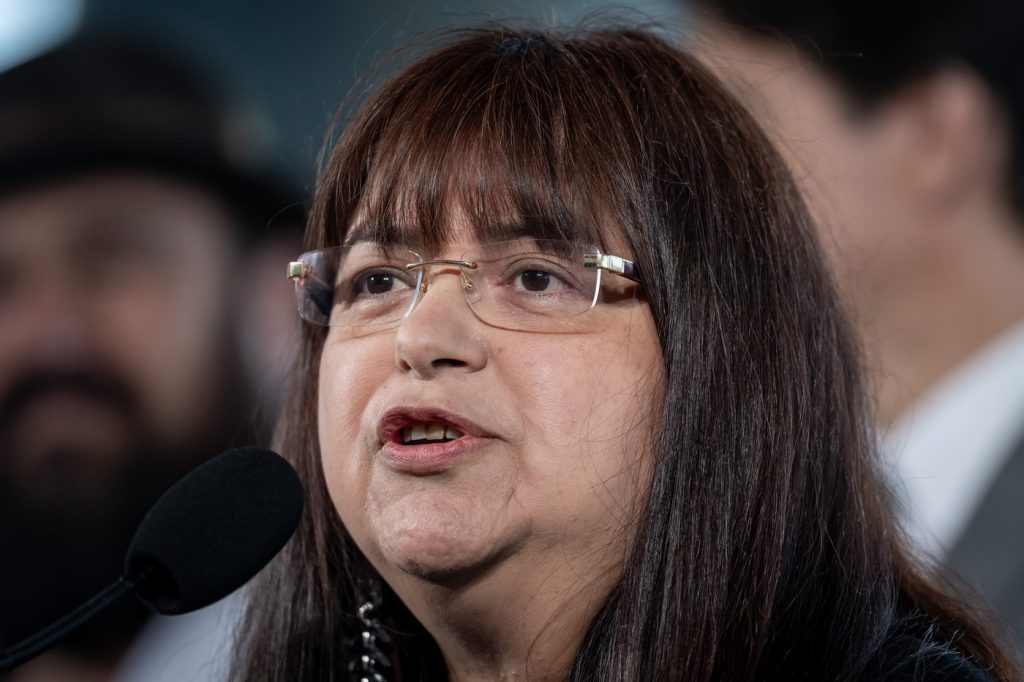
Delegates from the Heiltsuk Nation of British Columbia will advocate for changes to the oil spill compensation formula at the International Maritime Organization (IMO) in London. Chief Marilyn Slett will address the IMO's legal committee, emphasizing the need to include provisions for Indigenous cultural losses in the compensation structure. This initiative stems from the ramifications of an incident nearly ten years ago involving the tug Nathan E. Stewart, which ran aground near Bella Bella, B.C., and discharged around 110,000 litres of diesel oil into the environment.
During her speech, Slett will highlight how the spill altered a site crucial for knowledge transmission and held significant cultural value. She noted that existing maritime laws regarding oil spills were established without consideration for Indigenous peoples and lacked mechanisms to compensate them for cultural losses. "It goes really to the fabric of our way of life," Slett stated, emphasizing that their connection to the land and waters is integral to their culture. The incident, she insists, altered their relationship with their territory in a lasting way.
Chief Slett's trip from April 13 to 17 also includes discussions with Canada’s High Commissioner in the UK, Bill Blair, to follow up on past dialogues aimed at Indigenous rights recognition in environmental governance. With Canada being a signatory to the United Nations Declaration on the Rights of Indigenous Peoples and a member of the legal committee, Slett argues that this provides a basis for advancing their advocacy, which calls for the recognition of Indigenous cultural losses as part of global shipping standards.
Determining the specific parameters around Indigenous cultural losses presents challenges, according to Slett. "That’s a really big question, and it’s very broad, because it’s really about how we are as healthy people," she remarked. No concrete response from Canada has been forthcoming, and she acknowledges that transforming maritime laws may take considerable time due to global complexities. Nevertheless, Slett remains committed to ensuring that Indigenous voices are amplified in this critical discourse.
Continuing damages from the Nathan E. Stewart incident linger, with the Heiltsuk Nation awaiting over $23 million in compensation and restoration efforts. They also point out concerning environmental impacts, notably a surge in invasive European green crabs that threaten local clam fisheries as a direct consequence of the spill.
This marks Slett’s second lobbying trip to London; her first occurred two years prior, where she engaged with representatives from various member nations, including Australia, New Zealand, and Brazil. Her current visit follows a recent meeting with Prime Minister Mark Carney and other coastal First Nations leaders, where they expressed collective opposition to a memorandum of understanding between Ottawa and Alberta regarding a prospective pipeline project. The proposed pipeline aims to transport bitumen from northern Alberta to the coast of B.C. for export to Asian markets.
Carney clarified that any new pipeline would need a private proponent and would not progress without substantial local support. The Canadian government must also consider revisions to the current federal tanker ban, which restricts oil tanker traffic exceeding 12,500 metric tons along B.C.'s northern coast, an area critical to Indigenous nations' ecological and cultural integrity.
As she navigates these complex discussions, Slett and other First Nation leaders remain vigilant concerning the MOU's implications and the potential impacts on their communities. While acknowledging Carney's emphasis on building a resilient economy, Slett reiterates that First Nations cannot protect their way of life without adequate environmental stewardship and economic resilience. "We depend on a healthy ecosystem and a healthy ocean for our sustenance, for our way of life, and also for our economy," Slett asserted.
As Chief Slett articulates the concerns stemming from the Nathan E. Stewart spill and the potential expansion of oil transport, she underscores the importance of accountability. "How can we trust Canada on a new pipeline, when Canada has failed to adequately respond to previous spills?" she asked, reflecting frustration over the slow progress in achieving justice nearly a decade after the incident. "Adding super tankers on top of the existing traffic is not something we will ever support."








