

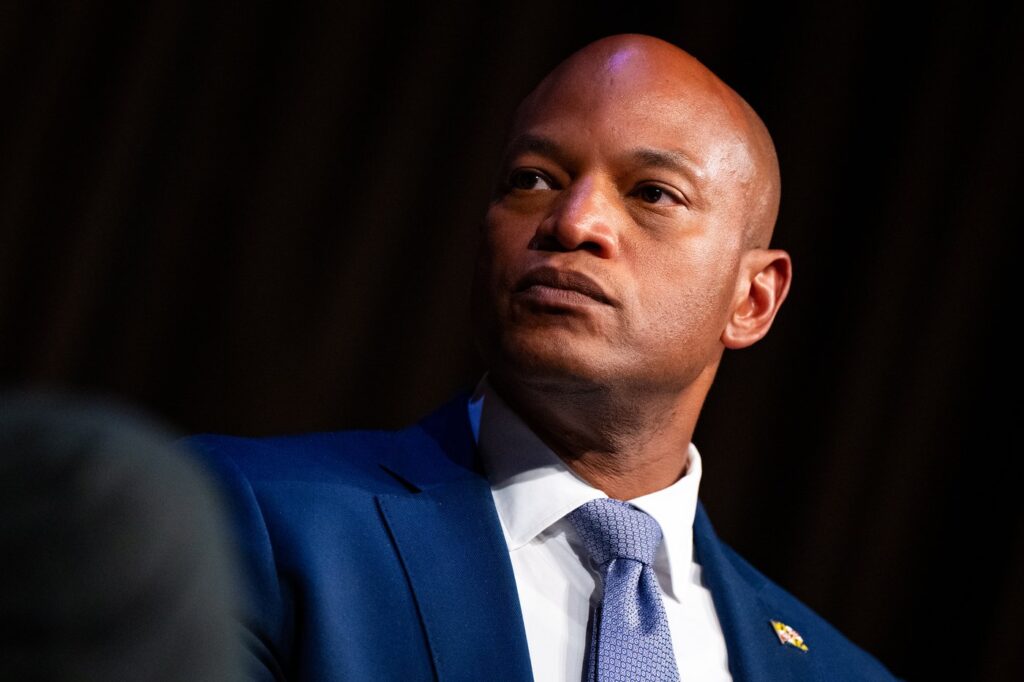
ANNAPOLIS, Md. (AP) - Maryland Democrats have recently dismissed a proposal aimed at redrawing the state’s congressional map to enhance their party’s chances in the upcoming midterm elections. This decision is seen as a setback for Governor Wes Moore, who had backed the initiative to counteract what he described as President Donald Trump's redistricting campaign.
The proposal officially lapsed late Monday night with the conclusion of the state legislative session, primarily due to disagreements within the Democratic Party. Ultimately, the Maryland Senate chose not to advance the bill from committee, with concerns that it could lead to unfavorable judicial outcomes. The suggested mid-decade redistricting, which has gained traction following Trump’s encouragement of Republican-led efforts in Texas last year, is likely to continue in other states, with Republicans planning changes in Florida and Democrats seeking voter approval for a referendum in Virginia.
In Maryland, the rejected map was intended to create better conditions for Democrats to unseat Rep. Andy Harris, the state's only Republican member of the U.S. House. Governor Moore, a potential contender for the 2028 presidential race, expressed that he disagrees with state Senate President Bill Ferguson regarding the necessity of counteracting Trump’s influence. Moore emphasized that to him, this is not merely a political maneuver but a critical response to what he perceives as Trump’s attempts to manipulate electoral rules for his own benefit.
Ferguson, on the other hand, argued that pursuing redistricting could ultimately harm Democrats, especially considering the likelihood of legal disputes that could lead to new maps that might be even less favorable to them. This lack of consensus persisted despite pressure from Moore and U.S. House Minority Leader Hakeem Jeffries to advance the proposal.
During a recent address at the National Action Network in New York, Moore voiced his concerns about Trump's influence on redistricting, arguing that while certain states were encouraged to act, others were advised to remain inactive. He challenged the notion of sitting idly by, asserting that the stakes of mid-decade redistricting are critical for maintaining fair representation and preventing what he described as the 'stealing' of elections.
Although Moore convened a panel in November to formulate a new congressional map, he failed to secure approval from the Democratic-controlled Maryland Senate. In January, he had argued that Maryland needed to respond to what he termed the 'political redlining' led by Trump, which he believed threatens the representation of Black voices in Congress.
The Democrats hold a significant advantage in Maryland, with a 2-1 majority over Republicans and a 7-1 lead in the state’s U.S. House delegation. Despite this clear majority, Ferguson's opposition played a crucial role in halting the proposed redistricting efforts, drawing attention to the legal ramifications of previous maps found unconstitutional in past years due to extreme partisan gerrymandering.
Currently, other states are also engaging in mid-decade redistricting efforts. In Florida, Republican Governor Ron DeSantis has scheduled a special legislative session for the predominantly Republican legislature to redraw congressional districts. This move could significantly affect Trump’s strategy to optimize congressional boundaries in GOP-led states, aiming to secure additional seats in the midterm elections.
Simultaneously, in Virginia, early voting has commenced on a constitutional amendment concerning a new congressional map. Following shifts in redistricting, Republicans are anticipating potential gains in U.S. House seats across several states, while Democrats are targeting their own opportunities for additional seats, particularly in Virginia, which could net them four new seats.








