

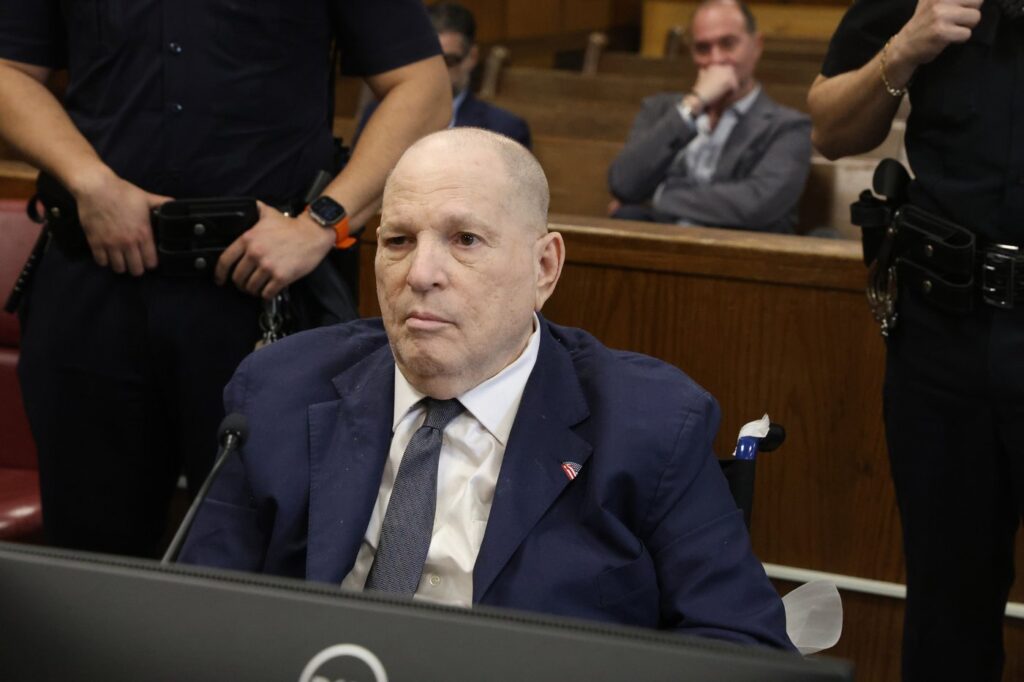
NEW YORK (AP) — After years of involvement with the #MeToo movement, legal troubles, and prison time, Harvey Weinstein is set to go on trial once again for a rape charge in New York City. Jury selection is scheduled to begin as early as Tuesday in what marks Weinstein's latest retrial, focusing exclusively on accusations from hairstylist and actress Jessica Mann, who claims that Weinstein raped her in a Manhattan hotel in 2013.
This upcoming trial differs from previous ones, as jurors will examine a single charge involving one accuser instead of the numerous allegations presented in earlier trials in New York and Los Angeles. Weinstein has steadfastly denied all accusations, stating in court this winter, “I acted wrongly, but I never assaulted anyone.”
Judge Curtis Farber has hinted that he may reconsider certain rulings about the evidence to be presented concerning the interactions between Weinstein and Mann over the years. The recent change in Weinstein's legal representation may also affect the trial's dynamics and strategies. New attorney Marc Agnifilo took over the case in February, succeeding longtime lawyer Arthur Aidala, who stepped aside to concentrate on Weinstein's appeals and civil issues. While both lawyers are prominent New York defense attorneys, their styles differ significantly—Aidala is known for his folksy demeanor, whereas Agnifilo is more formal.
Once a powerful figure in Hollywood, Weinstein's reputation was built on successful films such as “Shakespeare in Love,” “Pulp Fiction,” and “Chocolat.” However, a wave of sexual harassment and assault allegations began surfacing in the media in 2017, fueling the #MeToo movement. In 2018, he faced criminal charges in New York, followed by additional charges in Los Angeles two years later.
Weinstein was tried and convicted on some counts during both cases, but his initial convictions in New York were overturned, leading to a retrial last year. In that retrial, Weinstein was found guilty of forcing oral sex on production assistant and producer Miriam Haley in 2006, but was acquitted of a similar charge against model-turned-psychotherapist Kaja Sokola. The jury did not reach a decision on the rape charge involving Mann as the foreperson declined to continue deliberations.
After the retrial, Weinstein considered entering a guilty plea but ultimately decided against it. During the ongoing legal proceedings, Mann testified about a complicated, consensual relationship she had with Weinstein, but claimed he assaulted her when he cornered her in a hotel room, ignoring her protests by saying, “I don’t want to do this.” She reported that his persistent advances led her to eventually surrender.
While Weinstein has not testified in any of his trials, his legal team argues that he has never engaged in non-consensual sex. The defense maintains that Mann, alongside other accusers, welcomed his sexual approaches in hopes of gaining industry support. In contrast, the women allege that Weinstein exploited his power and influence to manipulate them.
Weinstein's conviction related to Haley carries a sentence of up to 25 years in prison, with no sentencing date set as of now. The pending rape charge against Mann is classified as a lower-level felony, punishable by up to four years in prison; however, Weinstein, now 73, has already served a longer sentence than that.
Health issues have compounded Weinstein's challenges, as he uses a wheelchair and has expressed fears about his potential demise in New York's infamous Rikers Island jail. He revealed in court that his mental state is deteriorating, saying, "My mental state is collapsing... My spirit is breaking."
Weinstein's defense team contends that the conviction from his New York trial was tainted by juror bias. Moreover, he is in the process of appealing the verdict from his Los Angeles trial, continuing to fight against the legal consequences he faces.
The Associated Press typically does not identify victims of sexual assault without their consent; however, Mann, Haley, and Sokola have agreed to be named in this case.








