

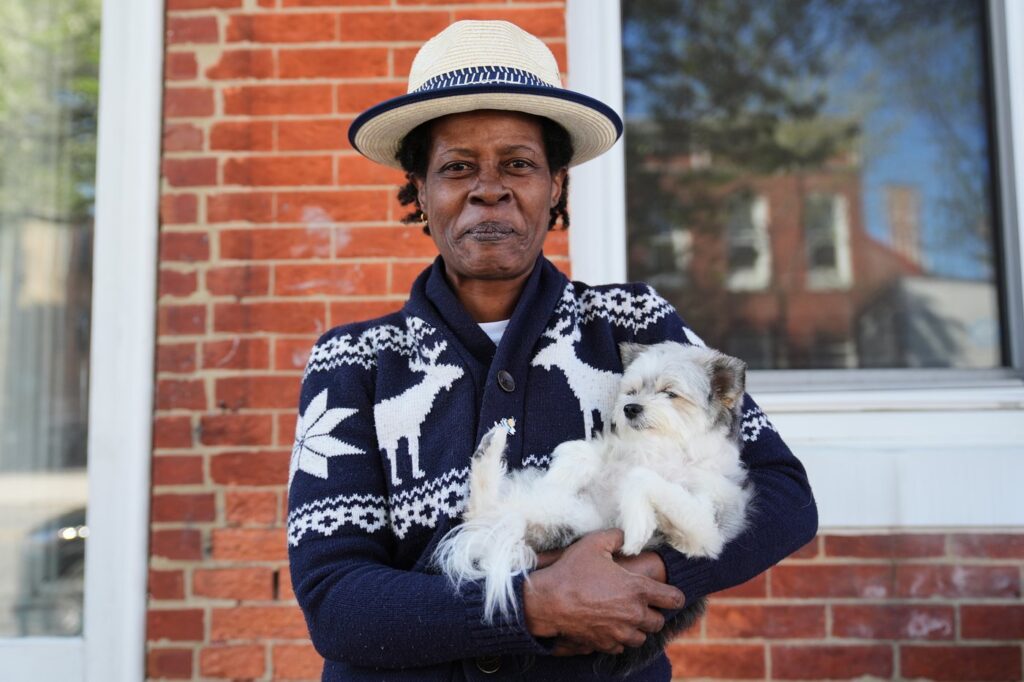
WASHINGTON (AP) Jevona Anderson's life took a downward turn after a series of tragic family deaths and an eviction that rendered her homeless. By 2025, at age 59 and nearing the completion of her bachelor’s degree, she found herself struggling with failing grades and mounting financial pressures, ultimately resulting in her decision to drop out. Anderson became one of many students, often referred to as “stopouts,” who have left college without obtaining their degrees.
In the United States, approximately 38 million working-age adults fall into this category, many burdened with student loans but lacking the necessary degree to enhance their job prospects and earnings. While many students initially leave college with the intention of returning, the reality is that few make it back. Nonetheless, recent years have seen colleges and local governments implement more effective strategies to assist these individuals in recommencing their education. As a result, more than 1 million stopouts reenrolled during the 2023-2024 academic year, marking a 7% increase from the previous year.
For Anderson, a scholarship proved to be a pivotal factor in her ability to return to school. With financial assistance, she could enroll once again at the University of Baltimore. Reflecting on her situation, Anderson commented, “It was so easy for someone my age to stop, because I have a lot of professional skills to get a job,” pointing out that her aspirations extended beyond mere employment.
Various hurdles often prevent students from completing their degrees. College can be daunting due to factors such as high costs, time commitment, and bureaucratic challenges. Unpaid fees or difficulty balancing work, health issues, caregiving, and transportation can derail a student's academic journey. “Life is always changing. Everybody is going through something,” noted Nina Diggs-Pindell, a University of Baltimore student who has experienced multiple stopouts for similar reasons.
Anderson initially enrolled at the University of Baltimore in 2019, aiming for a bachelor’s degree in environmental sustainability. Her career aspirations crystallized while substitute teaching in urban schools, where she recognized the lack of green spaces in impoverished communities. Motivated by her childhood passion for nature, she hoped to become a teacher to inspire children through environmental education. However, the challenges of life, including her personal losses and eviction, led to her academic decline, ultimately resulting in her decision to pause her studies.
The overall population of stopouts continues to grow, despite a decrease in annual stopouts and an increase in reenrollment rates. According to the National Student Clearinghouse, the number of individuals leaving college in recent years significantly exceeds those who have returned. Yet, states are beginning to implement targeted efforts, such as providing financial aid and eliminating bureaucratic barriers to support stopouts.
When Anderson's circumstances stabilized in late 2022, she became aware of a university scholarship program specifically for students close to completing their degrees. This program, funded mainly by the Carnegie Corporation, helped her cover her remaining credits and housing expenses. Now, at the age of 60, she is on the verge of graduation.
In Maryland, colleges reenrolled 25,068 students from across the nation during the 2023-2024 academic year, an increase from the previous year. However, this number still pales in comparison to the estimated 600,000 working-age adults in the state who had dropped out without completing their degrees. Various states have collaborated with a company named ReUp, which provides coaching and data tools to streamline the reenrollment process, matching students with appropriate college programs based on their past academic records and life situations.
Reengaging stopouts can prove challenging, often requiring an average of 24 communication attempts—such as texts and emails—before a former student decides to reenroll. Despite the difficulty, many colleges view this as a worthy investment, presenting an easier path than recruiting new students. Since its inception, the stopout scholarship at Colorado's Pueblo Community College has successfully motivated numerous former students to return, particularly those who faced life challenges that interrupted their studies. Students are also supported in their financial aid applications and receive regular check-ins to keep them on track.
Melody Blair, a 55-year-old student who had worked in a call center, found the needed support through a scholarship to resume her education, aiming for an associate’s degree in health information management. For her, this career represents a welcome change from her exhausting job, as she aspires to work in the genomic registry field, ultimately helping individuals access their medical histories. Anderson concluded her journey with a sense of determination, stating, “Me and God made a pact I am graduating this spring,” as she prepares to re-enter the educational sphere and fulfill her goal of inspiring the next generation.








