

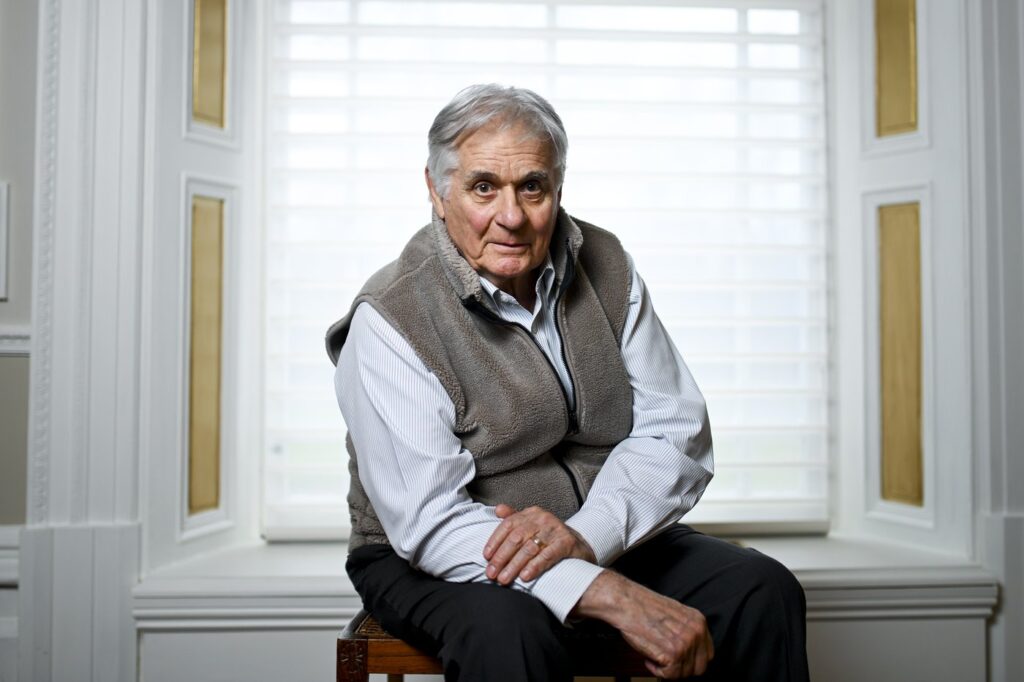
OTTAWA — Whit Fraser, a former journalist known for his work in Canada’s Far North and the husband of Governor General Mary Simon, reflects on his impactful career in his new memoir, “From Ragged Ass Road to Rideau Hall,” released on April 18, 2026. Fraser’s journey began almost 60 years ago when he accepted a job with the CBC in Iqaluit, then known as Frobisher Bay, despite having no prior experience as a news reporter.
In an interview with The Canadian Press, Fraser humorously quotes the late baseball player Yogi Berra: “When you come to a fork in the road, take it.” He attributes his successful career in journalism to a stroke of luck, where the opportunity to work in the North came after a memorable news reading performance that led someone to offer him the job.
Throughout his memoir, Fraser details his significant assignments, including his time at the CBC's parliamentary bureau and his role as an anchor for CBC Newsworld. Notable stories he shares include a 1982 report on thousands of animals that tragically died after being swept over a waterfall, as well as covering the devastating 1985 crash of Arrow Air Flight 1285R, which remains the deadliest aviation disaster on Canadian soil, taking 256 lives. Fraser expresses skepticism over whether the true circumstances of that incident will ever be fully uncovered.
Fraser also dedicates a portion of his memoir to highlight the contributions of Inuit broadcasters he has collaborated with, such as Paul Quassa and Jonah Kelly. He aims to raise awareness among Canadians about these influential figures in the Inuit community. He recalls how, shortly after Martin Luther King Jr.'s assassination in 1968, Kelly translated King’s famous “I have a dream” speech into Inuktitut, demonstrating the connection between the struggles of Inuit people and the civil rights movement in the United States.
While recounting his experiences, Fraser balances lighter stories with serious reflections, particularly on media coverage of Mary Simon’s tenure as Governor General. He expresses concern over the erosion of journalistic integrity, describing some current media practices as a “license to lie.” Furthermore, he critiques Quebec media and politicians for their focus on Simon's lack of fluency in French, arguing that they often overlook the challenges she faced, such as her upbringing in a school system that did not teach her French.
In a nostalgic reflection on his love for hockey, Fraser revisits the 1967 Stanley Cup finals, the last time the Toronto Maple Leafs won the championship, reminiscing about how he followed the games via radio from the Royal Canadian Legion in Frobisher Bay. He remembers the camaraderie shared with Inuit men who followed the game, despite language barriers. His passion for hockey led him to advocate for refurbishing the ice rink at Rideau Hall with a new refrigerated surface, collaborating with former colleagues to bring that vision to life.
As Fraser and Simon prepare to move from Rideau Hall, he envisions future enhancements for the rink, such as adding a roof to facilitate year-round activities and cultural performances. He expresses optimism about the possibility of making this dream a reality and intends to remain involved in the project alongside his network of hockey connections.
This memoir serves not only as a testament to Fraser's notable career in journalism but also as a reflection on his life experiences in Canada's North and the rich cultural tapestry of the Inuit people he worked alongside.








