

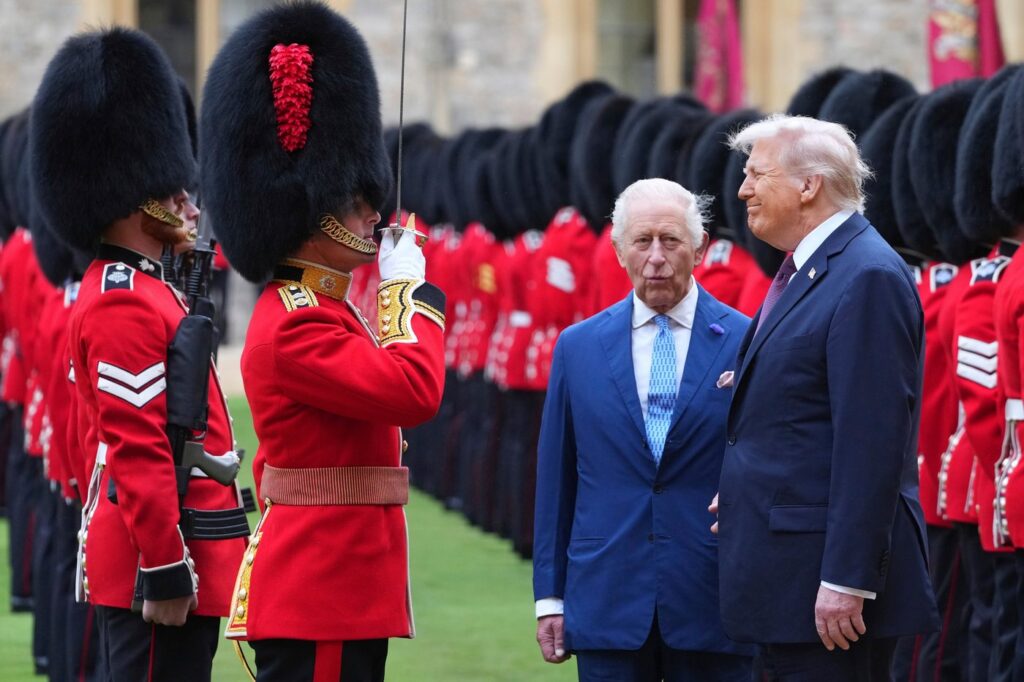
LONDON (AP) — King Charles III faces the enduring challenge of upholding the legacy of his mother, the late Queen Elizabeth II, during his upcoming state visit to the United States. This visit serves as a significant occasion as it coincides with America's 250th birthday. The Queen's impactful address to Congress in 1991 is a benchmark against which Charles' visit will be measured. In that speech, she celebrated the shared democratic values of Britain and the U.S., quoted notable figures such as Abraham Lincoln and Franklin D. Roosevelt, and underscored the deep-rooted ties between the two nations.
The themes of unity and shared history are set to be central to Charles' agenda as he navigates the complexities of contemporary U.S.-U.K. relations, particularly amidst the backdrop of tensions surrounding Prime Minister Keir Starmer’s refusal to support U.S. President Donald Trump’s stance on Iran. Douglas Brinkley, a presidential historian at Rice University, noted, “Politics come and go, prime ministers, presidents, come and go, but there’s something deeper about the special relationship between the United States and the U.K.”
As King Charles embarks on a meticulously planned four-day trip encompassing Washington, New York, and Virginia, the visit is orchestrated at the behest of the British government. Amid pressures to reconsider the visit, particularly due to Trump's disparaging remarks regarding Starmer, the event is still set to proceed. Notably, Trump has expressed admiration for Charles in the past, suggesting that he will likely seek to impress during this visit.
The royal legacy of visiting the U.S. officially began in 1939 with King George VI, igniting excitement with each subsequent royal visit. This inaugural trip occurred just before World War II, where the royals engaged with the American people through casual interactions and solemn commemorations, such as laying a wreath at George Washington's tomb. This gesture at a time of isolationism symbolized the emerging alliance necessary for confronting global tyranny.
Queen Elizabeth II further solidified these transatlantic bonds, making four state visits during her reign. Notable moments include her participation in America's bicentennial celebration in 1976 and meetings with President George W. Bush amidst the Iraq and Afghanistan conflicts. These visits emphasized continuity, goodwill, and mutual respect between the two nations.
Charles' visit is expected to include various commemorative activities, such as a ceremony paying tribute to the victims of the September 11 attacks and celebrations marking the 100th anniversary of A.A. Milne’s Winnie the Pooh stories. However, he will strategically avoid controversial encounters, such as addressing issues related to his brother's ties to Jeffrey Epstein or meeting his son, Prince Harry, who has been openly critical of the monarchy.
Brinkley asserts that the purpose of Charles’ visit is not to confront past grievances but to celebrate a significant partnership. He is likely to use his address to a joint session of Congress to articulate a message centered on historical continuity, friendship, and appreciation for the ties that bind the two nations. Charles is expected to blend gravitas with light-heartedness, reflecting on previous instances where humor facilitated rapport, as exemplified by his mother’s comedic quip during her 1991 speech.
The upcoming speech will likely explore themes of American exceptionalism, the historical importance of U.S.-British relations, and the enduring elements of their shared journey. As he prepares for this landmark visit, Charles stands at a juncture where he must invoke a sense of unity, heritage, and collective purpose that transcends current political rifts.








