

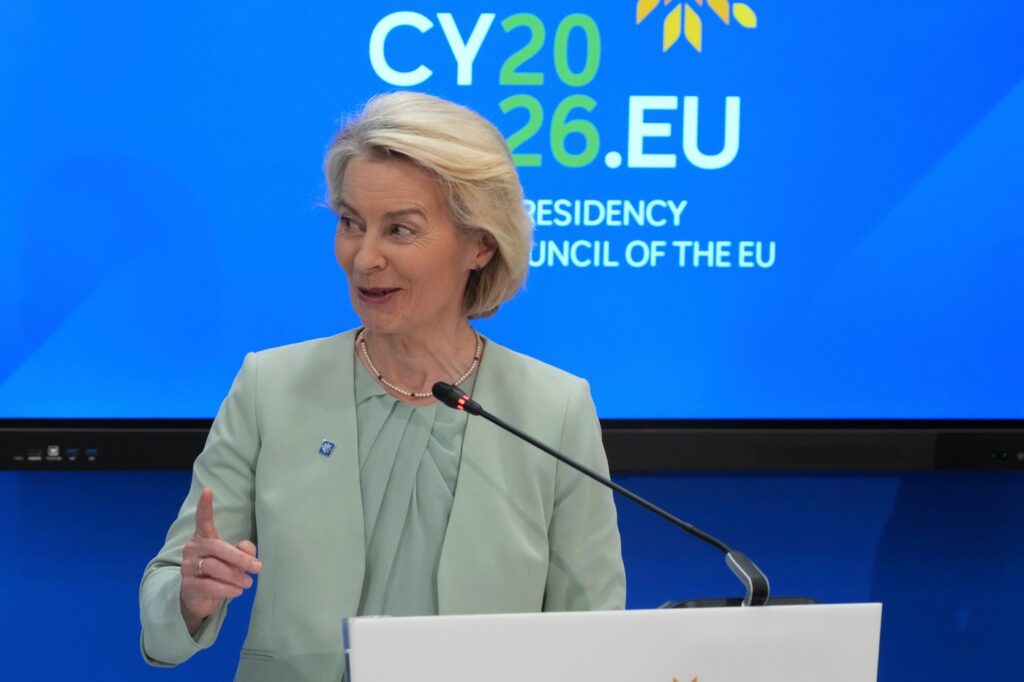
BRUSSELS – European Union countries are urged by European Commission President Ursula von der Leyen to focus their energy aid primarily on vulnerable households and industries. This advice comes in light of the ongoing conflict related to the Iran war, which has significantly elevated oil and gas prices, costing the EU nearly 500 million euros (approximately $600 million) each day. Concerns are also growing regarding potential jet fuel shortages in the coming weeks.
Von der Leyen highlighted the importance of learning from the 2022 fuel crisis, during which Russia leveraged its energy resources to undermine European support for Ukraine. She emphasized that failing to apply these lessons could lead to further economic harm for EU member states. More than 350 billion euros were reportedly spent on unspecific measures during the previous crisis, placing a considerable financial burden on national governments.
In her address to EU lawmakers in Strasbourg, France, von der Leyen stressed the need for the bloc to reduce its reliance on external energy supplies. Just as Europe successfully diminished its dependence on Russian energy, the commission aims to focus on renewable energy sources such as wind and solar, as well as nuclear power. She stated, "Our over-dependency on imported fossil fuels makes us vulnerable."
Since the onset of the war in 2022, imports of Russian gas into the 27 EU nations have dramatically decreased from 45% to just 12% last year. Additionally, coal imports were banned due to sanctions, and oil imports plummeted from 27% in 2022 to a mere 2%, with only Hungary and Slovakia continuing to source oil from Russia.
Von der Leyen cautioned that the effects of the Iran conflict may resonate for months or potentially years, urging EU countries to prioritize the development of clean energy supplies derived from renewables and nuclear sources. She called for a significant increase in electricity generated from these sources to power transportation, heat homes, and decrease dependency on fossil fuels in industrial sectors. Currently, electricity constitutes less than a quarter of the EU's overall energy consumption.
EU Energy Commissioner Dan Jørgensen echoed von der Leyen’s sentiments, warning that the Iran war has not merely resulted in a minor, short-term price increase. He characterized the situation as a crisis comparable to the energy crises of 1973 and 2022 combined. Jørgensen noted that Europe finds itself in a defensive position with limited control over unfolding events, stating, "Even in a best-case scenario, it’s still bad." He acknowledged that the potential for a supply security crisis largely hinges on developments in the Middle East and emphasized efforts to mitigate the impact of this crisis.








