

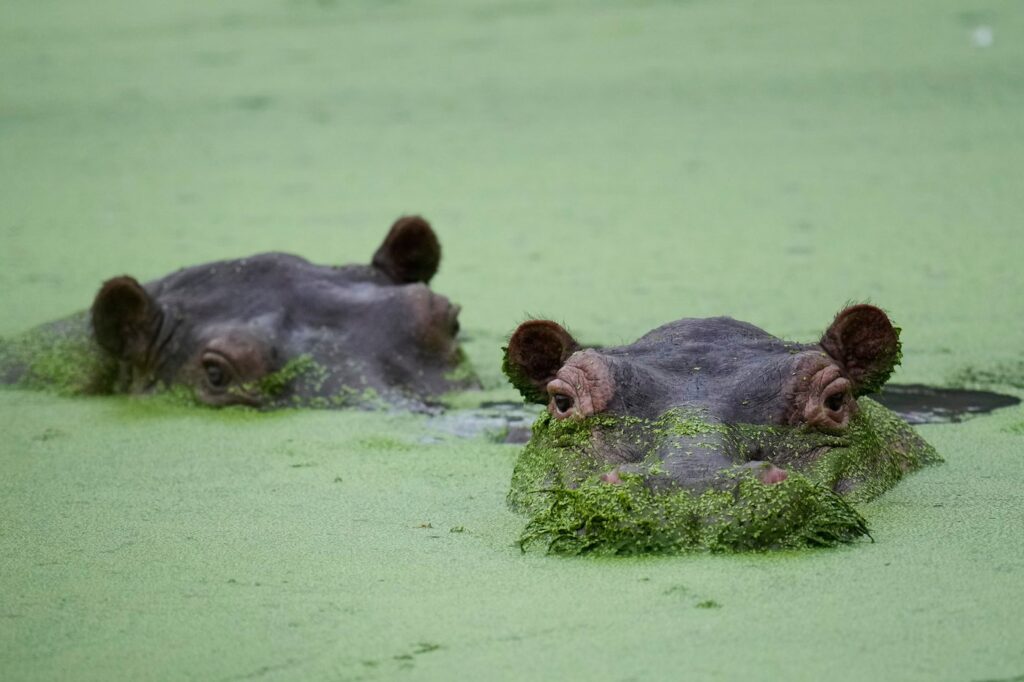
Along the Magdalena River in Puerto Triunfo, Colombia, fishermen navigate with caution due to the presence of hippopotamuses, which can surface unexpectedly and pose a significant threat. Fisherman Wilinton Sánchez described these animals as a "true nightmare," emphasizing their ability to charge at frightening speeds both in water and on land. This interaction between humans and hippos often leads to dangerous encounters, yet it also fuels a growing interest among tourists eager to observe the wildlife, making hippo-watching tours a vital part of the local economy.
The hippos in question are an invasive species, descendants of animals brought to Colombia illegally in the 1980s by the notorious drug kingpin Pablo Escobar for his private zoo at Hacienda Nápoles. With a population currently estimated at around 200 individuals, the Colombian Environment Ministry has projected that without intervention, the number could exceed 500 by 2030. In response, officials have recently initiated a controversial plan to euthanize approximately 80 hippos, starting in the latter half of the year, sparking intense debate across the region.
The euthanasia plan has not gone unchallenged. Local residents are divided: while some fear for their safety and the impact on the fishing industry, others, like business owner Diana Hincapié, express anger and willingness to protest against the killings. Hincapié argues that these hippos, now Colombian citizens born over 30 years in the region, should not be killed and that their loss would jeopardize the local tourism economy, which draws nearly 200 tourists a month specifically for hippo sightings.
As large terrestrial mammals, the hippopotamuses have thrived in the region, now occupying around 43,000 square kilometers (16,600 square miles) with no natural predators. Their presence has drastically altered local ecosystems and the daily lives of fishermen like Álvaro Molina, who have experienced direct encounters with the animals. Molina recounted a near-miss when hippos overturned his boat, leading him to believe that their presence has driven many away from fishing altogether.
The government’s control strategy aims to include options such as confinement, international transfers to sanctuaries or zoos, and euthanasia as a last resort. This plan has drawn criticism from several quarters, including Senator Andrea Padilla, who has called the euthanasia strategy an "extermination" of 80 individuals. She advocates for relocating the hippos instead of resorting to killings, arguing against repeating the violent legacy of Pablo Escobar's reign.
Unfortunately, the potential relocation of these hippos to other countries has not progressed, as no nation has agreed to accept them, largely due to the significant costs involved and legal restrictions on importing invasive species. As the hippos continue to multiply and the debate over their fate rages on, it remains to be seen how Colombia will navigate the competing interests of environmental conservation, public safety, and the economic significance of ecotourism that these animals unintentionally support.








