

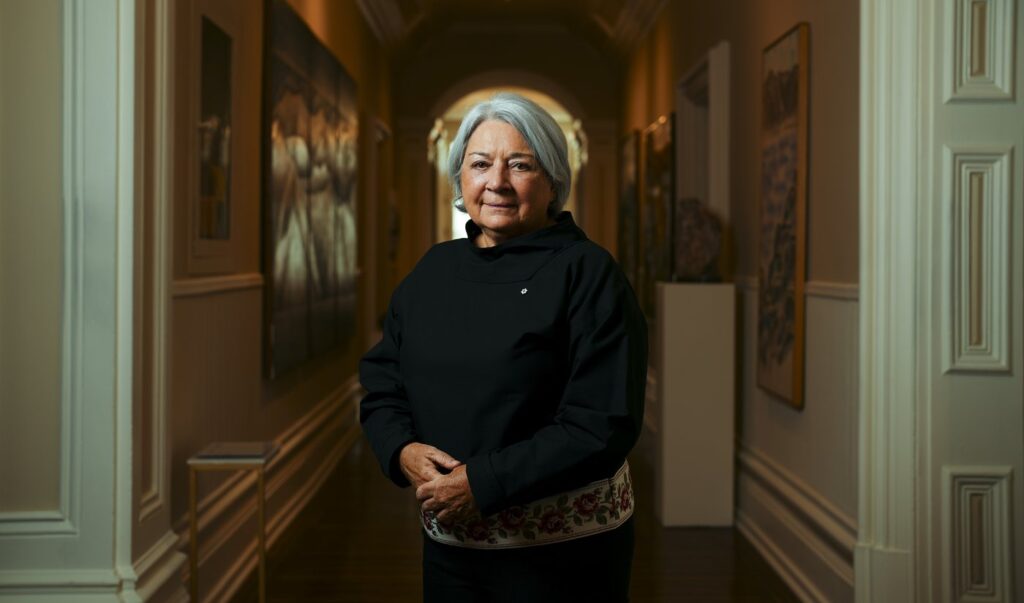
OTTAWA — The story of Mary Simon, the Governor General of Canada, is deeply intertwined with her Inuit heritage and her admiration for the British Royal Family. Raised in Nunavik by her unilingual Inuk mother, Nancy May, Simon grew up with a photo of Queen Elizabeth prominently displayed in their family home. The Queen’s stories and travels captivated young Mary, eventually culminating in her becoming the first Indigenous person appointed to represent the Queen in Canada in 2021 at the age of 73.
Simon expressed her enduring fondness for the Queen, sharing, “I really always loved the Queen. The Queen was always there.” Throughout her tenure, she has championed reconciliation between Canada and Indigenous Peoples. As her time in office comes to a close, she reflects on how her role allowed her to build relationships across Canada, fostering understanding and connection between Indigenous and non-Indigenous communities. “It takes time,” she noted, emphasizing the effort required to cultivate trust.
Simon took on her responsibilities at a critical period when the country began to face the legacy of residential schools. As Prime Minister Justin Trudeau prioritized reconciliation, Simon did not feel conflicted as an Inuk stepping into the viceregal role; however, she was mindful of the varying perceptions Indigenous communities had regarding the Crown. She aimed to be a “bridge-builder” for Canada, utilizing her position to strengthen these relationships.
The loss of Queen Elizabeth in 2022 significantly affected Simon. Nevertheless, she seized the opportunity to deepen connections with the Crown as King Charles’s coronation approached by facilitating meetings between the King and leaders of Indigenous organizations in Canada. Simon referred to these moments as “the more joyous moments” of her tenure.
As she nears the end of her term, discussions on reconciliation are evolving, with some politicians questioning if the efforts have favored Indigenous rights too much. Amid these challenges, Simon remains consistent in her messaging, emphasizing that reconciliation is a lifelong journey that requires continuous effort. “It doesn’t finish,” she stated.
Residing in Rideau Hall, a historic site since 1867, Simon maintains connections with her northern relatives through Facebook, acknowledging both the positives and negatives of social media. Unfortunately, her experience was marred by online harassment, necessitating her office’s decision to disable comments on her social media posts to protect her family from harmful reactions.
During her term, Simon faced criticism for her lack of fluency in French, despite her English and Inuktitut proficiency. She believed such critiques were unjust, highlighting the importance of Indigenous languages, especially as many Indigenous languages in Canada are endangered. Simon has made efforts to incorporate Inuktitut into her speeches to promote Indigenous languages, even teaching President Volodymyr Zelenskyy a word during his visit to Ottawa, emphasizing its empowering message: “Don’t give up.”
A seasoned diplomat, Simon previously served as Canada’s ambassador in Copenhagen and held leadership roles in Inuit organizations. As Governor General, she completed numerous official visits, including trips to Nordic countries, and celebrated the opening of a new Canadian consulate in Greenland earlier this year. She articulates the necessity for Indigenous Peoples in Canada to be integral to the development of Northern regions, not only economically but also in terms of health care and education. “Not just in terms of the economy — and that’s critical — but also in terms of how well the communities are doing…” she explained.
Simon also visited Tumbler Ridge, B.C., where a tragic mass shooting occurred, recognizing the critical role of community support in healing processes. She is contemplating a focus on mental health initiatives after she leaves office, suggesting a continued commitment to service within her community. While she plans to take a break initially, she is open to exploring various contributions, reflecting on her extensive career of over 50 years.
As she prepares to hand over her responsibilities to Louise Arbour, a former Supreme Court justice, Simon remains optimistic about the future of reconciliation in Canada. She noted, “I know that she’s committed to continuing the work on reconciliation, so I’m very pleased about that.”








