

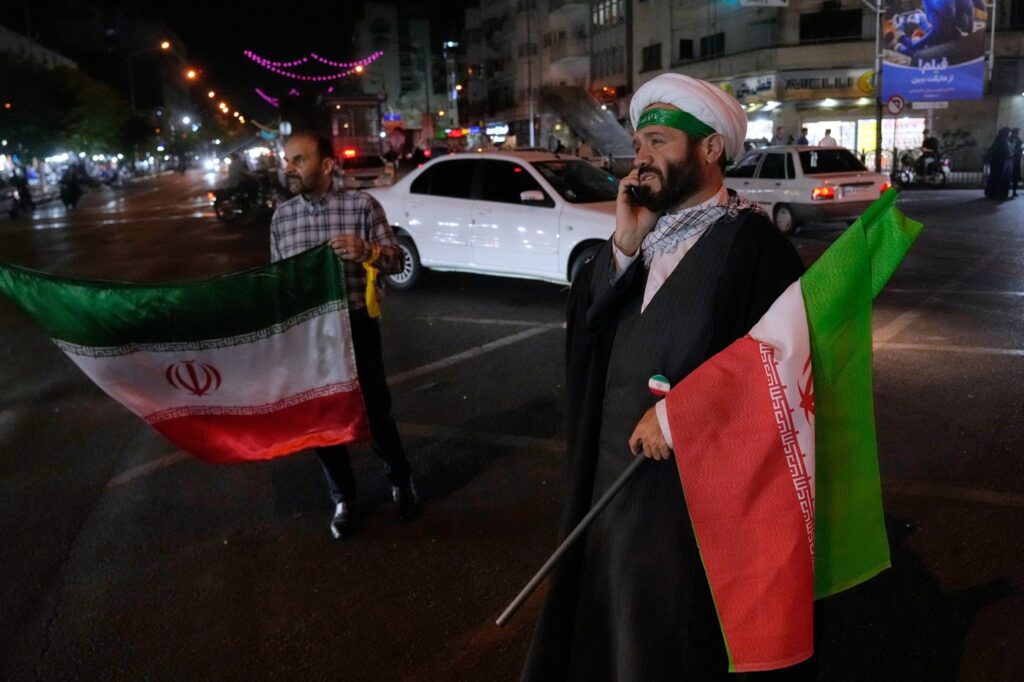
DUBAI, United Arab Emirates (AP) — A fragile ceasefire is reportedly maintaining stability as of Saturday, following U.S. military actions against two Iranian oil tankers. These actions have raised uncertainties regarding the ongoing ceasefire, which the United States previously claimed had been in effect for a month. The U.S. is currently waiting for Iran's response to its latest proposal aimed at concluding the conflict, reopening the crucial Strait of Hormuz for shipping activities, and addressing Tehran's contentious nuclear program.
On Friday, the U.S. military announced that it had disabled two Iranian tankers attempting to breach the American blockade instituted on Iran's ports. Earlier that same day, U.S. forces prevented attacks on three Navy vessels and targeted Iranian military installations in the strategic waterway.
In a related development, authorities in Bahrain declared the arrest of 41 individuals alleged to be associated with Iran’s Revolutionary Guard. While the Bahraini interior ministry reported that investigations are ongoing, specific details regarding the arrests were not disclosed. It is noteworthy that Bahrain, a Sunni-led monarchy, has a majority Shiite population, raising concerns among rights organizations that the ongoing U.S.-Iran conflict is being used as a pretext for suppressing dissent.
Iran responded with a warning directed at Bahrain, suggesting that alignment with U.S. policies could lead to significant repercussions. Ebrahim Azizi, who leads the national security committee of Iran's parliament, cautioned on social media, “Siding with the U.S.-backed resolution will bring severe consequences. The Strait of Hormuz is a vital lifeline; do not risk closing it on yourselves FOREVER.” Since the start of the war on February 28, Iran has largely blocked this pivotal route for global energy, resulting in increased fuel prices and disturbing global markets.
In the backdrop, the United States has implemented its own blockade of Iranian ports, with U.S. Central Command reporting that its forces have intercepted 58 commercial vessels and "disabled" four since the blockade commenced on April 13.
Furthermore, Britain has signaled its intentions to bolster naval presence in the Middle East. The UK’s defense ministry announced plans to deploy a warship, HMS Dragon, to potentially participate in operations intended to secure commercial shipping routes through the Strait of Hormuz, contingent upon the cessation of hostilities. Additionally, France has indicated that it is relocating its aircraft carrier strike group to the Red Sea in preparation for a joint security initiative led by the UK and France aimed at restoring navigation freedom in the strait.
U.S. President Donald Trump continues to assert that the ceasefire remains intact, although he has reiterated threats of renewed military action should Iran fail to agree to terms for reopening the strait and curbing its nuclear ambitions. Meanwhile, Iranian foreign ministry spokesperson Esmail Baghaei emphasized that Iran is disregarding any imposed “deadlines.”
In light of the ongoing tension, speculation surrounding the health of Iran's Supreme Leader, Mojtaba Khamenei, has risen, particularly as he has not appeared in public since the war began. A senior Iranian official confirmed his “complete health” and indicated that Khamenei would eventually be seen publicly, having largely recovered from knee and back ailments sustained during the conflict's initial stages.
Diplomatic initiatives are reportedly ongoing, with Pakistani Prime Minister Shehbaz Sharif stating that discussions with both the U.S. and Iran are being conducted continuously to extend the ceasefire and pursue a peaceful resolution. Russia's foreign ministry, along with Saudi Arabia, has also called for increased diplomatic efforts to establish a “sustainable, long-term agreement” to bring an end to the war. Moreover, top diplomats from Egypt and Qatar reiterated the necessity of diplomacy as the only viable path to a resolution during a recent phone conference.








