

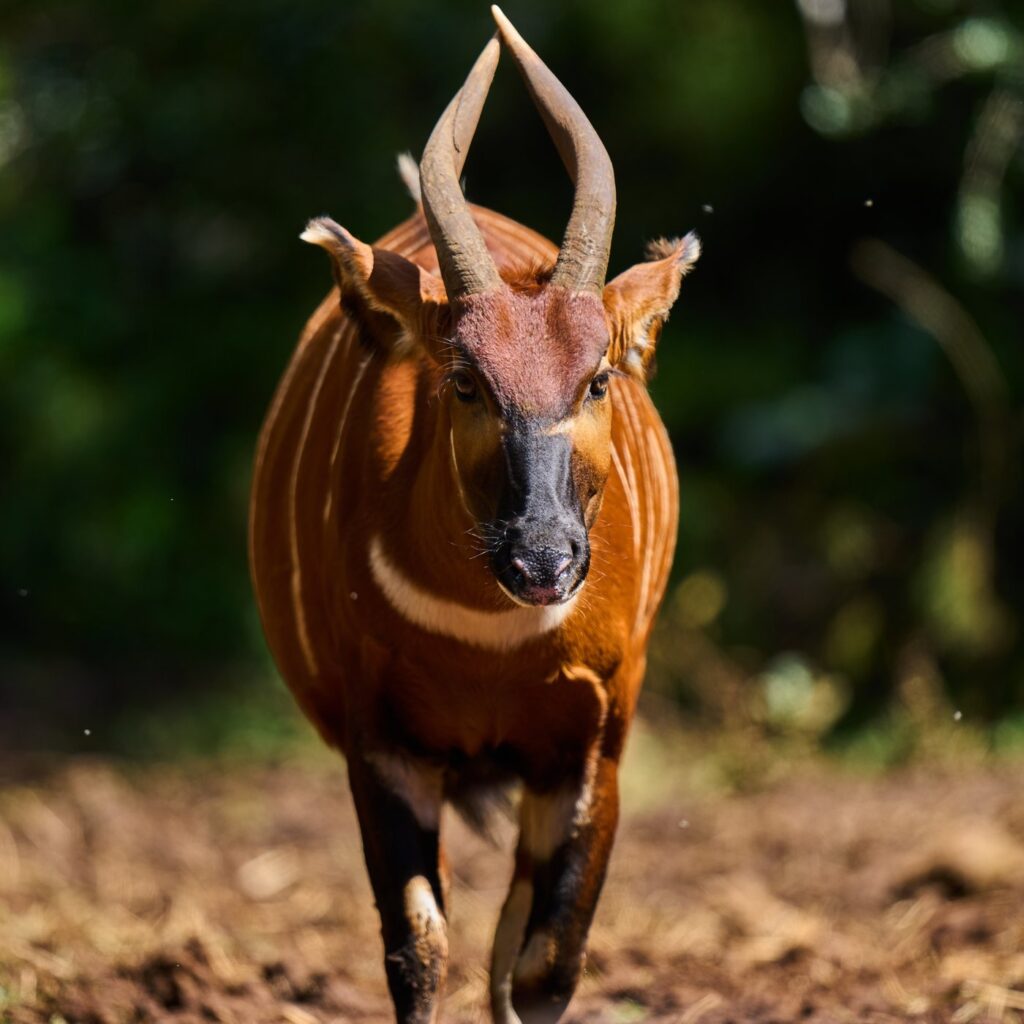
The mountain bongo, a critically endangered species native to Kenya, is increasingly becoming elusive due to its natural camouflage in dense shrubbery. Efforts are underway by conservationists at the Mount Kenya Wildlife Conservancy, located in the Nanyuki area, to reintroduce these rare antelopes back into their wild habitat, with a goal to boost their population from fewer than 100 individuals in the wild to 750 by the year 2050.
This unique antelope is characterized by its distinct brown skin and white stripes. The conservancy spans 1,250 acres on the misty slopes of Mount Kenya, and it focuses on nurturing the survival instincts of zoo-bred bongos. Conservationists aim to reintroduce them to the wild ensuring they can feed independently, evade predators, and develop a robust immunity to diseases.
Recently, the conservancy welcomed a new batch of four male bongos from the Czech Republic, imported via the European Association of Zoos and Aquaria. After undergoing a quarantine period, these new arrivals will breed with the descendants of 18 bongos that were imported from the United States in 2004, thereby enhancing the genetic diversity necessary for a sustainable population.
Dr. Robert Aruho, the head of the conservancy, emphasizes the need to prevent inbreeding among bongos that share similar genetic traits. He highlights the focus on breeding strong individuals that will pass favorable traits to subsequent generations. Bongos are endemic to Kenya's Mount Kenya, Aberdare, Eburu, and Mau forests, which are critical for maintaining the water supply within the country.
The last sighting of a wild bongo in the Mount Kenya forest occurred in 1994. However, in 2022, the conservancy successfully reintroduced the first cohort of ten bongos into their natural habitat. Today, they thrive among orange climber vines and shrubby plants that comprise their preferred diet. Historically, the bongo population faced a drastic decline due to disease outbreaks in the 1960s, prompting conservationist Don Hunt to export 36 individuals to the U.S. as a genetic safeguard, with plans to return them to the wild once conditions improved.
When the Mount Kenya Wildlife Conservancy was established in 2004, the first group of 18 bongos was imported, ensuring the continuation of the species' lineage. With appropriate interbreeding, the conservancy now boasts a population of 102 bongos. Caroline Makena, a 33-year-old gardener at the conservancy, reminisced about her grandmother's stories regarding bongos, which were once the favored bush meat in her community. It wasn't until she began working at the conservancy that she came to appreciate their beauty.
Bongos are notably shy and adept at camouflage, making them difficult to spot despite their striking appearance. Andrew Mulani, the bongo program assistant, explained that bongos are closely monitored for several months prior to their reintroduction into the wild, focusing on selecting the most timid individuals as they are less likely to be preyed upon by predators.
One significant milestone in their conservation efforts occurred when the fourth calf was born in the wild last year, signaling the recovery of the species in its native habitat. Bongos experience a gestation period of nine months, which contributes to their slow population growth. Additionally, they are sensitive to certain plants and weather conditions, which can hinder their adaptability compared to other antelope species sharing the same ecosystem.
As the Mount Kenya conservation team races against time to save these critically endangered animals, they supplement the bongos' diet with nutrient-rich pellets. Thousands of tourists visiting the conservancy each year are captivated by their spiraled horns and unique characteristics, with hopes that the mountain bongo will once again become a common sight in Kenya's forests.








