

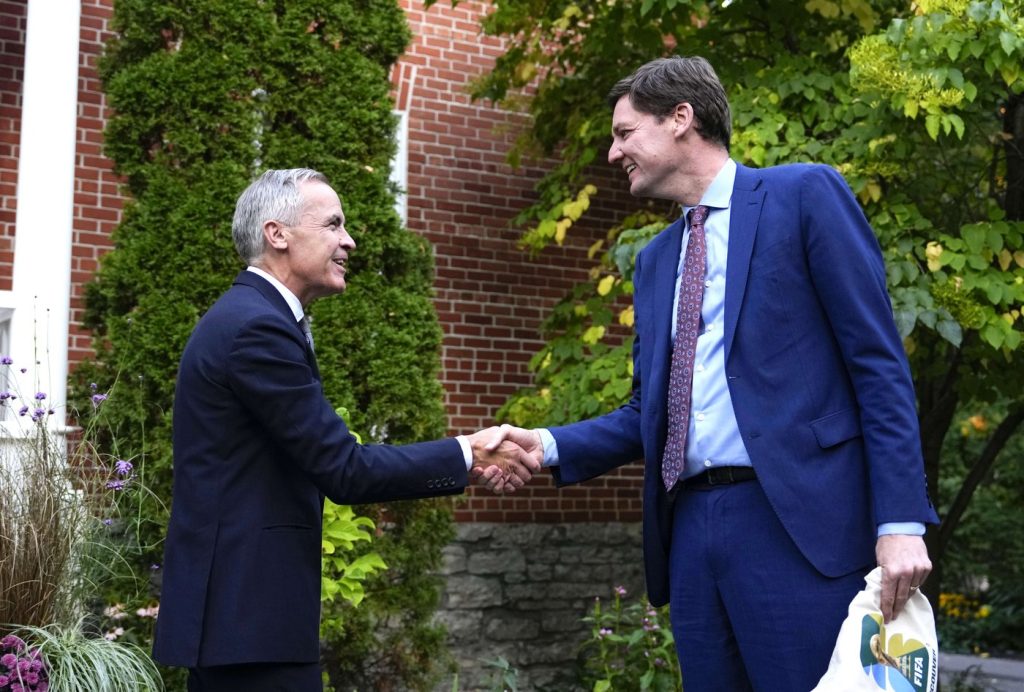
VANCOUVER - Prime Minister Mark Carney has outlined key prerequisites for a potential new oil pipeline project that would connect Alberta to the coast of British Columbia. This development comes in response to concerns raised by B.C. Premier David Eby, who criticized the project for potentially rewarding what he perceives as separatist behavior from Alberta.
During a discussion at the Greater Vancouver Board of Trade, Carney emphasized that the pipeline initiative, recently advanced through an implementation agreement between the federal and Alberta governments, would only move forward alongside the establishment of the Pathways carbon capture project. This highlights the government's focus on sustainability and environmental considerations in the context of energy infrastructure developments.
Furthermore, Carney stated that British Columbians ought to receive substantial economic and financial benefits from the project, reinforcing the government's commitment to ensuring that local communities are compensated fairly for any impact the project could have on the region. He also asserted that the duty to consult First Nations, as outlined in Section 35 of the Canadian Constitution, is “non-negotiable,” reflecting the government's recognition of Indigenous rights and participation in resource development decisions.
The proposed pipeline project is still in its infancy, with no agreed-upon route or private proponent identified at this stage, indicating significant uncertainty surrounding its execution. This lack of clarity could pose additional challenges in terms of regulatory approval and local support.
Premier Eby, who is scheduled to meet with Carney shortly thereafter, has expressed his discontent with the federal government's focus on Alberta's proposals, arguing that it should not reward what he terms "bad behavior." He is advocating for greater attention to be directed towards projects originating from British Columbia, which he believes align more closely with the province's interests and environmental standards.
Eby argued that Canada’s unity could be compromised if what he refers to as “separatist premiers” continuously garner federal attention while other provinces, like B.C., feel overlooked. His comments underscore the tension between provincial and federal priorities in the energy sector, particularly as it relates to national unity and collaboration.
The remarks from both Carney and Eby indicate a complex dialogue over Canada’s energy future, where economic ambitions must be balanced with environmental responsibilities and Indigenous rights. As the government contemplates the feasibility and implications of the proposed pipeline, these discussions will be central in determining its ultimate direction.
As the situation develops, stakeholders from multiple sectors, including the local communities, environmental activists, and Indigenous groups, will closely monitor the progress of negotiations and project planning. Their influence will likely shape the outcomes of any potential pipeline project, as they advocate for transparency and accountability in the decision-making processes.








