

PROVO, Utah (AP) — For five days, prosecutors in Provo, Utah, presented what they described as overwhelming evidence against Tyler Robinson, the man accused of assassinating conservative activist and Turning Point USA founder Charlie Kirk on September 10, 2026. The defense attorneys, however, have been working diligently to raise doubts about the findings, particularly those concerning DNA evidence and testimonies from other witnesses.
The case hinges on whether Robinson will face trial for an aggravated murder charge. State District Judge Tony Graf will make a decision after both sides submit final arguments on September 1, following a series of legal briefs. To date, Robinson has not entered a plea, but his legal team is already pushing to have the death penalty removed from consideration. Robinson voluntarily turned himself in a day after the shooting, which claimed the life of Kirk, a prominent supporter of former President Donald Trump.
During the preliminary hearing, prosecutors showcased several videos that allegedly captured Robinson on the Utah Valley University campus at the time of the shooting. Forensic evidence presented included a narrative from former Utah Bureau of Investigation Agent David Hull, detailing instances of Robinson buying food at Chick-fil-A and mingling with attendees affiliated with Kirk's organization. Hours later, prosecutors claimed that Robinson changed clothes and was recorded climbing onto a rooftop, initiating the shooting before fleeing the scene.
A former roommate of Robinson, Lance Twiggs, testified that Robinson expressed remorse over the killing, stating, "he wishes he hadn't done it," just a day after the incident. Additionally, prosecutors presented messages from a Discord chat, where Robinson purportedly acknowledged his involvement in the shooting and indicated his intention to surrender. A note left for Twiggs reportedly stated, "I had the opportunity to take out Charlie Kirk and I'm going to take it."
Defense counsel contended against the public release of Twiggs' statements and the chat messages, arguing that such evidence portrays Robinson as having confessed, which could compromise his right to a fair trial. In their effort to refute the prosecution's claims, defense attorneys also raised questions about the credibility of DNA results linking Robinson to the alleged murder weapon—a bolt-action rifle found wrapped in a towel near the university.
DNA analysis on the towel indicated matching samples from Robinson's roommate and potentially Robinson himself. Testimony from FBI analyst Amanda Bakker articulated the process and limits of the DNA testing conducted. The defense, however, relentlessly questioned the reliability of the DNA results and highlighted the complexities involved, prompting Bakker to clarify the protocol that precludes absolute identification in forensic studies.
Emotions ran high throughout the proceedings, especially for Kirk's family, who were present each day but occasionally left the room during the presentation of disturbing evidence. A notably emotional moment transpired when enhanced surveillance footage of the shooting was played. Erika Kirk, the widow of Charlie Kirk, was visibly affected when the footage depicted a figure identified as Robinson running across the rooftop, prompting her to comfort her mother-in-law amid tearful moments.
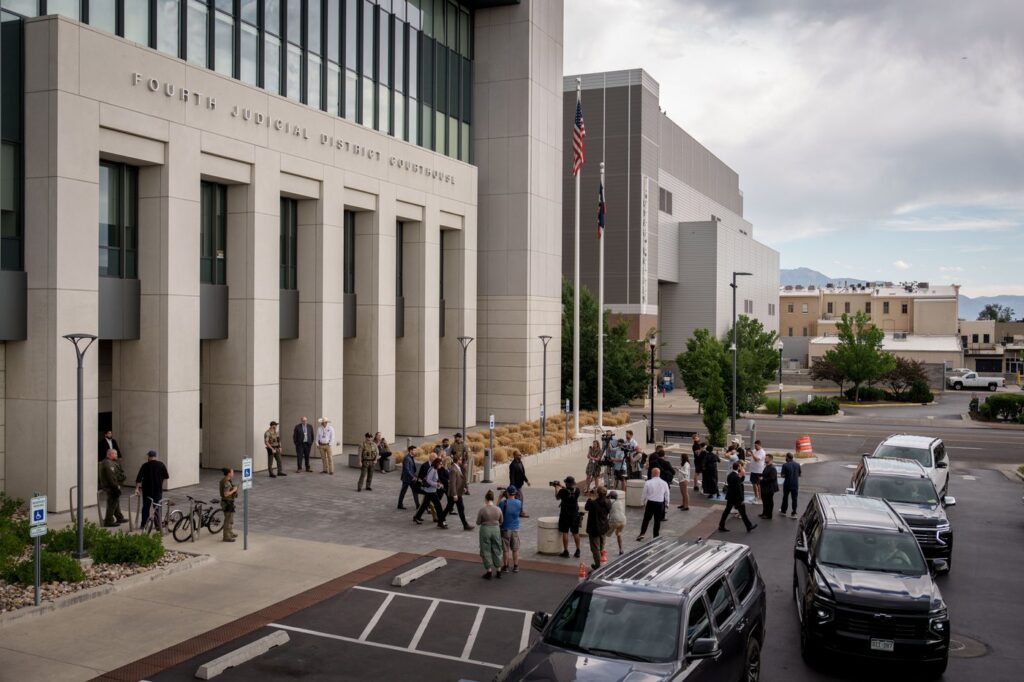
The courtroom was filled to capacity, with twelve seats designated for the public. The limited availability led some attendees to camp outside the courthouse, eager to witness what was deemed a significant trial. Notable figures, including Donald Trump Jr., attended the hearing during its initial days, with various supporters expressing their intentions to be part of this high-stakes legal battle that has drawn widespread attention.








