

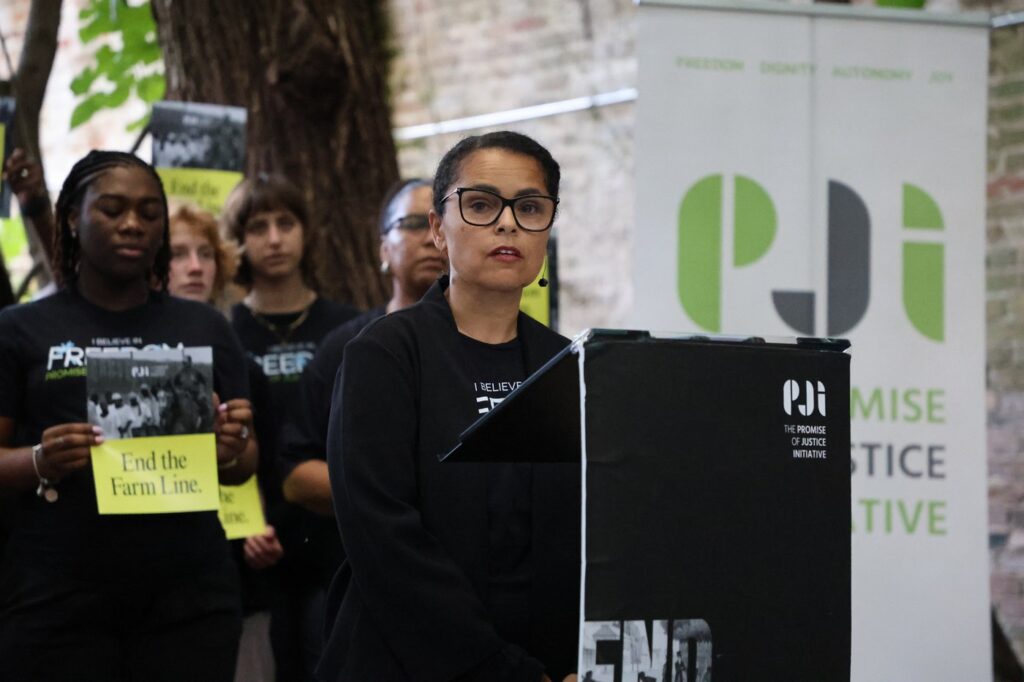
In a significant legal development, U.S. District Judge Brian Jackson has ruled that he cannot compel the state of Louisiana to rectify dangerously harsh working conditions for inmates on the "farm line" at the Louisiana State Penitentiary in Angola. This ruling comes amidst a long-standing lawsuit initiated by prisoners who claimed that forced labor in extreme heat constitutes cruel and unusual punishment under the Eighth Amendment.
Judge Jackson's 60-page opinion, released on a recent Tuesday, indicates that his decision was influenced by a recent ruling from the conservative 5th U.S. Circuit Court of Appeals in New Orleans. Back in March, that court sided with the state in a separate case, Parker v. Hooper, where inmates argued that Angola officials provided unconstitutionally inadequate medical care. As a result, Jackson stated that the 5th Circuit's decision effectively lowered the standard required to prove claims of cruel and unusual punishment.
Under the new judicial framework established by Parker, if the state can show it has undertaken any steps towards addressing potential Eighth Amendment violations—even if those measures are ineffective—it cannot be held liable. Judge Jackson acknowledged that the Louisiana Department of Public Safety and Corrections met this new legal threshold in the farm line case.
The judge noted, "Before Parker, the Court would have found Defendants liable under the Eighth Amendment for acting with deliberate indifference to the health and safety of incarcerated persons working the farm line... Under the Parker ruling, however, the Court is constrained to find that Defendants' implementation of remedial measures negates a finding of subjective deliberate indifference, even though these remedial measures are inadequate to cure the constitutional violation."
In 2023, four inmates from Angola, along with the New Orleans-based advocacy group Voice of the Experienced (VOTE), filed a lawsuit demanding an end to the perilous farm line work. Since then, more inmates have joined the suit. The Promise of Justice Initiative (PJI) and Rights Behind Bars represented VOTE and the Angola inmates, contending that the farm line labor in excessive temperatures violated Eighth Amendment protections and specific regulations outlined in the Americans with Disabilities Act.
Following the ruling, Samantha Kennedy, executive director of PJI, characterized the decision as "a victory without a remedy." She expressed satisfaction that the court acknowledged the unconstitutionality of forcing people to work in such dangerous conditions, but denounced the absence of consequences for Angola and the Department of Corrections as insufficient.
Samantha Pourciau, PJI's senior attorney and lead counsel in the case, noted that although the litigation has resulted in some progress for inmates—including more frequent breaks, enhanced access to water and shade, and improved protections for individuals with heat-sensitive medical conditions—there remains concern over future setbacks. She stated, "Incremental change, when it is the difference between heat stroke and survival, is real... [but] permanent protection has not been won. This ruling means that every hard-fought improvement can be reversed tomorrow."
The Louisiana Department of Corrections voiced its contentment with the ruling, asserting its commitment to the safety of incarcerated individuals, particularly in outdoor work assignments. Falon Brown, the department's press secretary, highlighted the existing heat pathology policies aimed at mitigating risks for inmates engaged in outdoor labor, which include mandated rest breaks and access to water and shade.
At Angola, inmates are assigned various jobs, including on the farm line, where they are supervised by armed guards while harvesting crops. The compensation for this labor is minimal, with workers often receiving just 2 to 4 cents per hour after three years of unpaid service. Additionally, the farm line is perceived as a punitive measure, with former workers likening the conditions to slavery, designed to demean and dehumanize individuals.
While the case VOTE v. LeBlanc has been moving through the courts, the Parker v. Hooper case has also been ongoing, addressing inadequate medical care that led to severe health repercussions for inmates. U.S. District Judge Shelly Dick previously found that the medical treatment available to prisoners was grossly insufficient, labeling it as “abhorrent cruel and unusual punishment.” Although she ordered federal oversight of the prison's medical practices, the state appealed, resulting in a March ruling from the 5th Circuit that deemed her corrective actions an illegal overreach.
In his ruling regarding farm line conditions, Judge Jackson noted that Angola had indeed made some changes, including updated heat policies, on-site weather monitoring, shade structures, and improved access to hydration and rest breaks for inmates. These adjustments were recognized by Jackson as providing some level of protection for those working in the farm line.








