

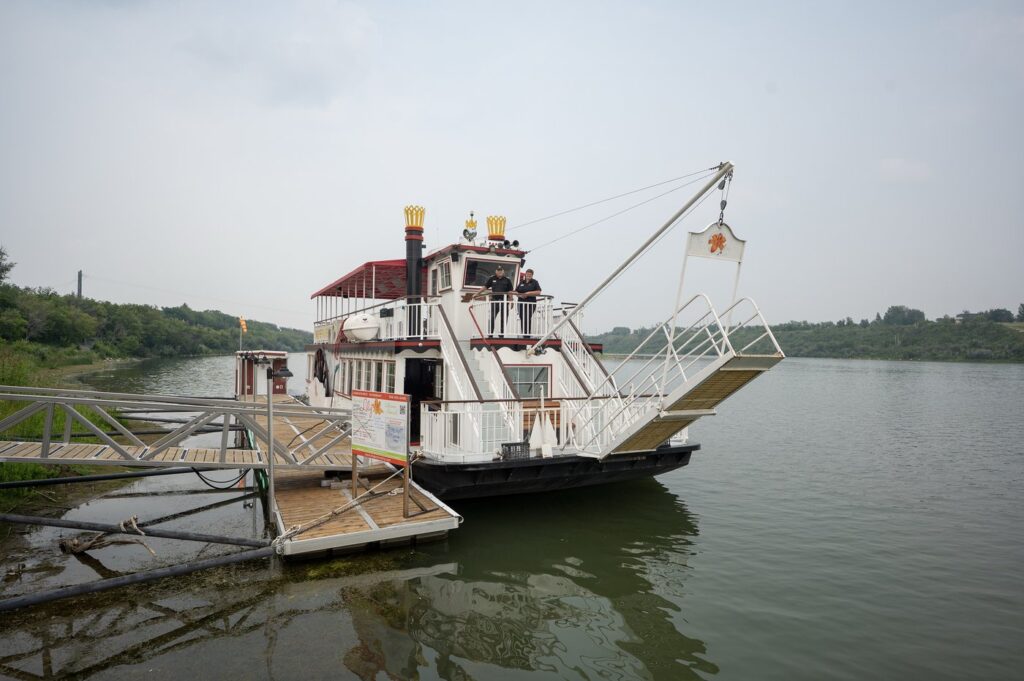
SASKATOON – The Prairie Lily, Saskatoon's iconic riverboat, is facing challenges once again this year, as its new owner claims that the provincial government has failed to provide adequate notifications regarding water flow changes. The riverboat, known for its picturesque cruises along the South Saskatchewan River, is currently unable to operate due to a significant drop in water levels.
According to the Prairie Lily's official website, the Water Security Agency unexpectedly reduced water flows from Lake Diefenbaker into the South Saskatchewan River over the recent weekend. This decision led to a rapid decline in river levels, directly impacting the riverboat’s ability to conduct cruises for the season. The company had anticipated consistent water flows, which would allow it to maintain its schedule, but the sudden drop left the boat stranded onshore.
The Prairie Lily was also grounded last year due to similar low water conditions, and despite a change in ownership this year, the situation has not improved. As a result of the unfavorable water levels, the Prairie Lily has announced the cancellation of all scheduled cruises into the next week and has halted ticket sales until June 18, pending an increase in water availability.
Kim Breckner, a member of the Opposition NDP in Saskatoon, expressed concern over the lack of communication from the provincial authorities regarding the water level changes. Breckner stated, “When water levels are changed without proper notice, it impacts workers, tourism operators, local businesses, and families who rely on Saskatchewan’s river economy.” She emphasized that effective leadership should involve proactive communication to prevent such disruptions.
The Water Security Agency has not yet responded to requests for comment regarding the situation. This lack of communication has raised questions among stakeholders who rely on the river for economic activities and tourism. Breckner's remarks highlight a prevalent frustration that key information should have been shared in a timely manner to mitigate the effects of these abrupt alterations in water management.
The Prairie Lily, which has long been a staple of Saskatoon's summer tourism, now faces uncertainty as the boating season starts. Local business owners and workers were hopeful for a bustling season after the ownership transition, but the sudden low water levels have dashed those expectations once again. The river economy, which significantly contributes to the region’s tourism, is now under threat due to these unforeseen circumstances.
In summary, the Prairie Lily’s current plight illustrates the interconnected nature of ecological management and local economies. As tourism operators await further information and potential water level improvements, the situation underscores the necessity for transparent and timely communication from governmental agencies to all stakeholders involved.








