

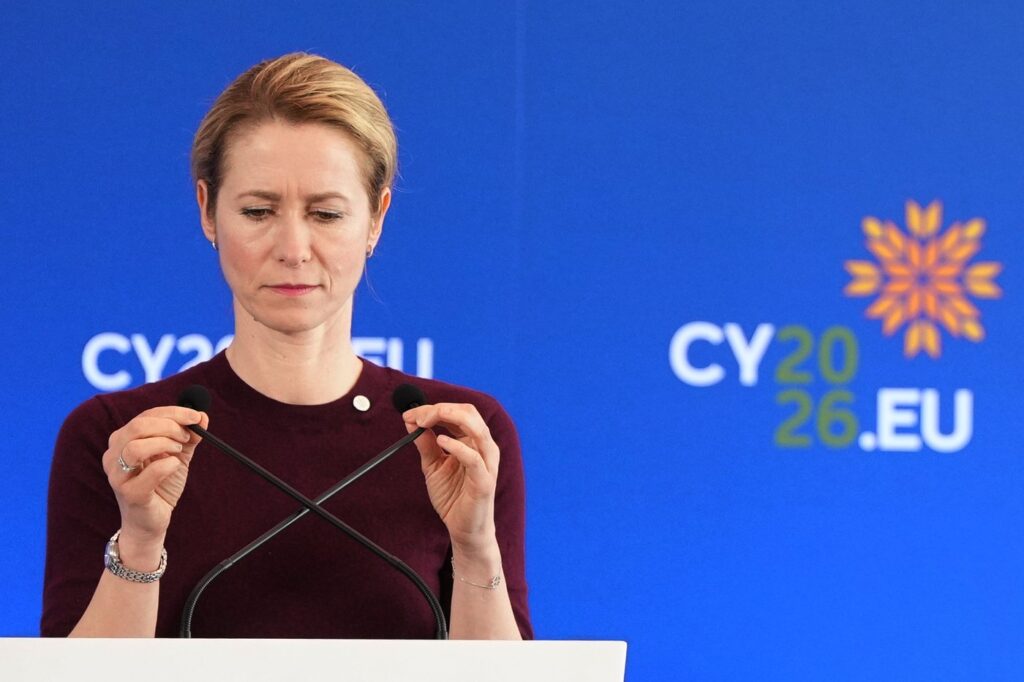
LIMASSOL, Cyprus (AP) — The European Union's foreign policy chief highlighted the urgent need for enhanced naval presence to secure freedom of navigation through the Strait of Hormuz post-conflict in Iran. During a press conference following a meeting with the EU's foreign ministers, Kaja Kallas emphasized that achieving stability would necessitate an increase in vessels, including additional ships from European nations, as well as an expansion of the existing EU naval mission.
The ongoing EU mission in the Red Sea, known as Aspides—which translates to "shield" in Greek—currently consists of three vessels tasked with guarding shipping routes from attacks by Houthi rebels in Yemen. The Strait of Hormuz, situated at the southern end of the Red Sea, serves as a critical chokepoint for approximately one-fifth of the world's oil and gas prior to the commencement of the Iran conflict.
Kallas pointed out that the operational plans for the Aspides mission might require revisions based on emerging obligations, such as the deployment of specialized vessels needed for mine clearance in the strait. "But it mostly needs more ships," she stated, while also indicating that one additional vessel is set to join the Aspides operation, although she refrained from disclosing further details.
Earlier this year, the EU extended the Aspides mission's mandate until February 2027, along with an additional funding allocation of 15 million euros (approximately $17.5 million). Furthermore, France and the United Kingdom are contemplating forming their own naval forces to escort vessels through the Strait of Hormuz once fighting concludes. An EU official revealed that discussions are underway regarding a potential integration of Operation Aspides with the Franco-British naval initiative. However, the official noted that significant issues remain unresolved, particularly regarding command and jurisdiction for a joint force, and spoke under the condition of anonymity due to the sensitive nature of the negotiations.
The escalation of the conflict in Iran, which began on February 28, has led to a surge in shipping costs, primarily due to elevated insurance premiums. The EU official remarked that these costs are unlikely to decrease for at least a year following the cessation of hostilities. He noted that in some instances, it has become more economical for vessels to navigate around the African continent rather than journey through the Red Sea.
In response to these challenges, officials are exploring the possibility of offering state guarantees to shipping companies to alleviate the burden of high insurance costs. This initiative aims to encourage a reduction in premiums, thereby facilitating smoother maritime operations in the affected regions.








