

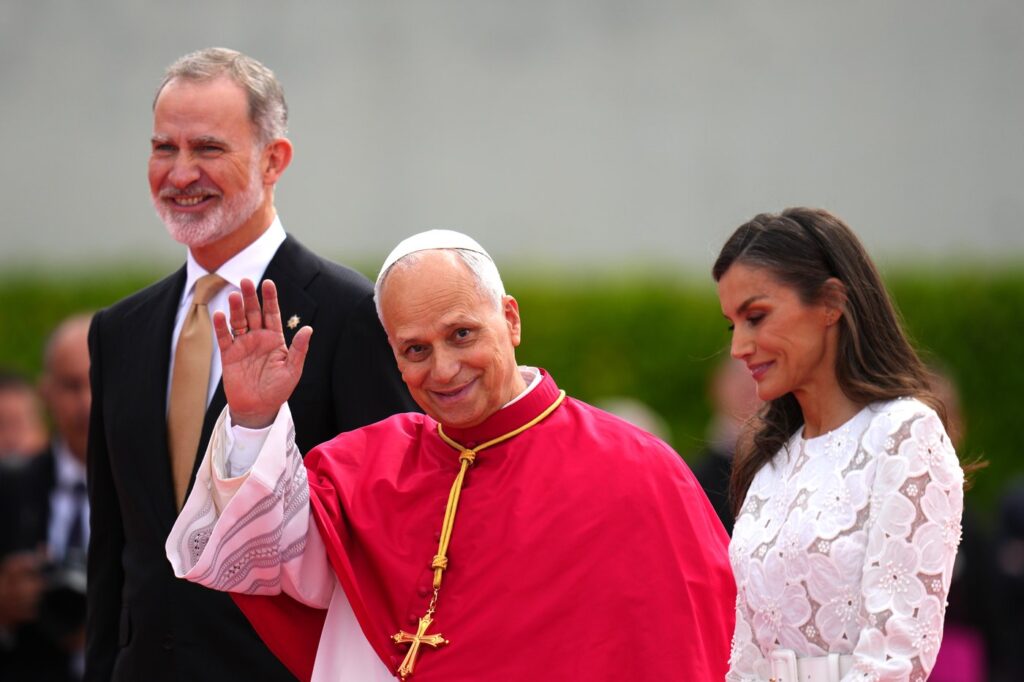
Pope Leo XIV has embarked on a significant weeklong visit to Spain, commencing on Saturday, June 6, 2026. This visit to a nation that historically held strong Catholic values highlights the ongoing changes within Spain, where the practice of religion has noticeably diminished in recent years. The Pope's apostolic journey encompasses not just mainland Spain but also the Canary Islands, aiming to reconnect with the local Catholic community and engage with various societal sectors, including the youth.
Upon his arrival at Adolfo Suarez-Madrid Barajas Airport in Madrid, the Pope was warmly welcomed by King Felipe VI and Queen Letizia. This first day of his apostolic visit set the stage for a series of engagements designed to foster dialogue within a country experiencing a religious transformation. Notably, the Pope’s itinerary includes prayer vigils, meetings with key figures, and interactions with the public, emphasizing his commitment to reaching out to both devout Catholics and those who may feel disconnected from the Church.
One of the first events of the trip was a prayer vigil held in Plaza de Lima, where young people gathered to participate in this important occasion alongside the Pope. This engagement with the youth is particularly relevant, as they represent a demographic that often exhibits waning interest in traditional religious practices. The vigil served not only as a spiritual gathering but also as a platform for young voices to express their hopes and challenges in the context of faith and society.
Throughout the visit, the Pope's interactions with prominent figures in Spain, including the royal family and various community leaders, were marked by a tone of inclusivity and encouragement. On the same day of his arrival, he met with King Felipe VI, Queen Letizia, and their daughters, Leonor, Princess of Asturias, and Infanta Sofia, at the Royal Palace in Madrid. Such meetings symbolize the Church's acknowledgment of the evolving role of monarchy in contemporary Spain, which has transitioned towards a more secularized state.
In an effort to connect with marginalized groups, Pope Leo XIV made a notable visit to CEDIA 24 Horas, a support center for homeless individuals in Madrid. Interacting directly with those in need reinforces the Pope's message of compassion and the Catholic Church's mission to serve the less fortunate. This visit exemplifies the practical application of faith in actions aimed at alleviating social issues, particularly as Spain continues to grapple with economic challenges that have affected various communities.
Images capturing these pivotal moments in the Pope's visit reflect the warmth and enthusiasm of the Spanish people. Notably, the presence of young attendees during the prayer vigil underscores a flicker of hope for the Church's future engagement with the younger generation. Despite the challenges of declining religious affiliation, the Pope's compassionate outreach and invitation to dialogue reveal a desire to invigorate the Church's presence in everyday life.
As the week progresses, the Pope is expected to partake in various rituals and discussions intended to address contemporary issues within the Church and Spanish society as a whole. His visit serves as a potent reminder of the ongoing evolution of Catholicism in a secular world, aiming to bridge the gap between tradition and modernity while reigniting the faith of those who feel estranged from religious practices. Pope Leo XIV's apostolic journey ultimately aspires to sparking new conversations around faith, community, and social responsibility in Spain, encouraging a renewed sense of connection and purpose among its citizens.








