

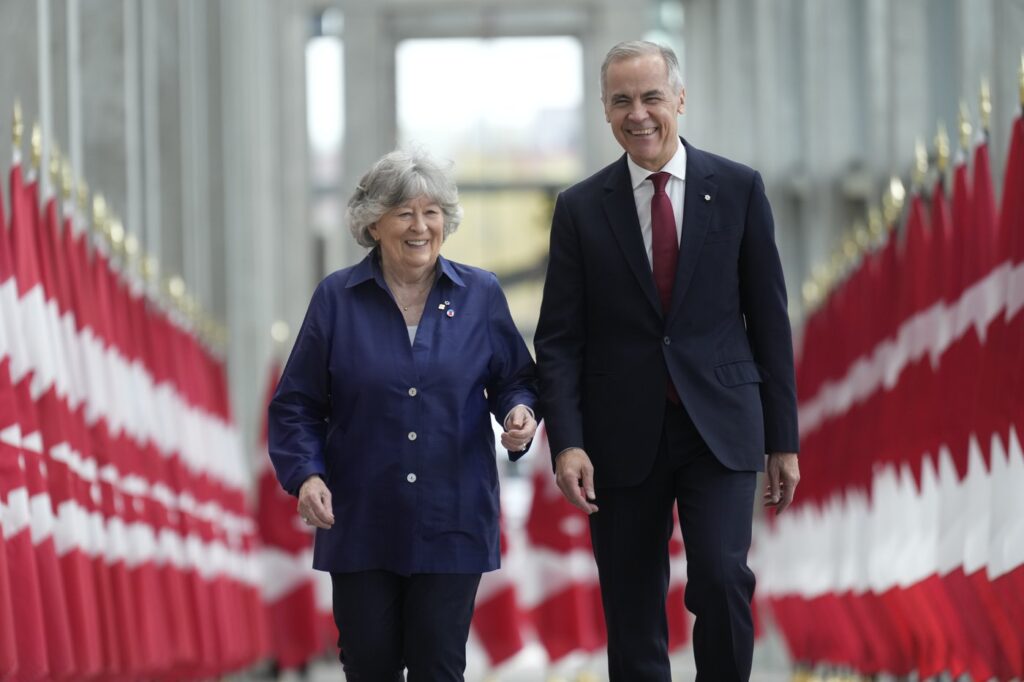
OTTAWA — Louise Arbour will be installed as Canada’s Governor General in a ceremony rich with traditional pomp and circumstance on Monday. Following her installation, she will assume viceregal duties, which encompass representing Canada internationally and promoting excellence and unity domestically.
What is the Governor General's job?
The Governor General serves as the representative of Canada’s head of State, currently King Charles, within Canada. According to the Governor General of Canada website, the role is imbued with constitutional responsibilities. These include swearing in the prime minister and cabinet ministers, signing official documents, and summoning, proroguing, or dissolving Parliament. As commander-in-chief of Canada, the Governor General also engages in military-related duties such as visiting military bases and Canadian Armed Forces (CAF) personnel both domestically and internationally, attending memorial services, and approving new military insignia and badges.
The office also plays a significant role in international relations by hosting foreign heads of state and members of the Royal Family during their visits to Canada. Furthermore, the Governor General is responsible for signing diplomatic letters for ambassadors and high commissioners, as well as presenting various honours and awards to Canadians, including the prestigious Order of Canada.
Who was the first Governor General?
Since the Confederation, Canada has witnessed 30 governors general. The first was Lord Monck, who had previously served as the governor of British North America. In 1952, Vincent Massey became the first Canadian to hold the post, marking a significant moment in the history of the role. Following Massey's appointment, every Governor General has been a Canadian citizen. Lieutenant-governors perform similar responsibilities on a provincial level, analogous to the national duties of the Governor General, while territorial commissioners fulfill analogous roles in Canada's three territories, although they are not officially recognized representatives of the Crown.
How often do we get a new Governor General?
The appointment of the Governor General is made by the King or Queen on the advice of the prime minister. While the Constitution does not stipulate a fixed term for the position, it is customary to see new appointments approximately every five years. During the transition period, the governor general designate receives briefings from various government members to ensure readiness for the role. This period also allows the designate to contemplate key themes for their installation speech, which can help set the tone for their upcoming mandate.
Who fills in for a Governor General who can't fulfil their duties?
In the event that the Governor General is absent or if the position is vacated, the chief justice of the Supreme Court of Canada temporarily assumes the Governor General's responsibilities. The chief justice serves in this capacity until the returning Governor General is back in Canada or until the appointment and swearing-in of a new governor general take place.
Are there any royal duties the Governor General can’t perform?
The Governor General exercises nearly all the powers and responsibilities attributed to the King or Queen. However, the monarch retains certain exclusive rights: only the King or Queen can appoint a new governor general on the advice of the prime minister, meaning that incumbents do not have the authority to choose their successors. Additionally, only the monarch can approve requests from the prime minister for the appointment of four to eight additional senators in the event of a potential political deadlock. Once such a request is granted, the Governor General executes the appointments.
This information highlights the ceremonial and constitutional significance of the Governor General’s role in Canadian governance and cultural representation.








