

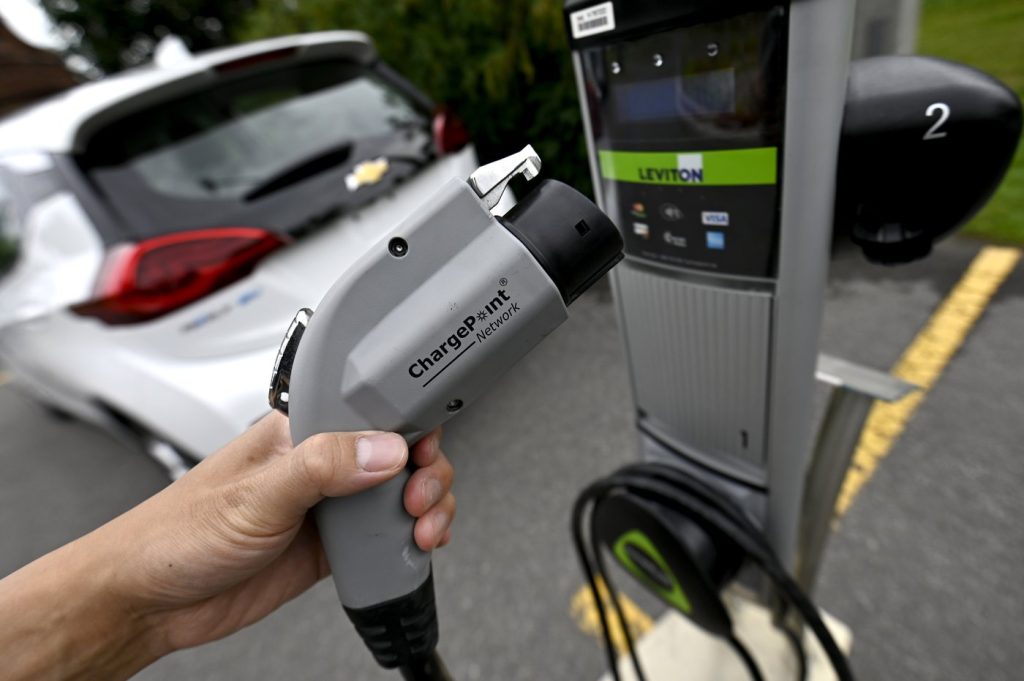
Steve Liborio, the owner of a Thrifty Car Rental franchise in Burlington, Ontario, was surprised to witness a sudden surge in interest for electric vehicle (EV) rentals, especially after earlier attempts by the car rental industry to introduce EVs had faltered. Customers, however, are increasingly seeking hybrids from his fleet due to the rising fuel costs, even though hybrids cost $10 more per day to rent. Liborio noted that while customers don't typically ask for hybrids, they often opt for them due to the savings on gas.
This renewed interest in electric vehicles coincides with heightened gas prices over the summer, prompting Canadian travelers to consider EVs as a way to avoid spending at the pump. Despite this demand, many are finding a shortage of EVs available for rent. Liborio's observations highlight a contrasting trend from previous years, where consumer hesitance regarding EV range, charging infrastructure, and the time required to recharge limited their popularity.
Daniel Ross, the director of strategic market insights at Canadian Black Book, explained that some rental companies had previously downsized their EV inventory due to low profitability and high maintenance costs, resulting in a significant reduction of their electric fleet. For instance, Hertz, after initially planning to expand its EV offerings in 2021, reversed this decision in 2024 by selling off a substantial portion of its global EV assets. Specific details regarding Hertz's Canadian electric fleet remain unclear.
Ross highlighted that the availability of EVs for rental in Canada is still quite limited, primarily in urban areas with adequate charging infrastructure. The rental industry's challenges have been exacerbated by recent fluctuations in the auto market, which had been disrupted by pandemic-related supply chain issues. Rental companies have mostly focused on acquiring gas-powered vehicles rather than expanding their EV fleets, as the demand for electric rentals is still not substantial enough to justify a significant change.
Interestingly, dealership sales of EVs have seen a notable increase. Factors contributing to this trend include ongoing global conflicts causing fluctuations in oil prices, particularly the war in Iran which has affected oil supply routes. The Canadian federal government's reintroduction of EV rebates in February 2023 has also boosted interest, leading to over a 50% increase in sales in several provinces shortly after the program's launch. Canadians claimed more than $122 million in federal subsidies for EV purchases in just three months after the rebate was reinstated.
On the peer-to-peer car rental platform Turo, EV bookings have surged by 80% as of mid-May when compared to the previous year. As per Turo Canada’s vice-president, Bassem El-Rahimy, this rise is indicative of a trend among consumers looking to mitigate high gas prices. Turo lists around 2,000 EVs and hybrids for rent, though supply is beginning to dwindle in anticipation of the summer vacation season. Moreover, searches for hybrid vehicles on Turo rose significantly, climbing by 180% year-over-year between late April and late May.
Enterprise Rent-A-Car has not experienced a noticeable increase in demand for hybrids or EVs, according to spokesperson Danielle Stuart. The company holds a global fleet of nearly 160,000 hybrids and EVs, with limited availability in Canadian markets based on local demand and charging infrastructure. However, the specific number of EVs in Canada was not disclosed.
Calgary resident Jeff Bannard, who frequently rents EVs for work, stated that he only chooses them if they offer the lowest rates compared to other vehicle types. Recently, however, he has found it difficult to secure affordable options, noting that renting an EV can cost 20% to 30% more per day than a traditional gas vehicle, despite the savings from reduced fuel costs. He indicated the cost of charging at supercharger stations ranges from 56 to 62 cents per kilowatt hour, which can be cheaper compared to fueling with gas.
This situation underscores the evolving dynamics of the car rental market as it grapples with changing consumer preferences, economic factors, and supply challenges related to the growth in electric vehicle demand.








