

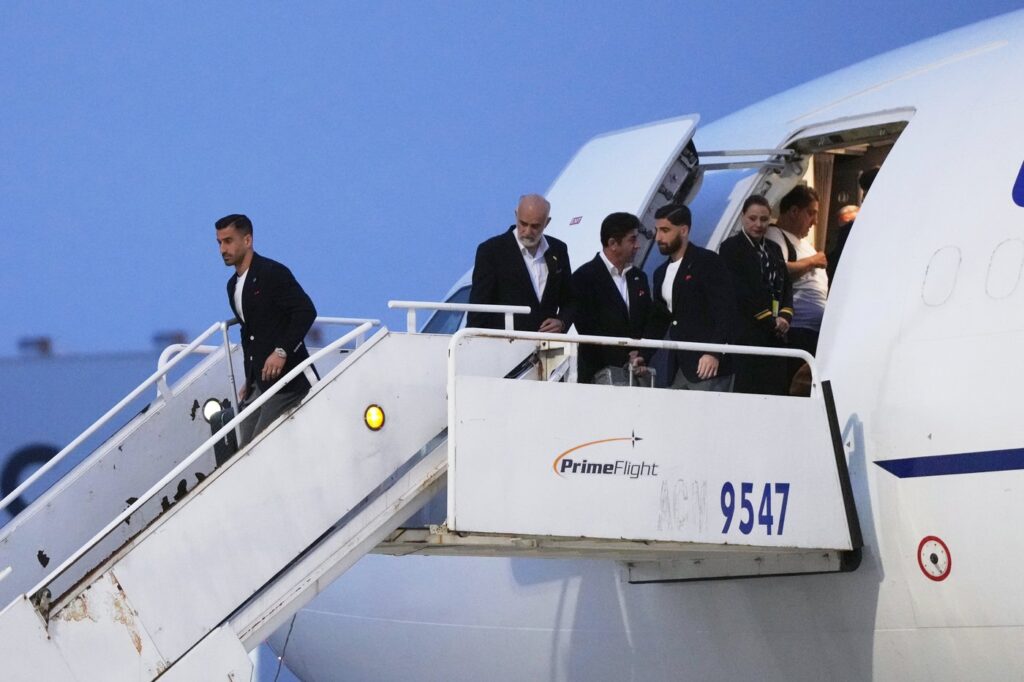
TIJUANA, Mexico (AP) — Iran's national soccer team recently arrived in Mexico for the upcoming World Cup, but they faced complications concerning team member visas. Ehsan Hajsafi, an Iranian defender, expressed his dissatisfaction with FIFA regarding the delays in visa processing, which left several members of their entourage without U.S. visas as they prepare for their matches in Los Angeles and Seattle later this month.
Initially, Iran's training was set to take place in Tucson, Arizona, but due to issues with the visa process, they changed their training base to Tijuana, Mexico. This city is conveniently located on the border with California, allowing easier access to the United States. Hajsafi remarked on the team's arrival, stating, “First of all, we’re very happy that the team has finally arrived, and we’re delighted about that. Thank God, the team’s condition is very good.”
Despite the team's arrival, Hajsafi went on to voice concerns regarding FIFA's handling of the visa situation. He pointed out that while visas were eventually issued to players and a few coaching staff members, crucial figures such as the Iranian Football Federation's secretary-general, Hedayat Mombeini, and vice president, Mehdi Mohammad Nabi, were still lacking U.S. visas. Hajsafi highlighted the importance of these individuals, stating, “Unfortunately, several key members of our coaching staff, whose roles are very important within the team, were not granted visas.”
In his statements, Hajsafi appealed to FIFA to resolve this pressing issue, which remains a significant concern as they prepare for their matches. The Iranian team had been training in Antalya, Turkey, before flying directly to Tijuana on a private jet. As they arrived early on the morning of June 7, 2026, they were greeted by around twenty fans waving flags at the airport.
The scheduling of Iran's matches is crucial, as they will play their first two games in Inglewood, California, starting with a match against New Zealand on June 15, followed by a game against Belgium on June 21. Their final group match will take place in Seattle against Egypt on June 26. If both Iran and the United States finish second in their respective groups, they could potentially meet in the round of 32 on July 3 in Arlington, Texas.
The situation surrounding Iran's participation has been politically charged. In March, U.S. President Donald Trump expressed concerns over Iran's involvement in the tournament, suggesting that it was "not appropriate" amidst worries for players' "life and safety." This provoked a strong response from the Iranian national team, which asserted that no one could exclude them from participating in the World Cup.
Iran’s selection for the World Cup has also been impacted by the ongoing war in the region, resulting in the team consisting of several home-based players whose clubs have not been active since February. Notably, star forward Sardar Azmoun was dropped from the team in March, reportedly due to a social media post that angered Iranian authorities during the conflict.
Despite previous warnings from Iran's sports minister about the team's potential withdrawal from the tournament, the Iranian Football Federation maintained their commitment to participate in the World Cup. They emphasized the need for all players and staff, including those who have served in the Islamic Revolutionary Guard Corps, to be granted visas for the event.








