

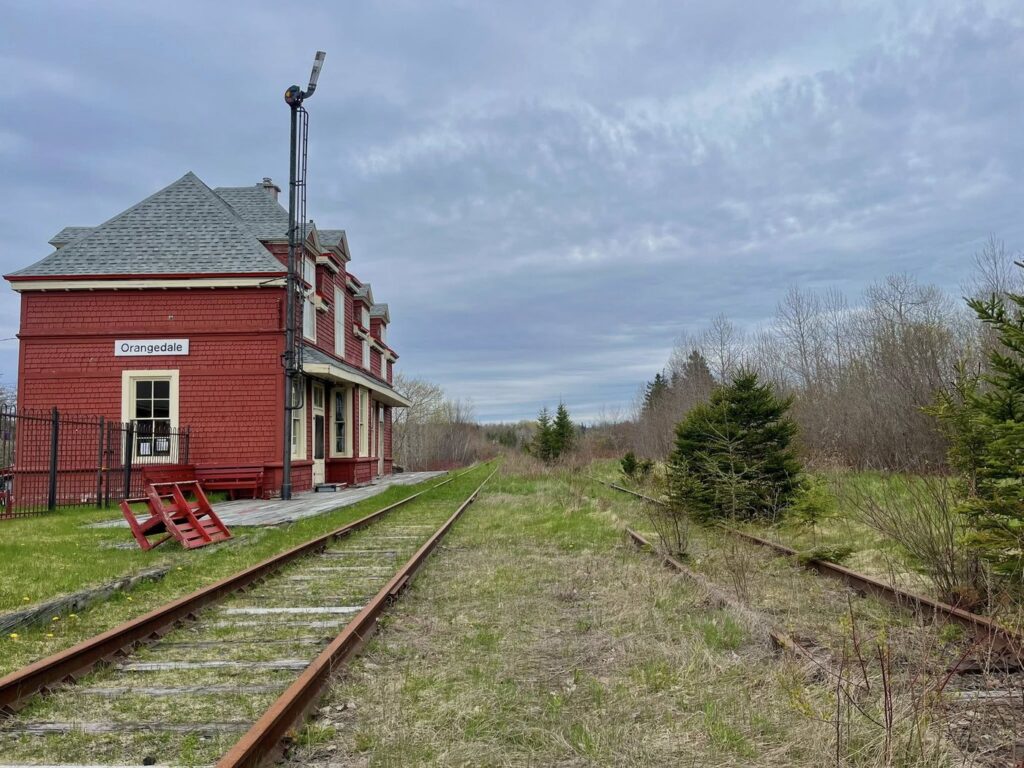
HALIFAX — For over a decade, the empty rail tracks in Cape Breton have faded into the island's picturesque landscape, symbolizing the decline of the industrial economy that once thrived in Nova Scotia. However, local business leaders like Jim Kehoe have persistently advocated for the return of freight trains, recognizing the significant impact it could have on their operations.
Kehoe, who owns several rope manufacturing companies in the vicinity of Sydney, Cape Breton's largest municipality, recalls a time when he received raw materials via rail. Now, shipments have to be transferred to trucks in Port Hawkesbury for a lengthy 130-kilometre journey to his factories. “It’s really affecting our bottom line,” Kehoe remarked in a recent interview, underscoring the logistical challenges businesses face without rail access.
The Cape Breton and Central Nova Scotia Railway, which once enabled the transport of coal and steel, serving industries that were foundational to the island's economy, has not been functional since service ceased near Port Hawkesbury in 2015. The area lost 12 percent of its population over the subsequent 20 years, with coal and steel industries disappearing in the early 2000s. Although the population has started to recover since the post-pandemic immigration surge, the local economy now relies heavily on tourism, retail, education, and public services.
Currently, the railway tracks are lined with overgrown vegetation, indicating years of neglect due to broken ties and washouts. Nevertheless, there are renewed efforts among the business community to revive the line. Trade patterns shifting in favor of the East Coast prompted discussions about potential users of the railroad, including products from Alberta oil, Saskatchewan potash, and local mining outputs; however, no formal business proposal has been advanced to date.
Tyler Mattheis, CEO of the Cape Breton Partnership, expressed optimism about future opportunities, highlighting the growing needs for transportation to East Coast ports. “Our population is growing, the need for East Coast ports is growing, and we’re quite confident that a business case will materialize,” he stated.
The railway spans 394 kilometres from Truro, Nova Scotia, to Sydney. The final 157-kilometre section has become desolate, with former operator Genesee and Wyoming noting that shipping dwindled to approximately 300 cars per year, far short of the 10,000 required for profitability. A 2023 study indicates that local businesses would consider shifting some shipping onto a reinstated railway but still fall short of the needed volume.
In 2023, CN Rail regained a stake in the line, raising hopes for revitalization. A spokesperson for the company noted that any future investment in the unused railway segment necessitates a solid business case to justify the substantial capital required for restoration. Meanwhile, Nova Scotia's Public Works Minister Fred Tilley commented on the estimated restoration cost of $120 million, suggesting it may be underestimated and expressing that no serious proposals have yet been brought forward.
Historically, rail transport has been integral to Cape Breton's industry. Herb MacDonald's book, "Cape Breton Railways: An Illustrated History," reflects on the railway's roots, dating back to early 1830s coal transportation in North Sydney. Despite proposals for a rail link involving New Brunswick and Quebec since the 1850s, the route did not materialize until 1890. Initially, rail traffic thrived during both World Wars and peaked in the 1950s at 180 cars per day, but by the mid-1970s, the rise of automobiles and trucking reduced demand by half. The closure of Sydney Steel and the last coal mine in 2001 marked a significant downturn, although rail services continued for a limited time thereafter.
Future prospects for the railway may involve alternatives such as a limestone mine or a green concrete operation, but industry experts suggest that its viability may depend heavily on the development of Sydney's underused port. Dan MacDonald, a consulting engineer examining railway possibilities, referred to the Port of Sydney as potentially one of Canada's most underutilized resources, noting its proximity to Europe and its dredged capacity for container shipping since 2012.
Despite ongoing discussions about a container terminal, negotiations with potential partner Sydney Harbour Investment Partners for a 500-acre terminal capable of handling approximately 3.2 million containers annually have reportedly ceased. Competing ports such as Halifax and Saint John, which still have considerable unused capacity, complicate Sydney’s case. Yet, MacDonald argues that while Halifax may have the capacity for container shipping, Sydney could cater to bulk cargo such as minerals and equipment, which require more land than is available in Halifax.
As interest grows in Canada's natural resources, there are discussions about the potential for shipping Alberta oil and Saskatchewan potash through Sydney. The recent establishment of a Canadian Coast Guard base in Sydney may also serve as an incentive for logistical investments, as Nova Scotia explores plans for large-scale offshore wind developments that could involve shipping turbine components through the Port of Sydney.








