

SEOUL, South Korea - South Korean tech giants Samsung Electronics and SK Hynix announced on Monday, June 29, 2026, their ambitious plan to invest a combined total of 800 trillion won (approximately $518 billion) in the establishment of a new computer chipmaking hub in the southwestern region of the country. This investment aims to leverage the increasing demand driven by the burgeoning artificial intelligence sector.
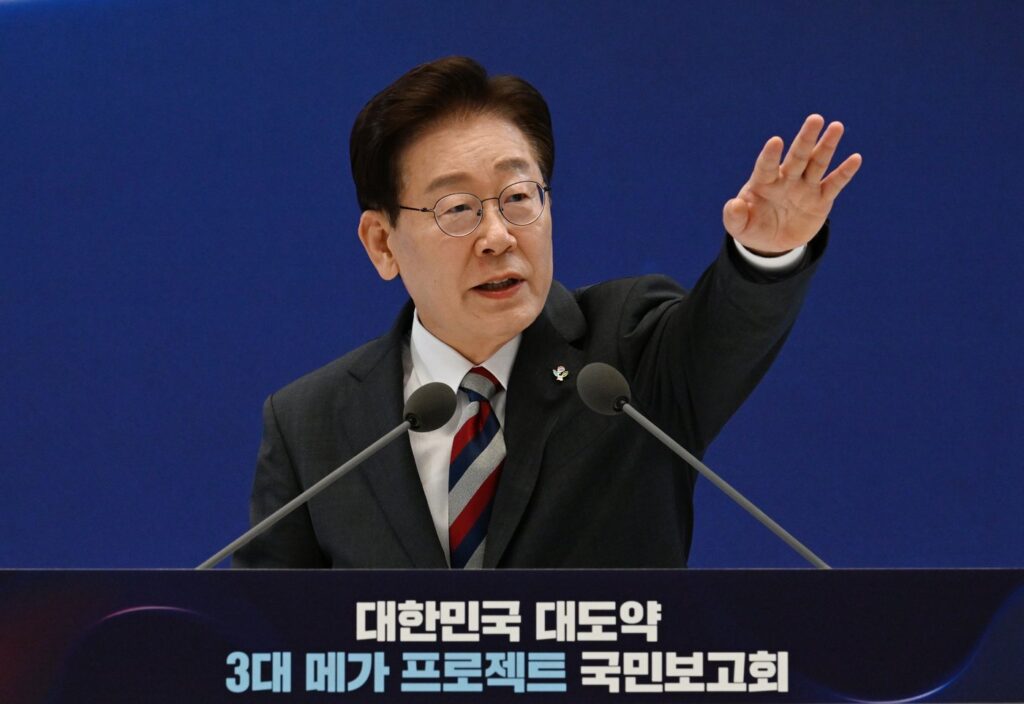
The announcement was made during a joint event attended by South Korean President Lee Jae Myung and the chairs of the two corporations. The initiative aligns with government efforts to diversify investment sources beyond the greater Seoul metropolitan area, historically recognized as the country’s principal economic hub and semiconductor manufacturing center.
The southwestern region has been identified as a key area for development, particularly because it has lagged behind other industrial hubs and has not seen significant economic diversification. Traditionally serving as a political bastion for President Lee's liberal Democratic Party, the region is now set to become a new center for technological innovation.
Both Samsung and SK Hynix are noted for their significant contributions to global memory chip production, collectively accounting for roughly two-thirds of the market share. Each company plans to construct two fabrication plants in this new hub, thereby augmenting their current manufacturing capabilities based in Gyeonggi Province, south of Seoul.
Samsung Chairman Lee Jae-yong indicated that the new fabs will be built in Gwangju, a city in the southwestern region, with potential sites under consideration, including the grounds of a military air base slated for relocation. However, the timeline for the completion of these fabrication plants remains unspecified. SK Hynix’s Chairman Chey Tae-won remarked that the undertaking will be complex and encompass large-scale efforts that demand vast land areas, necessary utilities like water and power, as well as a skilled labor force. Chey noted that establishing SK Hynix's substantial manufacturing cluster in Gyeonggi Province had taken nine years to complete, signifying the extensive planning and execution required for the new venture.
Questions regarding the southwest region's capacity to support such significant semiconductor fabs were dismissed by government officials, who emphasized that the area's strengths in renewable energy would be advantageous for chipmakers facing increasing global pressure to adopt cleaner energy sources. Recent reports have indicated that both Samsung and SK Hynix have experienced record profits due to a surge in global investment in data centers and AI infrastructure, which has subsequently heightened demand for memory chips.
As AI technology proliferates into various sectors—including AI-powered industrial robots and autonomous vehicles—government and business analysts anticipate that AI-driven demand will continue to escalate. There are concerns that the existing semiconductor facilities in Gyeonggi Province might face capacity constraints sooner than expected.
During the event, government representatives proposed the establishment of a nationwide semiconductor ecosystem. This would involve enhancing current manufacturing hubs in the southeast for chip components and materials, creating specialization in chip packaging in the central Chungcheong region, and constructing data centers throughout the country. President Lee articulated the urgency of establishing critical components of artificial intelligence ahead of other nations, identifying semiconductors, physical AI, and AI data centers as the three foundational pillars crucial for the country’s future technological advancements.








