

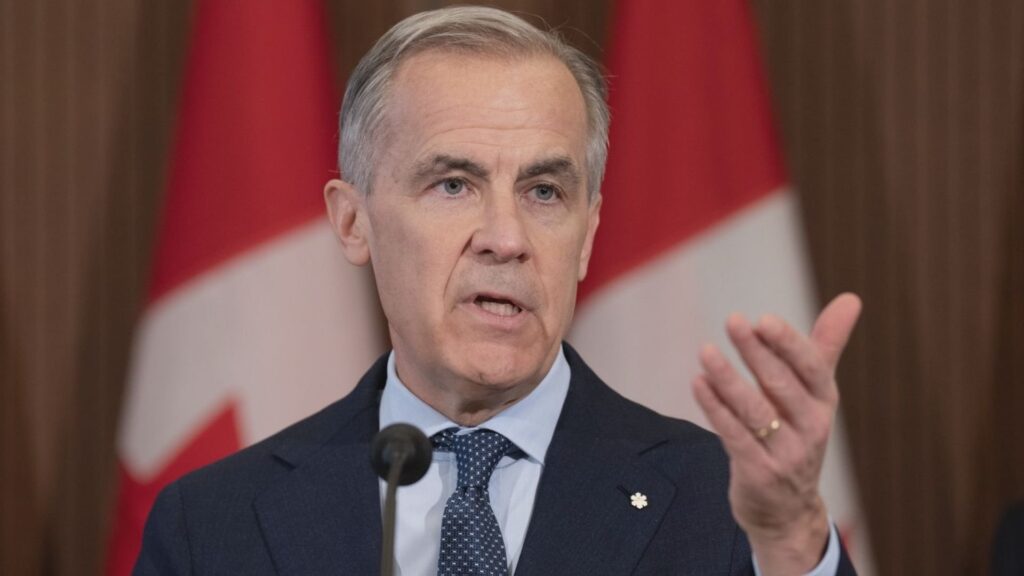
Canadian Prime Minister Mark Carney announced that retaliatory tariffs against the United States will take effect on September 8, following a breakdown in trade negotiations. This decision comes after the U.S. imposed new 50% tariffs on billions of dollars in Canadian exports, a move that Carney described as stemming from a "bad deal." The U.S. tariffs, which target approximately $28 billion in Canadian goods, include products ranging from hockey sticks and honey to dairy products and electronics.
The trade discussions collapsed late Friday, prompting Carney to suspend negotiations and call back Canadian trade negotiators to Ottawa. Speaking to reporters on Parliament Hill, Carney highlighted a growing "gap" between the two nations, indicating that Canada has transitioned from a partner to a competitor in terms of trade relationships. He reiterated, "We cannot accept what they've offered and we will not give what they've asked."
“We cannot accept what they’ve offered and we will not give what they’ve asked”
Accompanying Carney at the press conference were Dominic LeBlanc, Canada-U.S. Trade Minister, and Janice Charette, Canada's chief trade negotiator. Carney stated that Canada plans to implement dollar-for-dollar retaliatory tariffs, targeting specific sectors including steel, dairy, appliances, agricultural equipment, pulp and paper, and electronics. More specifics regarding these countermeasures and support for affected industries will be announced shortly.
Carney also criticized the U.S. for introducing changes to the proposed terms at the last minute, which he described as "unfair" and "uneconomic." He accused the U.S. of attempting to restrict Canada’s ability to engage in other trade deals and to limit protections of language and culture. "This is unacceptable," Carney emphasized, affirming Canada’s commitment to free trade with various international partners.
Jamieson Greer, the U.S. Trade Representative, attributed the failure of the negotiations to Canada's last-minute demands and deviations from previously agreed terms. He claimed that the U.S. had offered Canada the best treatment of any major exporter, along with significant tariff reductions on key products like steel and aluminum, in exchange for concessions from Canada.
In light of the failed negotiations, Greer conveyed that no new talks with Canada were forthcoming and that the U.S. would be moving ahead with measures to respond to Canadian retaliation. The breakdown of the talks is particularly significant as it occurred shortly after the Trump administration did not extend the Canada-United States-Mexico Agreement (CUSMA) in July, initiating a rolling review of the trade deal.
Reacting to the situation, Ontario Premier Doug Ford expressed his full support for Carney's strong response against the tariffs, emphasizing that Canada must stand firm against economic coercion. In a letter to Carney, Ford suggested a retaliatory approach that matches U.S. tariffs dollar-for-dollar and proposed that electricity, energy, and critical minerals be used as leverage in negotiations. He called for the imposition of tariffs on products from politically significant states that support the current U.S. administration, including Alabama, Arkansas, Florida, Iowa, Missouri, Montana, Texas, and Wisconsin.
Despite the pressures for a more aggressive stance, Carney seemed hesitant to use energy and critical minerals as bargaining chips, maintaining that doing so could harm Canada’s reputation as a reliable supplier. He stated that Canada has already increased its development of critical minerals independently of U.S. relations, indicating that other options would be prioritized to protect domestic industries during this trade conflict.








