

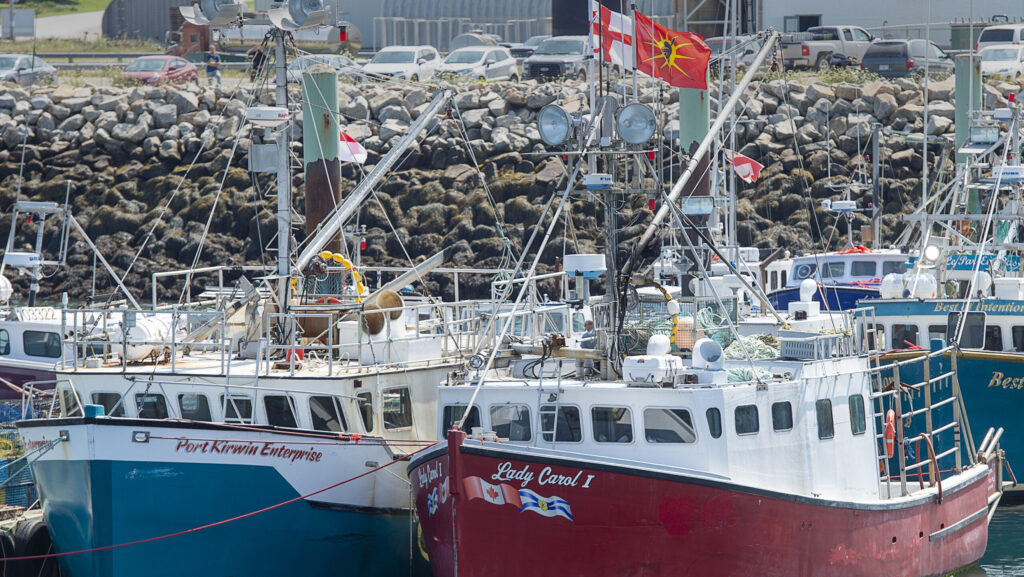
A group representing commercial fishers in Nova Scotia, known as the Unified Fisheries Conservation Alliance (UFCA), has announced its intention to appeal a recent court decision that ruled it lacks standing to challenge Indigenous fishing rights. The court's ruling involved a case concerning the Sipekne’katik First Nation's treaty rights to fish for lobster out of season without commercial licenses, a contentious issue that has led to ongoing disputes in the region.
The Sipekne’katik First Nation first declared its plan to launch a self-regulated fishery in September 2020, specifically targeting the highly lucrative St. Mary’s Bay, situated approximately 200 kilometers west of Halifax. UFCA president Colin Sproul expressed his frustration, stating that the federal government should have addressed the issue promptly, preventing the need for litigation. He criticized both Sipekne’katik and the Canadian government for seeking to recover approximately $4,000 in legal costs, describing their actions as “rubbing salt in the wound” of commercial fishers facing financial hardship.
In court documents filed in 2024, the alliance claimed that the Sipekne’katik fishery was unauthorized and unlawful, arguing that it negatively impacted lobster stocks. They asserted that some commercial fishers were compelled to sell their licenses or fish in alternative areas due to the competition posed by the Indigenous fishery. The UFCA sought a judicial declaration affirming that federal Fisheries Act regulations are constitutionally valid and do not infringe on Sipekne’katik’s treaty rights.
While the alliance does acknowledge that the First Nation has treaty rights to hunt, fish, and gather in pursuit of a moderate livelihood, it contended that these rights were subject to regulatory limitations from the outset, constrained by existing legislation and administrative guidelines. However, Justice Ann Smith ruled last month that the UFCA lacked the necessary legal standing to pursue the claim, meaning the court had no jurisdiction to entertain the case.
Justice Smith noted that the UFCA is not a party to any treaty between Sipekne’katik and Canada and, therefore, does not possess the private interest standing required to assert the constitutional status of treaty rights. Smith emphasized that any discussions regarding treaty rights should be conducted through negotiations between First Nations and the federal government rather than through adversarial litigation.
Furthermore, Chief Michelle Glasgow of Sipekne’katik declined to provide comments but underscored in court documents the potential dangers of allowing non-Indigenous parties to instigate litigation that seeks to limit First Nation treaty rights. She warned that such actions could undermine the rights holders’ sovereignty in resolving disputes regarding their treaty rights.
The Supreme Court of Canada recognized the right of First Nation members to engage in moderate livelihood fisheries in a landmark 1999 ruling known as the Marshall decision. This ruling confirmed that Mi’kmaq fisherman Donald Marshall Jr. had the right to fish for eels and sell them without a license, affirming that treaty rights are protected under Section 35 of the Constitution.
The Sipekne’katik First Nation’s decision to implement its self-regulated fishery was based on the implications of the Marshall decision. However, non-Indigenous fishermen had long raised concerns about the legality of Sipekne’katik members' participation in the fishery. The tensions escalated into violence on October 13, 2020, when over 200 mostly non-Indigenous fishers protested at a facility in Middle West Pubnico, Nova Scotia, that was storing lobster caught by Sipekne’katik members. This led to several arrests and further hostility, including a fire that destroyed the facility two days later.
In his comments, Sproul reiterated that the UFCA was formed in 2020 to promote dialogue and peaceful resolutions rather than violence or extremism regarding fisheries management. He insisted that a unified regulatory framework for all fishers is essential for resolving the ongoing disputes surrounding fishing rights in St. Mary’s Bay.
Although the attorney general’s office did not provide a direct response, federal lawyers indicated that the alliance’s claim overlaps with ongoing legal issues already before the courts. Sipekne’katik has previously pursued civil actions involving its fishing rights, with one case being voluntarily discontinued in 2025 and another currently placed on hold by mutual agreement.
The report highlights the complexities of fishing rights in Canada, particularly concerning Indigenous communities' entitlements established through treaties, and showcases the ongoing struggle between commercial fishers and First Nations over access to maritime resources.








