

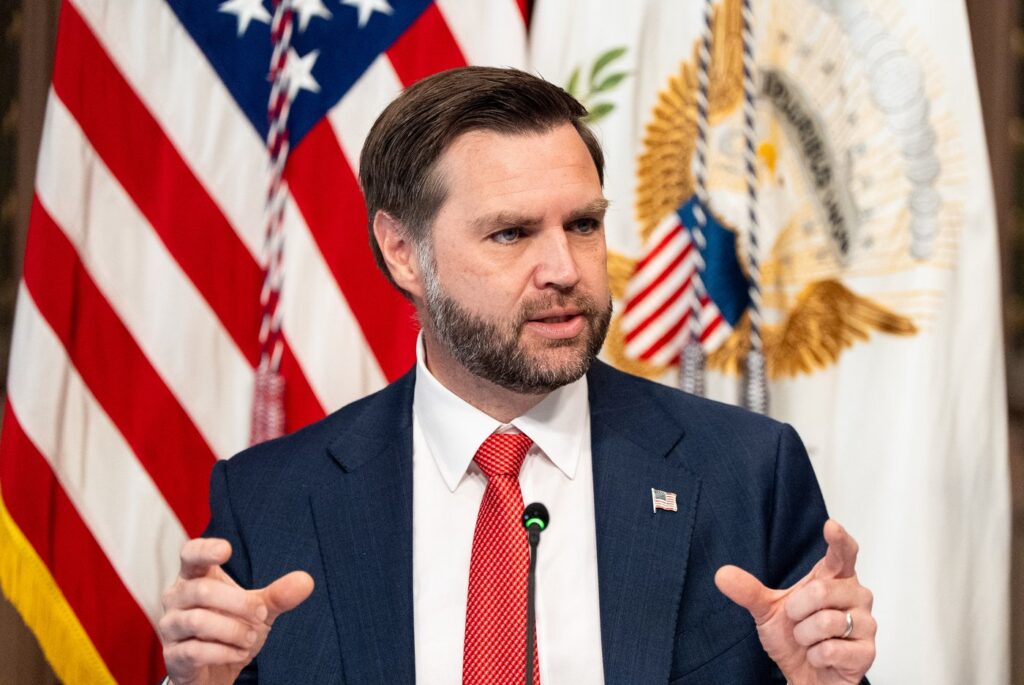
U.S. Vice-President JD Vance recently commented on a new trade deal between the United States and Canada during a fundraising event held in Southampton, New York. He critiqued Canadian Prime Minister Mark Carney, suggesting that Carney attempted to "out-tough" President Donald Trump, while also praising Conservative MP Jamil Jivani for his effective advocacy on behalf of Canada.
In an audio recording obtained from the private fundraiser, Vance referred to Carney as a "very sweet guy" with whom he has a good relationship. However, he criticized Carney’s approach to negotiations, stating that the Prime Minister has a tendency to act confrontationally toward Trump, claiming victories where none are apparent. Vance pointed out that although Carney promotes the deal as beneficial for Canada, many issues were conceded during negotiations.
During his remarks, Vance mentioned Jivani’s impactful role behind the scenes, noting that the Conservative MP has managed to build a productive rapport with U.S. officials, which has helped Canada navigate the complexities of the trade discussions. Vance also dismissed Pierre Poilievre, the leader of the Conservative Party in Canada, as a "non-entity" in the negotiations, further highlighting Jivani's importance in the process.
Vice-President Vance’s comments came on the heels of Trump's announcement of a last-minute deal to postpone new tariffs on several Canadian products for three days. This agreement followed a phone call between Trump and Carney, culminating weeks of intense negotiations. Trump asserted that the deal would benefit all parties involved, claiming a "very nice relationship" with current Canadian leadership.
The most recent agreement, which reportedly includes the U.S. reducing tariffs on Canadian steel, aluminum, and automobiles, has raised questions regarding additional concessions made by Canada. Trump suggested that the arrangement would also result in zero tariffs for American farmers. Canadian Minister Dominic LeBlanc returned to Washington for further trade discussions, indicating that negotiations continued up to a looming deadline.
Vance emphasized that Trump’s focus is not on accommodating Canada at the expense of U.S. interests but on leveraging the negotiations for the benefit of the American people. He acknowledged that Canada's approach has subtly shifted toward a more favorable stance under the current administration, reflecting a "Trumpian direction" even if the change is not wholly complete.
This period has marked a significant resurgence of tension in Canada-U.S. relations, particularly after Trump's tenure began, characterized by tariffs and threats of territorial annexation. The previous relationship between Trump and former Prime Minister Justin Trudeau was notably strained and contributed to Trudeau’s eventual resignation.
Vance disclosed that both Jamieson Greer, the U.S. Trade Representative, and Commerce Secretary Howard Lutnick are leading the negotiations but noted his own heightened involvement due to his friendship with Jivani. Jivani has actively sought to position himself as a bridge between the United States and Canada and has previously engaged in talks to facilitate stronger business ties.
Jivani's growing role in U.S.-Canada relations has sparked contention within the Canadian Conservative Party, with Poilievre frequently criticizing any deals not conducted on a tariff-free basis. Jivani, despite facing backlash, remains committed to advocating for Canada's interests during negotiations with the Trump administration. The dynamics of these discussions highlight the ongoing complexities in Canadian politics and international relations with the United States.
As the situation develops, Jivani’s diplomatic efforts and Vance's influential commentary will likely play critical roles in shaping the future of the Canada-U.S. trade landscape.








