

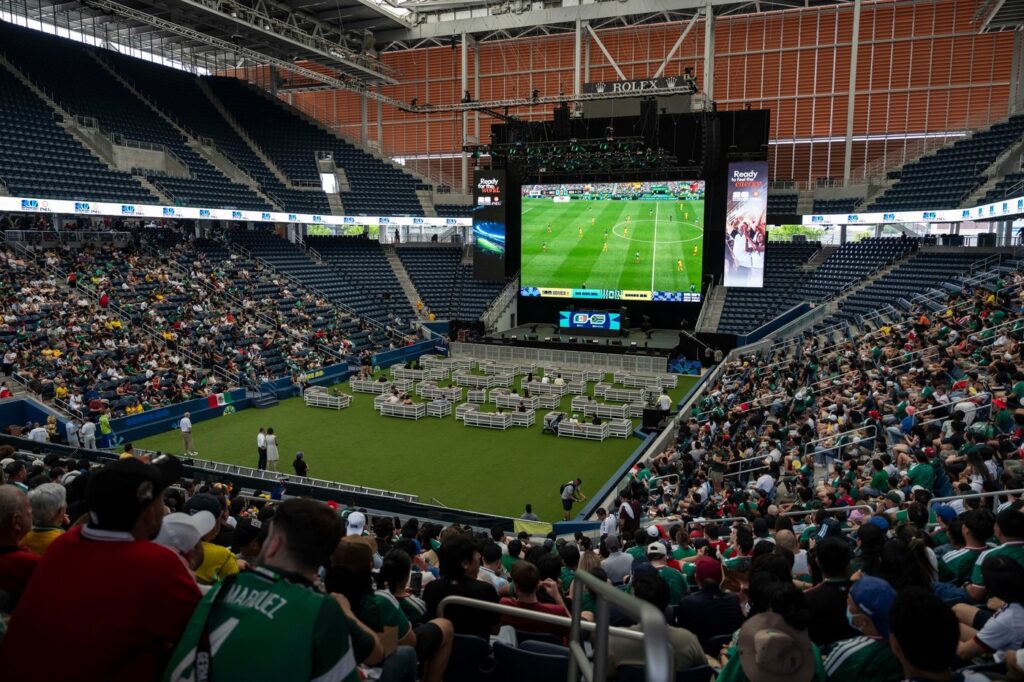
MIAMI (AP) — In the United States, a notable trend has emerged during the World Cup as many English-speaking viewers are tuning into broadcasts on Telemundo, despite not fully understanding Spanish. This phenomenon represents a shift in how soccer fans engage with the sport, revealing a deeper appreciation for the game and its culture.
Ashleigh Hallam, an English as a second language teacher from Indiana, represents this movement. Although she admits to not comprehending everything being said on Telemundo, she finds that the excitement and energy of the matches come through, regardless of the language barrier. Hallam is among a significant portion of the audience; statistics show that around 20% of the U.S. population identifies as Hispanic, yet Nielsen ratings indicate that nearly half of the World Cup viewers have watched matches in Spanish.
Viewers have been drawn to several aspects of Telemundo's coverage. Notably, the famed broadcaster Andrés Cantor's iconic "¡goooooool!" call has captivated audiences, along with the fact that Telemundo does not break for commercials during crucial hydration breaks, an aspect often criticized in English broadcasts by Fox. Additionally, some fans simply find the Spanish broadcasts more entertaining and accessible at a lower cost through platforms like Peacock compared to Fox One.
Jackson Braunius, a Michigan native, shared his experience of watching a U.S. game at a bar in Miami Lakes, Florida. Despite knowing very little Spanish—just enough to order a beer—he has embraced watching matches on Telemundo. He has learned to read the emotional cues of the commentators, deducing from their volume levels whether a significant play is about to unfold.
Comedian Trevor Noah has also joined the trend, hosting World Cup watch parties on YouTube where he has opted for Spanish-language feeds. He praised Telemundo's coverage for capturing the essence of the game, including the coaches’ stress levels and player interactions during non-play moments, arguing that commercial cuts detract from the live experience of the match.
With the tournament’s success, broadcasters are now eyeing future opportunities, including the potential bidding war for the rights to the 2030 World Cup. Reports suggest that these rights may be bundled for both English and Spanish broadcasts, contrasting the current separate arrangements.
Fox Sports highlighted the immense viewership numbers, announcing that a recent match between Belgium and the U.S. achieved peak ratings of around 41 million, making it the most-watched soccer telecast in U.S. history. The final U.S. game in the tournament had a collective audience of about 45 million between Fox and Telemundo, a significant feat that underscores the growing interest in soccer across the nation.
William Kennedy from Miami, whose wife is Colombian, shared his experience of preferring to watch matches in Spanish. He finds that the excitement conveyed by the commentators, especially during fast-paced moments, enhances his viewing experience, even if he doesn't fully understand the commentary itself.
Hallam's journey into soccer was spurred when her daughter expressed a desire to join a recreational league. After teaching herself the sport from a "coaching for dummies" book, she began coaching her daughter and developed a lasting love for soccer. Today, she enjoys watching the World Cup matches in Spanish and plans to continue doing so in future tournaments.
Overall, this World Cup has highlighted how soccer can serve as a universal language, bridging cultural gaps and fostering connections among viewers of different linguistic backgrounds.








