

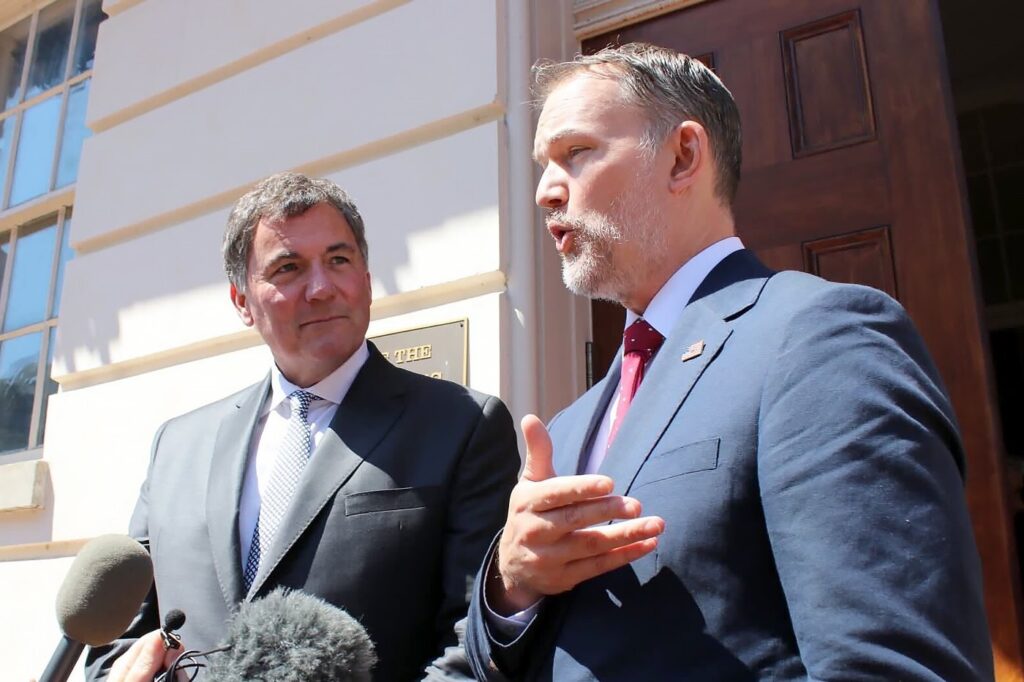
Canada-U.S. Trade Minister Dominic LeBlanc is returning to Washington to continue discussions with U.S. Trade Representative Jamieson Greer as both nations work to finalize a trade deal that aims to prevent the implementation of new U.S. tariffs. The meeting is scheduled for 12:15 p.m. ET, where LeBlanc will be joined by Canada's chief negotiator Janice Charette.
Additionally, Foreign Affairs Minister Anita Anand is also in Washington and is expected to meet with Secretary of State Marco Rubio at the White House at 1:30 p.m. ET. LeBlanc had initially been in Washington since August 10 but made a brief return to Ottawa on Wednesday to update Prime Minister Mark Carney on the negotiations and participate in discussions with his cabinet and the country's premiers.
Among the premiers, there is a mix of optimism and caution regarding Canada’s prospects for reaching a trade agreement to avoid potentially damaging tariffs from the United States. Some premiers express hope for positive developments, while others are seeking further clarity on the proposed agreement.
On Tuesday, U.S. President Donald Trump announced a temporary pause on 50 percent tariffs that were set to impact a range of Canadian goods starting just after midnight. This three-day respite, extending until just after midnight on Saturday, aims to provide time for the parties to formalize the agreed-upon deal in writing.
Canada is particularly focused on securing relief from tariffs affecting several key sectors, including steel, aluminum, forestry, and the automotive industry. Reports from major news outlets such as Bloomberg and The Wall Street Journal suggest that the deal may involve a reduction of tariffs on Canadian steel and aluminum from the current 50 percent to 25 percent. A confidential source indicated that lower duties on these metals are included in the negotiations, but specific tariff rates have not been disclosed.
Premier Tim Houston of Nova Scotia expressed optimism regarding the trade deal and mentioned that Prime Minister Carney has requested provinces to restock shelves with American alcohol. British Columbia’s Premier David Eby acknowledged that while no potential agreement would meet all expectations, substantial progress has been made in key sectors. Saskatchewan Premier Scott Moe voiced his hope for negotiations to yield reduced U.S. tariffs on Canadian steel, aluminum, autos, and lumber.
Quebec Premier Christine Fréchette remains cautious, stating that it is too early to assess the deal's impact and that she requires more information to determine its benefits for her province. Prime Minister Carney has not publicly commented on the details of the deal but released a statement affirming that the new agreement strengthens Canada’s existing trade advantages with the United States.
President Trump characterized the potential agreement as a "good deal for everybody" and reiterated claims that it would eliminate tariffs imposed on American farmers. He hinted that there may be a reduction in tariffs on Canadian steel and aluminum, noting that Canada was previously subject to higher tariffs compared to other countries.
The U.S. administration has identified several justifications for the 50 percent tariff threat against $28 billion worth of Canadian goods, including Canada's retaliatory tariff-free auto quota, provincial restrictions on alcohol sales, and the country's supply-managed dairy sector.
In a statement, Trade Representative Greer conveyed that the U.S. has made progress towards alleviating some of the unresolved issues that have been sources of friction over the past year. It is important to note that, unlike other tariffs, the duties in question would affect goods that comply with the Canada-U.S.-Mexico Agreement (CUSMA) on trade. The anticipated tariffs could impact a wide range of products, from hockey sticks to honey, as well as concrete and plywood.








