

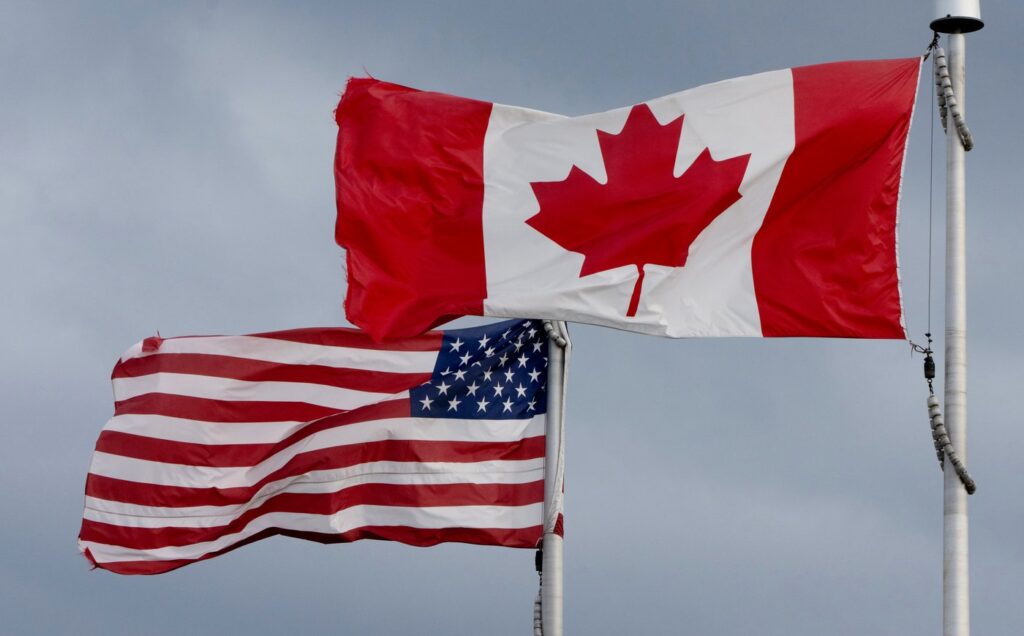
In recent years, the relationship between the United States and Canada has reached a precarious low point, primarily due to the trade war initiated by former U.S. President Donald Trump. Tensions between the two neighboring countries have escalated, causing Canadians to express a more negative opinion about their American counterparts. The economic disputes and political rhetoric have intensified the strain, leading to a complex diplomatic scenario.
The situation has drawn mixed responses from those in the U.S. Some politicians and commentators have criticized Canada and its Prime Minister, Mark Carney, for their approach to handling these tensions. On the other hand, there are voices within the U.S. who commend Carney for standing firm against Trump's administration, seeing it as a necessary stance in these challenging times.
In a recent discussion, host Caryn Ceolin engaged with Anthony Scaramucci, who is notable for his previous role as the White House communications director and currently serves as the host of The Rest is Politics: US and managing partner at Skybridge Capital. Their conversation delved into the intricacies of U.S.-Canada relations, the perspectives Americans hold regarding the ongoing trade war, and the evolving leadership role that Carney is assumed to occupy on the global stage.
Scaramucci articulated his view that Carney "leads the west," indicating a shift in the dynamics of global leadership in response to the challenges posed by the Trump administration's policies. This assertion raises interesting questions about the influence of Canadian leadership in international affairs, particularly concerning economic cooperation and diplomacy amidst rising nationalism and protectionist tendencies in the U.S.
The backdrop to this dialogue highlights the broader implications of the trade war, where tariffs and trade barriers have not only strained economic ties but have woven a narrative of mistrust and rivalry between the two nations. Canadians are beginning to question the longstanding relationship that once symbolized amicable partnership and mutual benefit, causing a reevaluation of their diplomatic stance and public sentiment towards the U.S.
The unfolding events have thus made it imperative for leaders like Carney to navigate a challenging geopolitical landscape, balancing national interests with the need to maintain a constructive relationship with the U.S. Even as some view the current climate with skepticism, others perceive an opportunity for Canada to assert its voice and influence within the context of Western leadership.
In conclusion, the dynamic between the U.S. and Canada continues to evolve, shaped by political decisions, economic policies, and public perceptions. The ability of leaders to foster a renewed partnership amid adversity will be critical in determining the future trajectory of the relationship between these two countries.








