

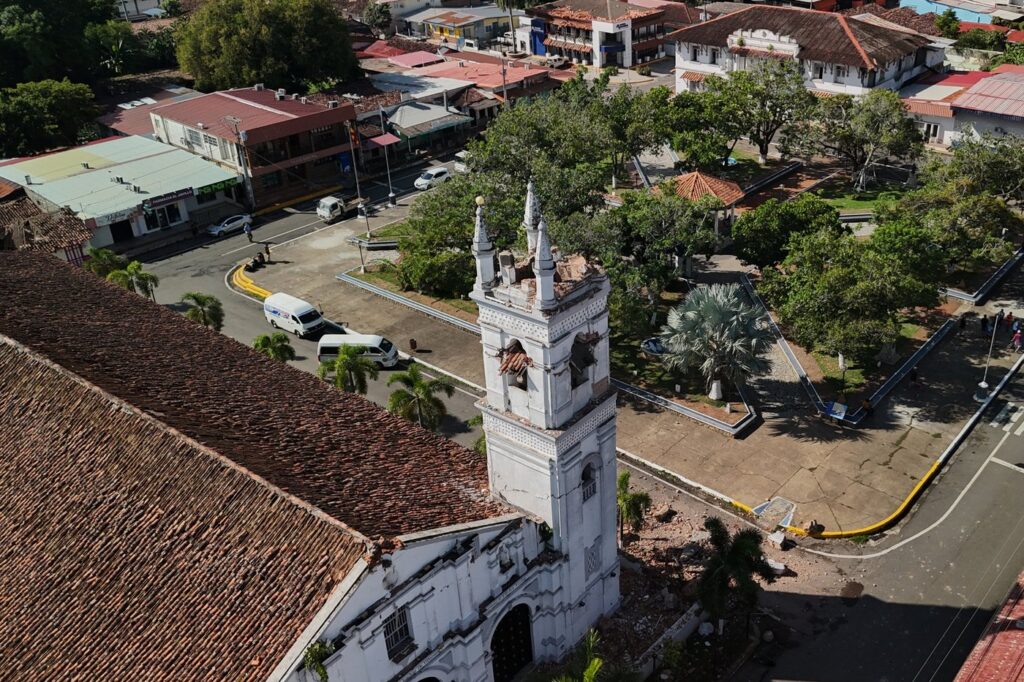
A preliminary magnitude 6.1 earthquake struck southern Panama on Monday evening, according to the U.S. Geological Survey. Fortunately, there have been no immediate reports of casualties or property damage following the tremor.
The earthquake occurred at approximately 6:20 p.m. local time, with its epicenter located about 18 kilometers (11 miles) west of Río Grande. The quake was measured at a depth of 10 kilometers (6 miles), which is relatively shallow and could potentially lead to more intense shaking on the surface.
This earthquake follows a series of seismic activities in the region, including two significant earthquakes recorded on Friday afternoon—one with a magnitude of 7.7 and another at 6.6. Those earlier quakes resulted in the collapse of buildings near their epicenters and prompted widespread evacuations throughout southern Panama.
The recent seismic events raise concerns about the stability of infrastructure and the potential for future aftershocks. Since earthquakes are common in the region due to its location along tectonic plate boundaries, the government and local authorities are likely to remain vigilant in monitoring seismic activity and ensuring public safety.
Residents in the affected areas are accustomed to tremors, yet significant earthquakes such as these often serve as reminders of the unpredictable nature of seismic events. Emergency preparedness and response plans are crucial in mitigating the impacts of such natural disasters, particularly in densely populated regions.
The U.S. Geological Survey continues to track the seismic activity in Panama, and further reports may provide additional insights into the aftershocks and any necessary safety measures for local populations. The earthquake's occurrence in a span of days, following powerful prior quakes, highlights the geophysical complexities of the region and the need for ongoing research and preparedness.
In summary, while the magnitude 6.1 earthquake on Monday resulted in no immediate harm, it adds to a series of significant seismic events that have affected southern Panama recently. The community’s resilience and emergency management will be critical in addressing the challenges posed by such natural occurrences.








