

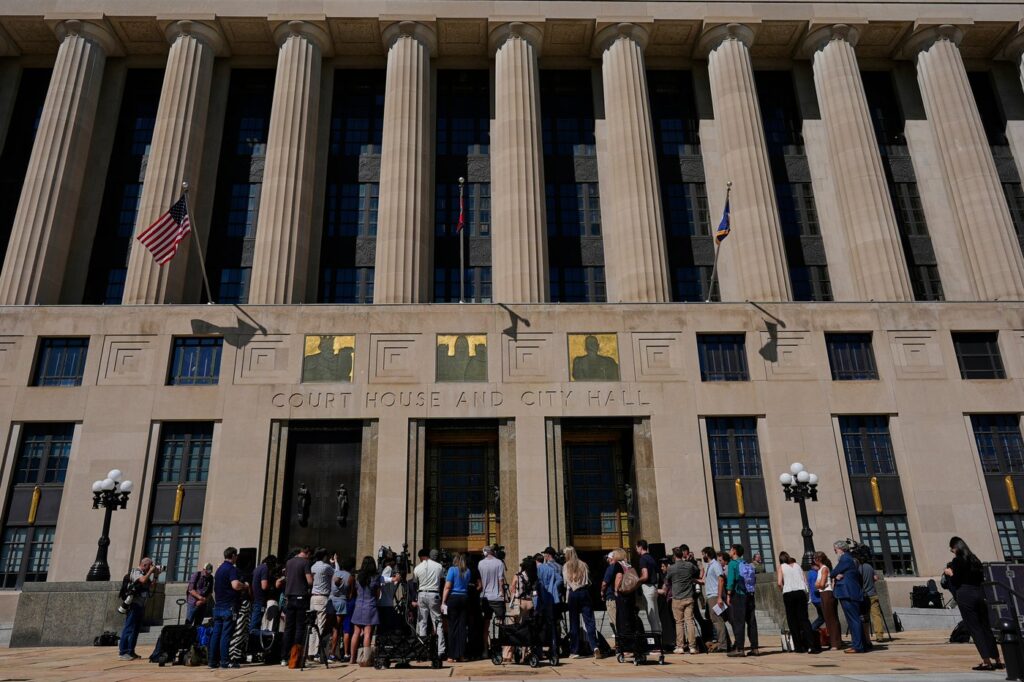
After Christa Pike's failed execution attempt in Tennessee on September 30, 2023, the legal landscape surrounding her case is raising significant questions regarding the possibility of a second attempt. Pike, 50, suffered severe burns and blisters after executioners attempted to administer two doses of pentobarbital, which led to a prolonged hospitalization. She was previously sentenced to death for the brutal 1995 murder of her classmate Colleen Slemmer.
While multiple states have conducted second attempts at executions under varying circumstances, they all involved initial attempts that were halted before any lethal drug was administered. In contrast, Pike’s case is distinct due to her experiencing tangible physical harm from the execution attempt.
Outgoing Republican Governor Bill Lee has temporarily paused executions in Tennessee and has initiated an external review of the failed attempt. His office has not commented on whether the state will pursue another execution attempt for Pike.
Legal experts indicate that the question of whether Tennessee can lawfully execute Pike again is complex and will require extensive legal examination from her defense team, the prosecution, state officials, and state and federal courts. Stephen Johnson, a prominent criminal defense attorney in Tennessee, noted the need for careful analysis, suggesting that the legal arguments surrounding this issue could be protracted and intricate.
Mental competency will likely be a significant hurdle for Pike's case. She regained consciousness nearly six days post-execution attempt, counter to her legal team’s initial belief that she was brain dead. Upon waking, she expressed feelings of confusion and anger over her ordeal. Her attorneys plan to investigate the medical and psychological implications of receiving lethal injection drugs and being on a ventilator for days. Determining her mental competency would involve comprehensive legal and medical evaluations, which could lead to lengthy litigation.
Although there are past cases that may serve as comparisons, Pike's situation is notably unique. For instance, Alan Miller and Kenneth Smith both survived lethal injection attempts in Alabama in 2022 and successfully argued that a second attempt would amount to cruel and unusual punishment under the Eighth Amendment. Their cases were ultimately resolved when they were executed via nitrogen gas in 2024.
Similar situations include Thomas Creech of Idaho and Tony Carruthers of Tennessee, who remain on death row following unsuccessful execution attempts. However, Pike differs from these instances as she has personally suffered from the lethal drug administration process, presenting a case that could redefine the legal boundaries around execution attempts.
An historical precedent exists from 1946 involving Willie Francis in Louisiana, who survived a failed electrocution, yet was executed the following year. The Supreme Court then determined that a second attempt did not violate the Fifth Amendment or the Eighth Amendment. However, legal experts caution that contemporary standards may reinterpret such precedents, especially considering public sentiment surrounding executions.
Legal professionals indicate that no specific state or federal law prohibits second attempts at execution following an unsuccessful one. John Mills, an attorney specializing in death penalty cases, emphasized the pivotal question of whether a subsequent execution attempt for Pike could be deemed as torture, particularly given her recent traumatic experience. He noted that previous federal court interventions typically arise in less egregious situations compared to Pike’s unique circumstances.
Experts conclude that if Tennessee were to pursue a second execution attempt, it would likely explore unprecedented legal challenges. Jordan Steiker, co-director of the Capital Punishment Center at the University of Texas, suggested the Tennessee governor might consider commuting Pike's sentence as a means to avoid extensive litigation surrounding these complex issues.








