

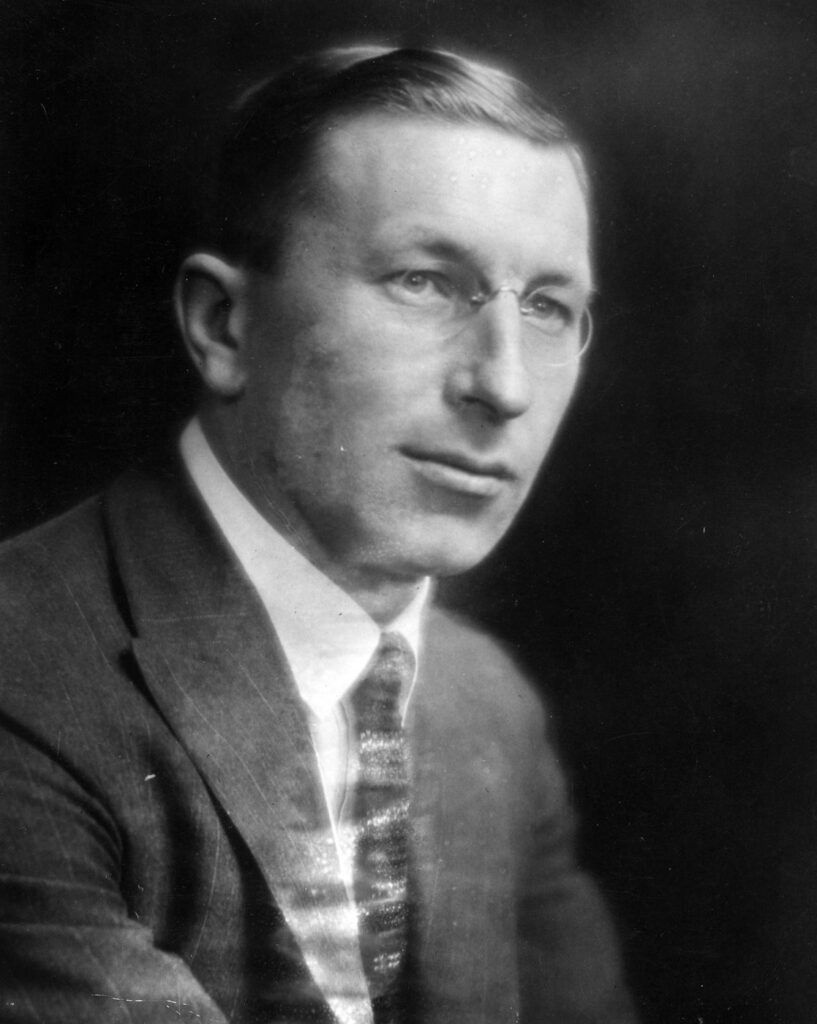
A Comprehensive Overview of Canadian Nobel Laureates
Canada has produced a remarkable number of Nobel Prize winners across various disciplines, showcasing the country's diverse contributions to fields such as medicine, chemistry, literature, physics, and economic sciences. The legacy of these laureates not only illustrates significant advancements in their respective areas but also highlights the global impact of Canadian intellect and innovation.
The journey of Canadian Nobel laureates began in 1923 with Frederick G. Banting, who was awarded the Nobel Prize in Medicine for his groundbreaking discovery of insulin. His work has had a lasting impact on diabetes treatment, saving countless lives. Following Banting, in 1949, William F. Giauque received the Nobel Prize in Chemistry for his contributions to chemical thermodynamics, particularly at very low temperatures.
The Nobel Peace Prize was awarded to former Prime Minister Lester Bowles Pearson in 1957 for his crucial role in resolving the 1956 Suez Crisis, demonstrating Canada’s commitment to peacekeeping and diplomacy on the international stage. In 1966, Charles B. Huggins was honored with the Nobel Prize in Medicine for his discoveries related to the hormonal treatment of prostate cancer, furthering cancer research and treatment options.
Moving into the 1970s, Gerhard Herzberg was recognized in 1971 with the Nobel Prize in Chemistry for his work on molecular electronic structures. Saul Bellow followed in 1976, receiving the Nobel Prize in Literature for his profound insights into contemporary culture through his literary works.
The 1980s marked a significant era for Canadian scientists, with several laureates achieving prestigious honors. In 1981, David H. Hubel claimed the Nobel Prize in Medicine for his findings on visual information processing. The following years saw Henry Taube winning in Chemistry for his research on electron transfer mechanisms in 1983, while John Polanyi was awarded in 1986 for his contributions to the dynamics of chemical processes.
Sidney Altman was awarded the Nobel Prize in Chemistry in 1989 for his discovery of RNA's catalytic properties, followed by Richard E. Taylor, who received the Nobel Prize in Physics in 1990 for his vital insights into particle physics that contributed to the quark model. Other notable winners include Rudolph A. Marcus in 1992 for his theories on electron transfer, Michael Smith in 1993 for innovative techniques in protein studies, and William Vickrey in 1996 for his contributions to economic theory regarding incentives.
The late 1990s provided further achievements, with Myron S. Scholes winning the Nobel Prize in Economic Sciences in 1997 for developing a new method to value derivatives and Robert A. Mundell in 1999 for his analysis of monetary and fiscal policies under various exchange rate regimes.
In the new millennium, Canadian laureates continued to make their mark. In 2009, Jack W. Szostak was awarded the Nobel Prize in Medicine for his discovery related to telomeres, while Willard S. Boyle received the Nobel Prize in Physics for inventing the charge-coupled device (CCD) sensor. Ralph M. Steinman's work on dendritic cells earned him a Nobel Prize in Medicine in 2011.
Alice Munro was recognized with the Nobel Prize in Literature in 2013 for her mastery in the short story format. Subsequent recognitions included Arthur B. McDonald winning the Nobel Prize in Physics in 2015 for his discovery regarding neutrino oscillations, and Donna Strickland in 2018 for her co-development of high-intensity optical pulses.
The years 2019 and 2021 saw notable wins in Physics and Economic Sciences, respectively. James Peebles was awarded in 2019 for his work in physical cosmology, while David Card shared the Nobel Prize in Economic Sciences in 2021 for his innovative research on labor-market impacts.
Looking toward the future, Geoffrey Hinton, known as the "godfather of AI," shared the Nobel Prize in Physics in 2024 for foundational work in machine learning and neural networks. In 2025, Peter Howitt was honored with the Economic Sciences Prize for his explanations regarding innovation-driven economic growth. The latest recognition came in 2026 when Anne Carson received the Nobel Prize in Literature for her inventive literary oeuvre that dialogues with classical traditions while exploring new forms for contemporary writing.
This rich tapestry of Nobel laureates from Canada underscores the nation's significant contributions to global discourse in various fields, showcasing both innovation and a commitment to advancing knowledge. These individuals represent a legacy of excellence and inspire future generations of researchers, writers, and leaders.








